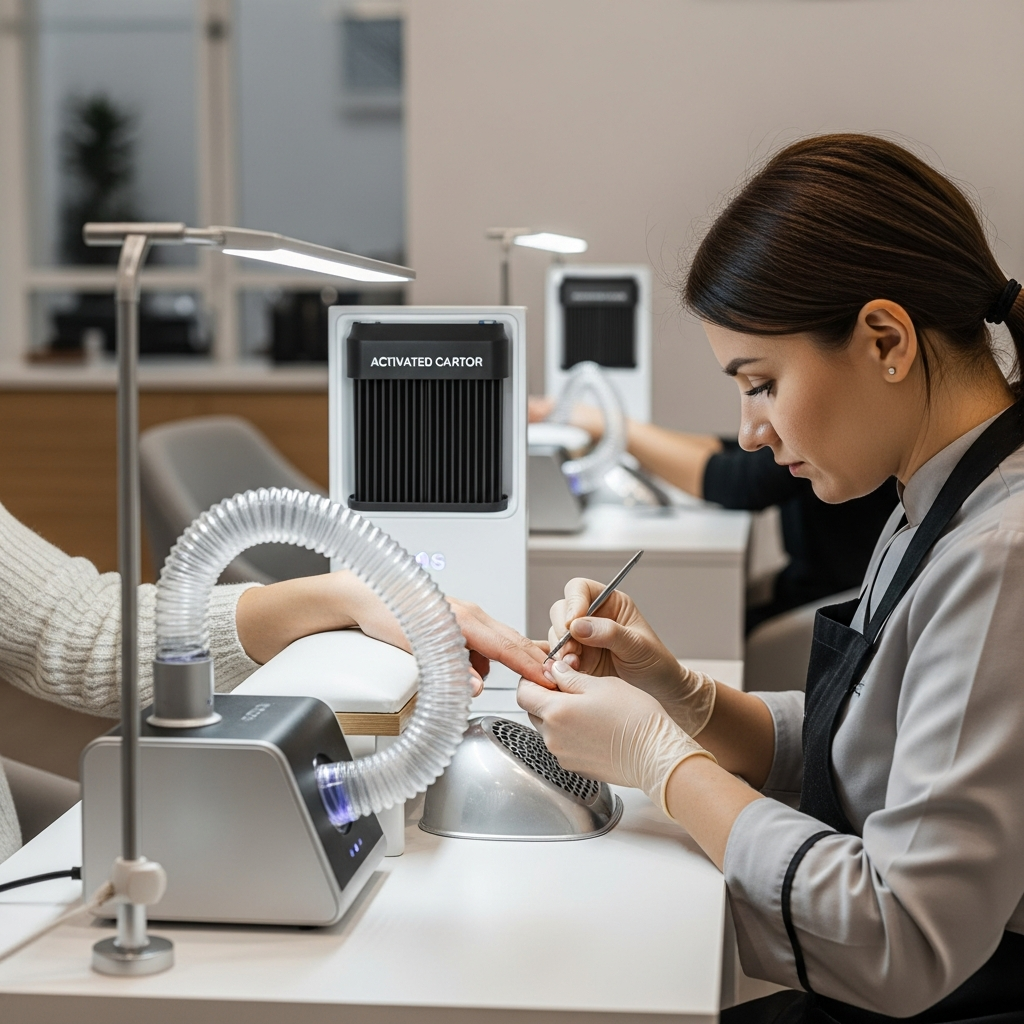
Implementing Chemical Odor Control in Professional Nail Salons
Maintaining a clean air environment is a primary responsibility for every nail salon owner. Chemical odors, particularly from ethyl methacrylate (EMA) monomers, require specialized management to ensure a professional atmosphere.
Effective odor control protects the health of nail technicians and improves the overall client experience. Understanding the mechanics of vapor mitigation is essential for modern nail salon operations and safety compliance.
Understanding Source Capture Systems for Nail Vapors
Source capture systems are designed to extract nail dust and chemical vapors at the point of origin. These units sit directly on the nail station to protect the technician’s breathing zone during service.
High-quality systems use multi-stage filtration to trap fine particulate matter before it enters the salon’s general air supply. This prevents the heavy accumulation of chemical scents throughout the facility.
For nail salon owners, investing in source capture is the most efficient way to manage EMA vapors. These systems are significantly more effective than general room air purifiers or open windows.
The Role of Activated Carbon in Monomer Mitigation
Standard air purifiers are often insufficient for the specific chemical loads found in nail salons. Professional nail air solutions must include heavy-duty beds of activated carbon filtration.
Activated carbon filters chemically bond with nail monomer vapors through a process called adsorption. This is the only reliable method to neutralize the molecular structure of professional nail chemicals.
When selecting a system, ensure the carbon filter is specifically rated for nail industry VOCs. This ensures the filter can handle the high concentration of vapors generated during acrylic nail applications.
Professional Ventilation Standards for Nail Salons
Proper HVAC integration is essential for maintaining long-term air quality in high-volume nail environments. Local exhaust ventilation (LEV) provides the most consistent results for vapor removal.
Ensure your salon’s ventilation system meets the minimum air exchange rates required for professional nail services. This helps dilute any residual odors that might escape the primary source capture units.
Work with HVAC professionals who understand the specific needs of a nail salon. Standard commercial ventilation often lacks the power to move heavy chemical vapors effectively from the floor level.
Operational Best Practices for Odor Reduction
Chemical management extends beyond filtration systems to daily nail salon workflows and technician habits. Small operational changes significantly reduce the overall chemical load in the workspace.
- Use metal trash cans with tight-fitting, self-closing lids for all chemical-soaked nail wipes.
- Empty nail waste into external bins several times throughout the business day to prevent vapor off-gassing.
- Utilize dappen dishes with specialized lids to minimize the surface area of exposed liquid monomer.
- Seal all nail product bottles immediately after use to prevent unnecessary evaporation into the salon air.
Maintaining Air Quality Equipment
Regular maintenance of nail salon air systems is critical for continued safety. Filters must be replaced according to a strict schedule to remain effective against concentrated nail vapors.
Clogged filters reduce suction power and allow hazardous nail dust to recirculate in the room. Establish a maintenance log for every station to ensure the health of your nail staff and clients.
Using a professional-grade air quality monitor can help nail salon owners track VOC levels in real-time. This data-driven approach allows for adjustments in ventilation or filtration before odors become problematic.
