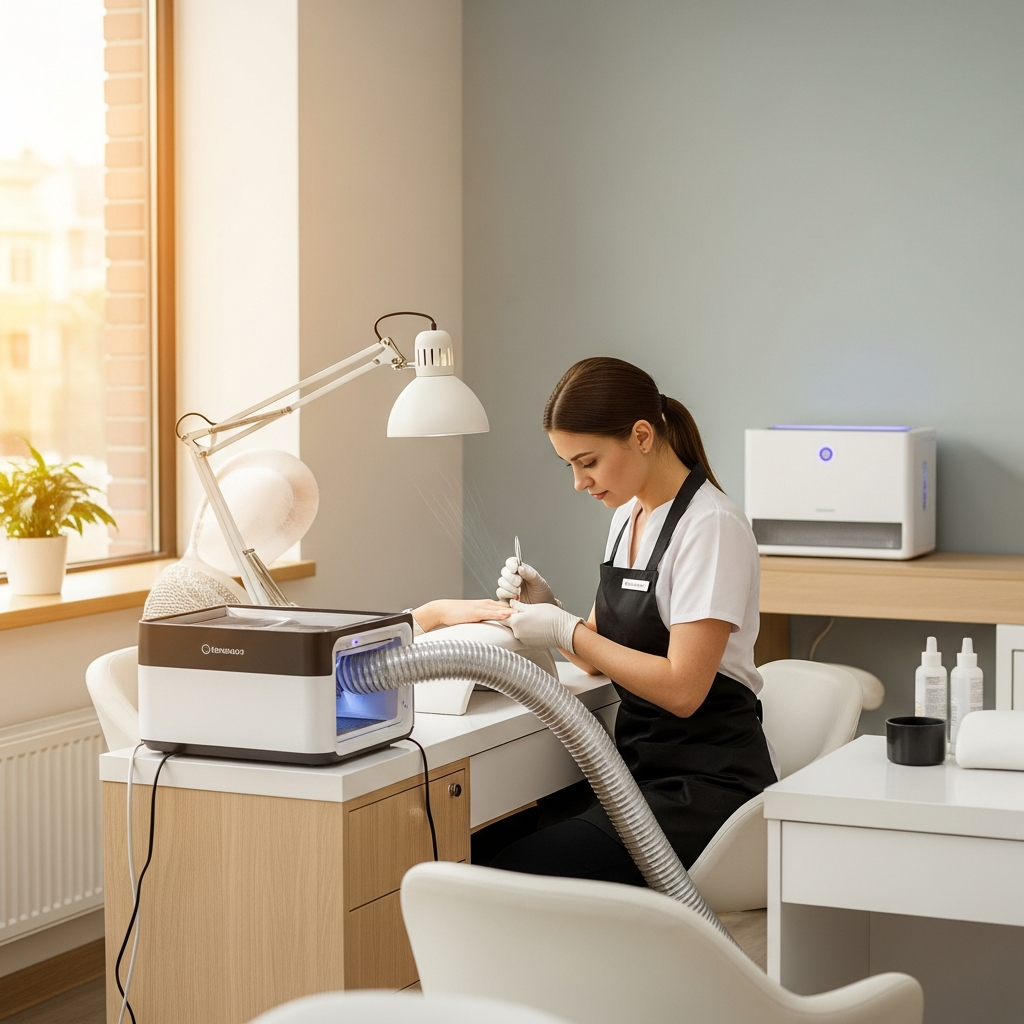
Evaluating Air Purification Systems for Your Nail Salon
As a nail salon owner, maintaining air quality is critical for technician health and client retention. Proper ventilation manages the inhalation risks associated with nail dust and chemical vapors.
Selecting the right air purification system requires understanding the difference between source capture and ambient filtration. This guide evaluates professional solutions to help you make an informed investment.
Source Capture Systems vs. Ambient Air Purifiers
Source capture systems are designed to extract nail dust and monomer vapors directly at the manicure table. These units use flexible hoses or integrated desk vents to pull contaminants away before they reach the breathing zone.
Ambient air purifiers focus on cleaning the entire room’s air volume. While effective for general odors, they are less efficient at capturing heavy acrylic dust generated during E-file services compared to localized extraction.
Key benefits of source capture in nail salons:
- Immediate removal of fine EMA monomer vapors.
- Prevention of nail dust settling on salon furniture and retail displays.
- Direct compliance with specific state board ventilation requirements.
Critical Filtration Components for Nail Chemicals
A professional nail salon purifier must feature a high-grade HEPA filter. These filters are essential for trapping microscopic nail dust particles that can cause respiratory irritation for long-term technicians.
Beyond dust, your system needs a substantial activated carbon filter. Carbon is the only effective way to neutralize Volatile Organic Compounds (VOCs) and the strong odors associated with acrylic liquid and gel systems.
What to look for in a carbon filter:
- Filter depth: Thicker carbon beds provide longer contact time for chemical absorption.
- Pelletized carbon: High-quality pellets are more effective than thin carbon-coated pads.
- Refillable canisters: Some systems allow you to replace just the carbon, reducing long-term maintenance costs.
Operational Noise and Maintenance for Salon Owners
The decibel level of your air system impacts the salon atmosphere. High-performance units often feature variable speed controls, allowing you to increase power during heavy filing and lower it during polish application.
Evaluate the cost of replacement filters before purchasing. Systems with pre-filters for large nail dust particles extend the life of expensive HEPA and carbon stages, lowering your annual operating budget.
Maintenance checklist for salon managers:
- Check pre-filters weekly for visible nail dust accumulation.
- Replace HEPA filters every 6 to 12 months based on service volume.
- Monitor carbon saturation to ensure chemical odors do not bypass the system.
Compliance with Ventilation Standards and IMC Codes
Many jurisdictions now follow the International Mechanical Code (IMC) for nail salons. This often requires a minimum exhaust rate of 50 cfm per nail station to ensure safety and hygiene.
Ensure your chosen system helps meet these local building codes. Investing in a certified nail ventilation system protects your business from liability and ensures a professional, odor-free environment for your clients.
