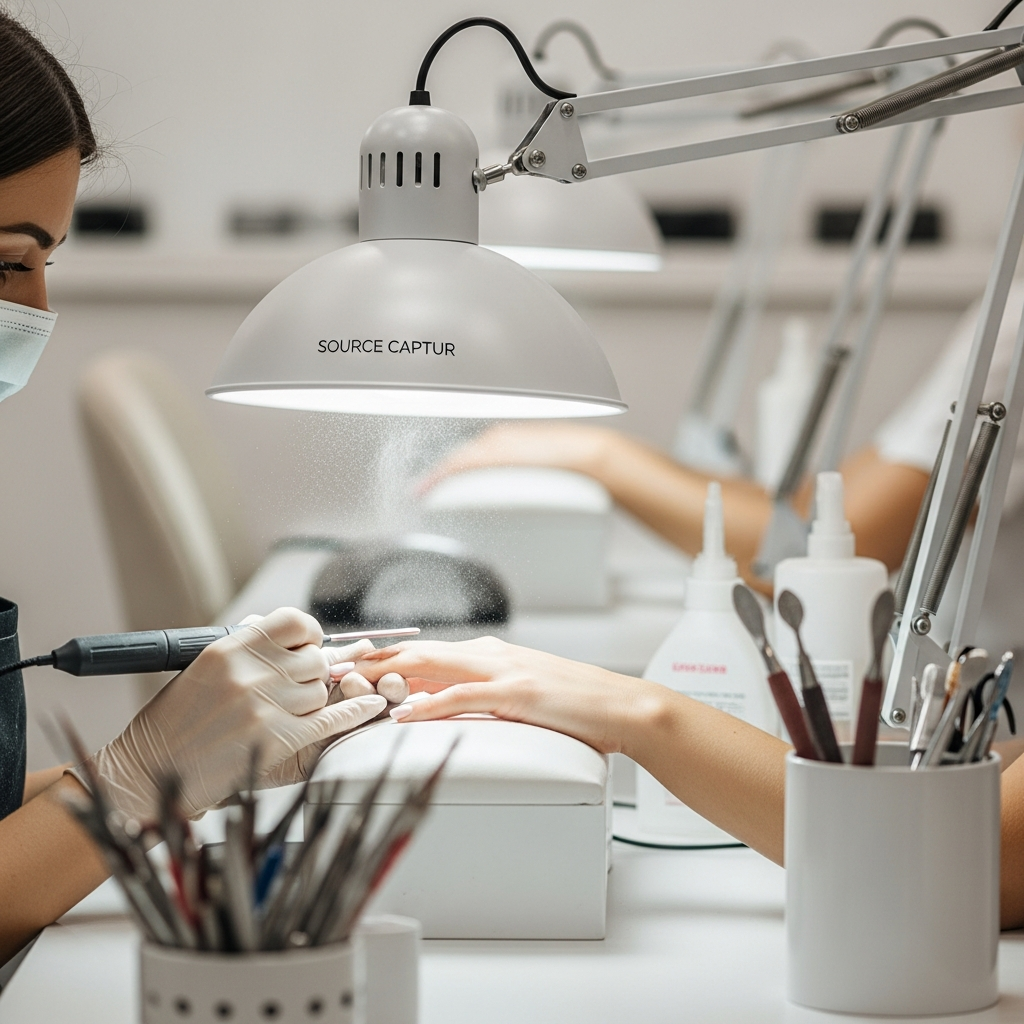
Implementing Source Capture Ventilation in Your Nail Salon
Professional nail salons face unique air quality challenges that general ventilation cannot solve. High volumes of nail dust and chemical vapors require specialized source capture systems.
As a nail salon owner, maintaining air purity is essential for staff health. These systems pull contaminants away from the breathing zone before they circulate.
Implementing proper ventilation demonstrates a commitment to professional industry standards. It protects your investment and ensures a safer environment for every nail technician.
Understanding Nail Dust and Monomer Vapor Risks
Mechanical filing and e-filing produce microscopic nail dust particles. These particles can remain suspended in the air for hours without proper extraction.
Liquid monomer, specifically Ethyl Methacrylate (EMA), releases heavy vapors during acrylic applications. Without source capture, these vapors settle and concentrate at the nail table.
Long-term exposure to these particulates and odors can lead to respiratory sensitivity. Professional nail salons must prioritize extraction to mitigate these operational risks.
The Function of Source Capture in Nail Salons
Source capture systems are designed to sit within inches of the nail service area. This ensures that dust and vapors are trapped at the point of origin.
Unlike standard air purifiers, these units use high-velocity suction to manage heavy debris. This is critical during the removal of acrylic, gel, or dip powder enhancements.
Effective systems utilize multi-stage filtration to address different types of salon waste. This includes both physical particulates and gaseous chemical compounds.
Key Components of Nail Air Extraction Systems
- HEPA Filtration: Captures 99.97% of fine nail dust and filing debris.
- Activated Carbon: Absorbs chemical odors and monomer vapors specifically.
- Flexible Extraction Arms: Allows the technician to position the hood precisely.
- Variable Speed Control: Adjusts suction based on the nail service being performed.
Operational Benefits for Nail Salon Owners
Clean air environments significantly improve the professional image of your nail salon. Clients appreciate the lack of strong chemical odors and visible dust buildup.
Investing in high-quality ventilation can reduce staff turnover by improving workplace comfort. It minimizes the physical fatigue associated with inhaling salon chemicals all day.
Moreover, many modern building codes now mandate specific ventilation for nail services. Being proactive ensures your salon remains compliant with all local safety regulations.
Maintenance Standards for Nail Ventilation Systems
Regular maintenance is vital to keep your nail salon ventilation system functional. Clogged filters reduce suction power and increase motor strain over time.
Nail salon managers should establish a strict filter replacement schedule. Pre-filters usually require attention every two to four weeks depending on service volume.
Main HEPA and carbon filters should be replaced according to the manufacturer’s usage hours. Documenting these changes helps maintain a high standard of salon sanitation and safety.
Integrating Systems into Your Nail Station Workflow
Choose between portable units or built-in vented nail tables based on your layout. Portable units offer flexibility for salons that frequently reconfigure their floor plans.
Built-in systems provide a streamlined look that integrates directly into the nail desk. This setup is often preferred for high-end salons focusing on a clean aesthetic.
Ensure that every nail technician is trained on correct hood positioning. The extractor must be close to the filing area to be effective during the nail service.
