Evaluating Professional Air Purification for Nail Salons
Nail salon owners must prioritize air quality to ensure the safety of both technicians and clients. Professional nail services involving acrylic monomers, gel polishes, and e-filing generate significant chemical vapors and fine particulate dust.
Choosing the right air purification system requires an understanding of how these contaminants behave in a high-volume nail salon environment. Standard residential filters are insufficient for capturing the specialized chemical loads found in a professional nail setting.
Comparing Source Capture Systems vs. Ambient Air Purifiers
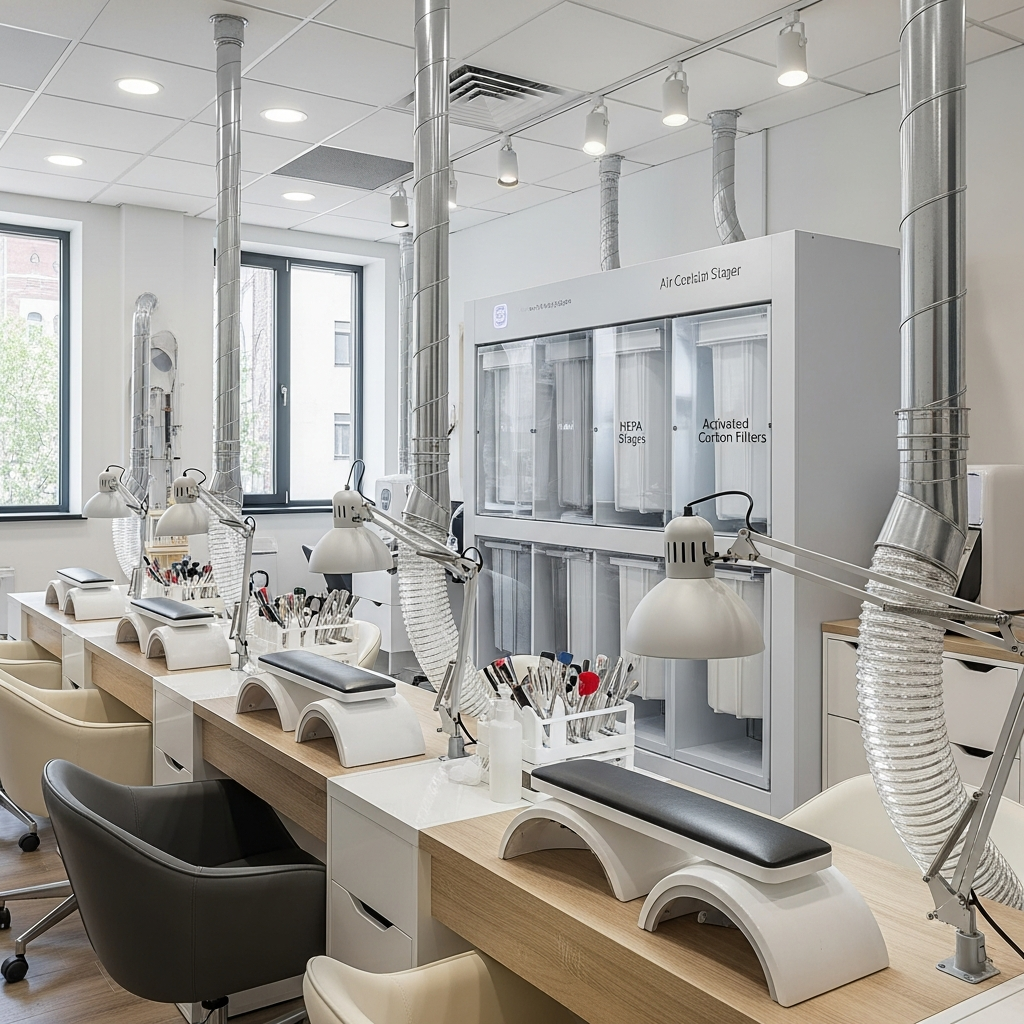
Source capture systems are the industry gold standard for nail technicians working with acrylics and dip powders. These units feature flexible ducts positioned directly at the nail table to vacuum fumes and dust before they enter the breathing zone.
Ambient air purifiers work by cycling the air in the entire room, which is beneficial for overall salon odor control. However, they are less effective at protecting the technician’s immediate workspace than a dedicated source capture unit.
The Importance of HEPA and Activated Carbon in Nail Salons
Effective nail salon purification requires a multi-stage filtration process. A HEPA filter is mandatory for trapping microscopic nail dust and filings created during the preparation and shaping phases of a manicure.
Activated carbon filters are essential for neutralizing Volatile Organic Compounds (VOCs) and monomer odors. For nail salons, the carbon bed must be thick enough to provide sufficient dwell time for chemical molecules to be absorbed effectively.
Operational Benefits for Nail Salon Owners
Investing in high-quality air filtration reduces the accumulation of fine nail dust on salon furniture and retail displays. This minimizes cleaning time and maintains a more professional, hygienic appearance for your nail business.
Beyond cleanliness, proper ventilation demonstrates a commitment to staff health, which can reduce technician turnover. Salon owners often find that improved air quality leads to higher client satisfaction and more positive online reviews.
Technical Requirements for Nail Ventilation Systems
- Cubic Feet per Minute (CFM) rating suitable for the salon square footage.
- Ease of filter replacement to ensure consistent airflow during busy shifts.
- Noise levels that do not interfere with nail technician-client communication.
- Compliance with local mechanical codes and nail industry safety standards.
Final Evaluation Criteria for Nail Professionals
When comparing systems, salon owners should calculate the total cost of ownership, including replacement filter prices. High-performance systems specifically designed for the nail industry offer the best long-term protection against chemical exposure.
Ensure any system you select is capable of handling the specific chemical byproduct of your most popular services, such as EMA monomer or cyanoacrylate-based dip resins. Professional-grade equipment is a critical investment in your salon’s infrastructure.
