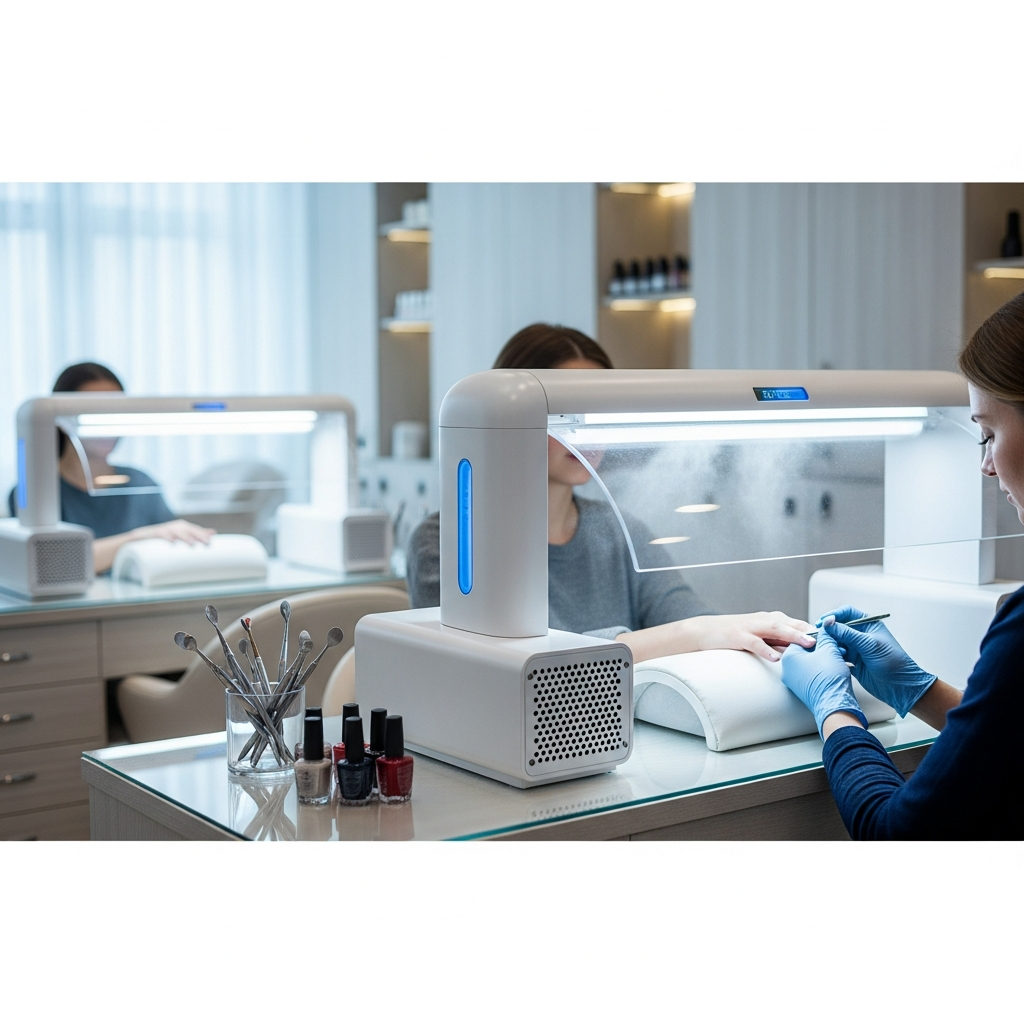
Selecting High-Performance Air Purification Systems for Your Nail Salon
Professional nail salon owners must prioritize indoor air quality to ensure a healthy environment. Identifying the right air purification system requires understanding the specific contaminants found in nail service workflows.
Nail salon air contains a mix of fine particulate matter from filing and volatile organic compounds (VOCs) from chemicals. Standard HEPA filters alone are insufficient for handling professional-grade nail monomers and adhesives.
Effective air management protects your staff from long-term respiratory issues and enhances the client experience. This guide evaluates the technical requirements for professional-grade nail ventilation and filtration systems.
Understanding Source Capture vs. Ambient Air Filtration
Source capture systems are the gold standard for nail salon safety and odor control. These units use adjustable hoods or integrated desk vents to trap dust and vapors directly at the manicuring station.
Ambient air purifiers treat the entire room but are less effective at preventing immediate inhalation. Owners should prioritize source capture to stop the spread of nail dust and chemical plumes before they disperse.
Combining both systems provides a comprehensive solution for large-scale nail operations. This dual-layer approach ensures that lingering odors and micro-dust are removed from the general salon atmosphere.
Critical Features for Nail Dust Extraction Units
HEPA Filtration for Fine Nail Particulates
Nail filing, especially with electric files, creates microscopic dust that stays airborne for hours. A true HEPA filter captures 99.97% of particles as small as 0.3 microns, including acrylic and gel residue.
Ensure your chosen system uses medical-grade HEPA filters rather than “HEPA-type” alternatives. High-quality filtration prevents fine dust from settling on salon surfaces and entering the lungs of your nail technicians.
Activated Carbon for Monomer and Chemical Odors
Nail monomers, primers, and polish removers release heavy VOCs that cause headaches and nausea. Specialized activated carbon filters are required to adsorb these chemical vapors effectively.
Look for units with a high volume of pelletized carbon rather than thin carbon-coated pads. The more carbon surface area available, the longer the system can neutralize strong nail chemical odors.
Operational Considerations for Nail Salon Owners
Noise levels are a critical factor when selecting equipment for a professional nail environment. High-decibel fans can disrupt the salon atmosphere and make communication with clients difficult.
Maintenance schedules must be strictly followed to ensure the longevity of your air purification system. Clogged filters reduce suction power, leaving your nail technicians exposed to harmful dust and fumes.
Key Maintenance Checklist for Nail Salon Systems:
- Daily: Clear surface dust from intake grilles and source capture hoods.
- Weekly: Inspect pre-filters and replace them if nail dust accumulation is visible.
- Monthly: Verify airflow levels and check carbon filters for odor breakthrough.
- Annually: Replace main HEPA filters to maintain certified filtration standards.
Evaluating the Return on Investment for Air Systems
Investing in high-end air purification reduces technician turnover by providing a safer workplace. It also positions your nail salon as a premium, health-conscious establishment in a competitive market.
Compare the cost of replacement filters across different brands before making a final purchase. Some lower-cost units have higher long-term operational expenses due to frequent filter changes.
Verify that the system meets local building codes and nail industry safety regulations. Proper ventilation is not just a comfort feature; it is a fundamental standard for modern nail salon operations.
