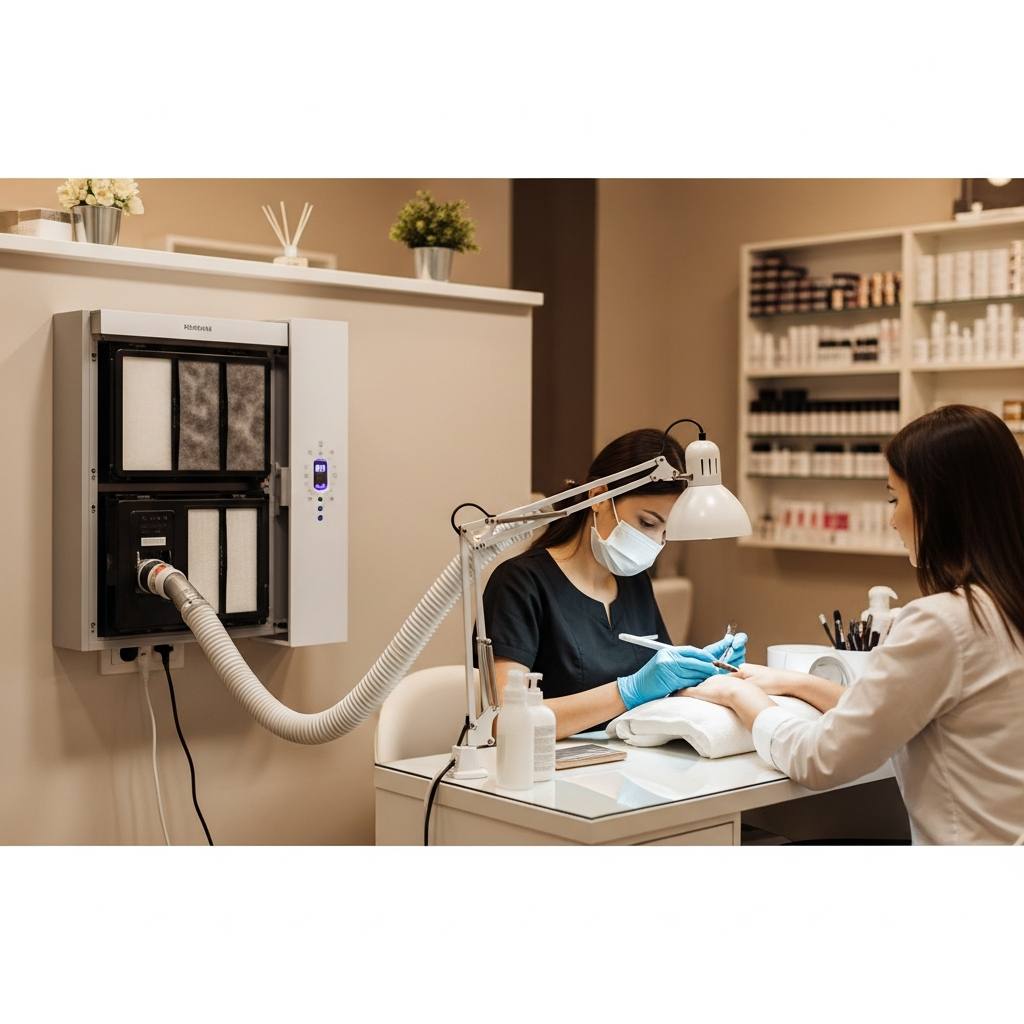
Evaluating Air Purification Systems for Professional Nail Salons
Nail salon owners must prioritize air quality to maintain a safe working environment. Professional nail services produce specific chemical vapors and fine particulates that require specialized filtration.
Standard air purifiers often lack the power to handle nail-specific pollutants. Selecting the right system involves understanding the difference between source capture and room-wide ventilation.
High-quality air systems protect the health of your nail technicians and improve the client experience. This guide evaluates the most effective solutions for modern nail salon operations.
Source Capture Systems vs. Ambient Air Cleaners
Source capture systems are the gold standard for the nail industry. These units use flexible ducts to extract nail dust and chemical odors directly from the technician’s breathing zone.
By capturing pollutants at the point of origin, these systems prevent vapors from circulating. This is the most efficient way to manage EMA monomer odors and filing debris.
Ambient air cleaners work by filtering the air in the entire room. While helpful, they are less effective than source capture units at protecting the technician during active nail services.
Essential Filtration: HEPA and Activated Carbon
A professional nail air system must include a medical-grade HEPA filter. This technology captures 99.97% of fine nail dust particles created during electric filing and manual shaping.
Without HEPA filtration, microscopic acrylic and gel dust can settle on salon surfaces or be inhaled. This poses a long-term respiratory risk for nail salon staff and owners.
To manage chemical odors and VOCs, a deep-bed activated carbon filter is mandatory. This filter adsorbs vapors from nail primers, adhesives, and liquid monomer systems.
Key Specifications for Nail Salon Owners
- Cubic Feet per Minute (CFM): Look for high airflow ratings to ensure rapid extraction of nail chemical vapors.
- Filter Density: Systems with multi-stage filtration provide the best protection against both dust and chemical odors.
- Noise Output: Choose units that operate quietly to ensure a professional and relaxing nail salon atmosphere.
- Portability: Evaluate if the system needs to be mobile or if a fixed, built-in nail desk extraction unit is better.
Maintenance and Long-Term Operational Costs
Nail salon owners must consider the frequency of filter replacements. Dust-heavy environments like nail salons require regular maintenance to keep air systems running efficiently.
High-quality systems often feature indicator lights that signal when a filter is saturated. This prevents the system from blowing unfiltered air back into the nail salon.
Investing in a robust air purification system reduces the accumulation of dust on nail retail displays. This leads to a cleaner salon appearance and lower daily cleaning requirements.
Implementing Air Safety Standards
Ensure your chosen system meets local board of cosmetology requirements for ventilation. Many regions now mandate specific air exchange rates for professional nail salons.
Document your filter replacement schedule as part of your salon safety protocol. This demonstrates a commitment to professional standards and technician well-being in the nail industry.
Proper air purification is an investment in your salon’s reputation. Clean air improves employee retention and ensures a premium environment for your nail salon clientele.
