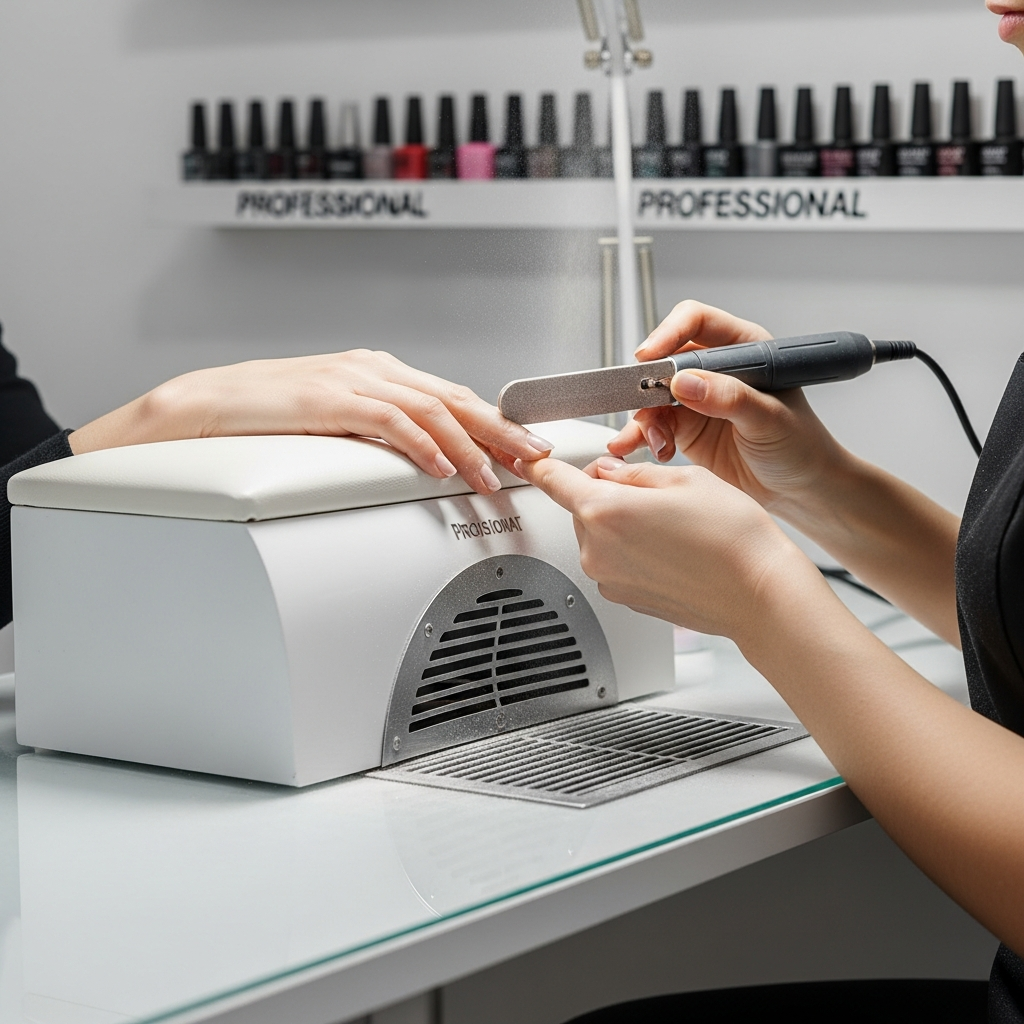
Evaluating Nail Dust and Vapor Extraction Systems for Your Salon
Selecting the correct ventilation system is a critical decision for nail salon owners.
Proper extraction ensures the removal of hazardous nail dust and volatile organic compounds (VOCs).
High-quality air systems protect the health of both technicians and clients.
Inhalation of fine acrylic dust and monomer vapors can lead to long-term respiratory issues.
Implementing a professional-grade system maintains a clean environment and professional reputation.
This guide evaluates the best solutions for modern nail salon operations.
Source Capture vs. Room Air Filtration
Source capture systems are considered the industry standard for professional nail safety.
These units are positioned directly at the nail table to intake dust and odors at the point of origin.
Capturing particulates before they enter the breathing zone is the most effective control method.
Room air purifiers are designed to cycle the general air within the entire salon space.
While they help improve overall air quality, they are not a substitute for source capture.
A combination of both systems provides the highest level of protection against chemical odors.
Key Technical Specifications for Nail Salon Owners
HEPA Filtration for Fine Nail Particulates
Professional nail dust collectors must utilize true HEPA-grade filters to be effective.
These filters are designed to trap 99.97% of microscopic nail particles generated during e-file services.
Using standard vacuum filters is insufficient for the fine dust created by gel and acrylic removal.
Activated Carbon for Monomer Odor Control
To eliminate the distinct chemical smell of monomer, look for systems with deep-bed activated carbon.
Activated carbon filters adsorb chemical vapors from acrylic liquids and nail adhesives effectively.
Ensure the carbon filter is thick enough to handle high-volume nail service workflows.
Professional Operational Workflows and Maintenance
Salon managers should integrate filter inspections into their weekly maintenance schedule.
Clogged filters significantly reduce suction power and compromise the safety of the nail station.
Regularly replacing filters ensures the system operates at peak performance during busy shifts.
- Daily: Clean the intake grill of the nail dust collector.
- Weekly: Inspect pre-filters for heavy accumulation of acrylic and gel debris.
- Monthly: Check the integrity of the activated carbon filter for odor breakthrough.
- Quarterly: Full system diagnostic to ensure motor efficiency and airflow levels.
Compliance and State Board Standards
Ensure your chosen extraction system meets local State Board and OSHA ventilation requirements.
Investing in compliant equipment prevents costly fines and ensures your salon passes inspections.
Prioritizing air quality demonstrates a commitment to professional nail industry standards.
Professional nail extraction systems also reduce the amount of dust settling on salon surfaces.
This leads to a cleaner workspace, faster cleanup times between clients, and better product application.
A dust-free environment is essential for achieving a flawless finish on gel and acrylic sets.
