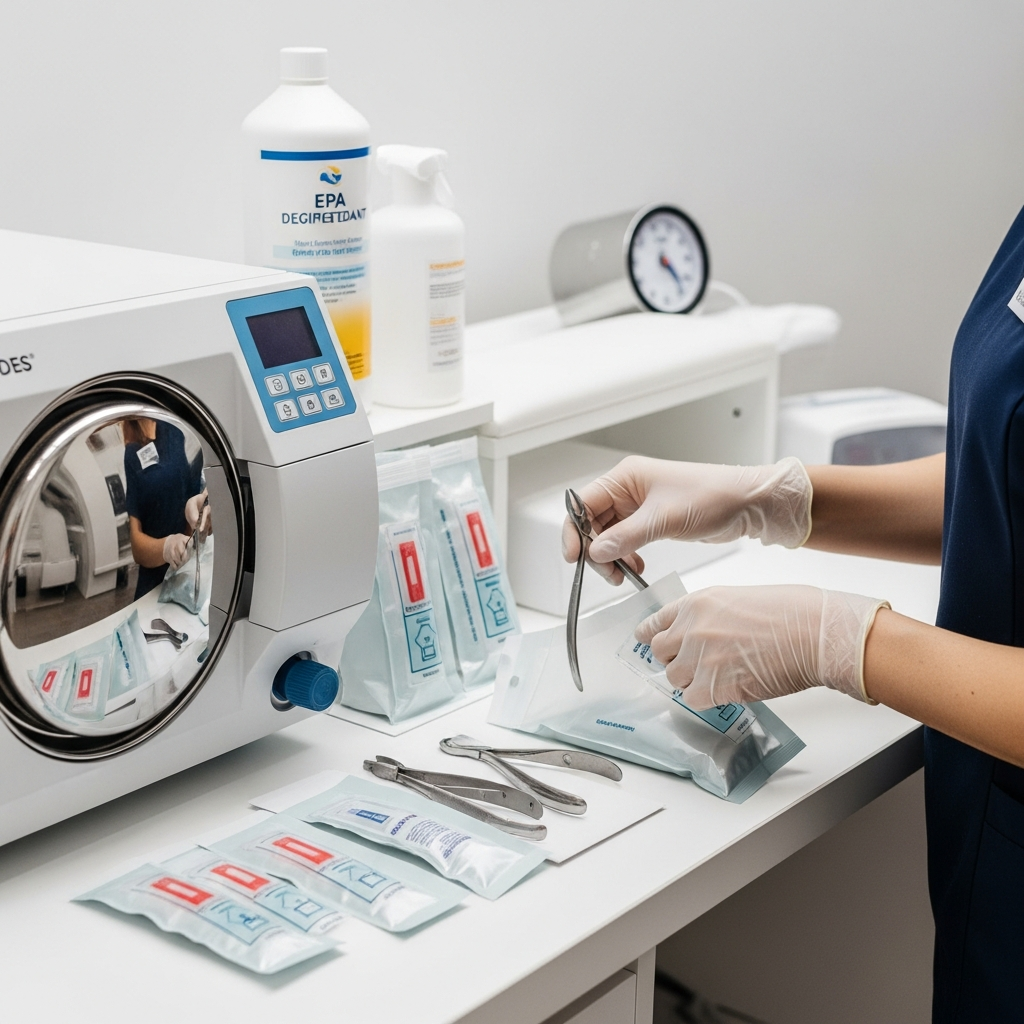
Professional Sterilization Standards for Nail Salon Tools
Maintaining high-level sterilization is a fundamental responsibility for every nail salon owner. It ensures the safety of both technicians and clients during every service.
Professional nail tools, especially metal implements like nippers and pushers, require rigorous decontamination to prevent the spread of pathogens and bacteria.
Establishing a clear workflow for tool processing protects your business reputation and ensures compliance with state board regulations for the nail industry.
The Hierarchy of Nail Tool Decontamination
Sanitation is the first step, involving the removal of visible debris from nail tools using soap, water, and a clean professional nail brush.
Disinfection follows, using EPA-registered, hospital-grade solutions to kill most microorganisms on non-porous surfaces like glass or metal nail files.
Sterilization is the highest level, completely destroying all microbial life, including fungal spores, typically achieved through a medical-grade autoclave.
Implementing Autoclave Systems in the Nail Salon
An autoclave uses high-pressure saturated steam to reach temperatures that kill even the most resilient spores on metal nail implements.
Salon owners should use sterilization pouches with chemical indicators to verify that each set of nail tools has reached the required temperature.
Monthly biological spore testing is a best practice to ensure your nail salon autoclave is functioning correctly and meeting safety standards.
Chemical Disinfection for Non-Porous Nail Implements
High-level liquid disinfectants are used for nail tools that cannot withstand the high heat of an autoclave, such as certain plastic handles.
The nail technician must ensure tools are fully submerged for the exact contact time specified by the manufacturer to be effective.
Refresh the disinfectant solution daily or whenever it becomes cloudy to maintain its efficacy against nail-related pathogens.
Best Practices for Nail Tool Handling and Storage
- Use dedicated bins: Clearly label containers for “Soiled” and “Clean” nail tools to prevent cross-contamination.
- Dry thoroughly: Always dry metal nail nippers and pushers completely before sterilization to prevent rust and corrosion.
- Store in sealed pouches: Keep sterilized nail tools in their sealed pouches until the client’s service begins.
- Document everything: Maintain a sterilization log for your nail salon to track every cycle and maintenance check.
Common Sterilization Risks to Avoid
UV cabinets are often mistaken for sterilizers, but in a nail salon environment, they are only suitable for clean tool storage.
Do not skip the cleaning phase; any organic matter left on a nail tool can shield bacteria from the disinfection or sterilization process.
Ensure your nail salon staff is trained on the specific chemicals and equipment used in your facility to maintain consistent safety results.
The Business Impact of Nail Salon Safety
Investing in high-quality sterilization equipment demonstrates a commitment to client health that sets your nail salon apart from competitors.
Proper tool maintenance also extends the life of expensive nail implements, reducing the long-term overhead costs for the salon owner.
Clear communication of your nail tool safety protocols can significantly increase client trust and retention in a professional salon setting.
