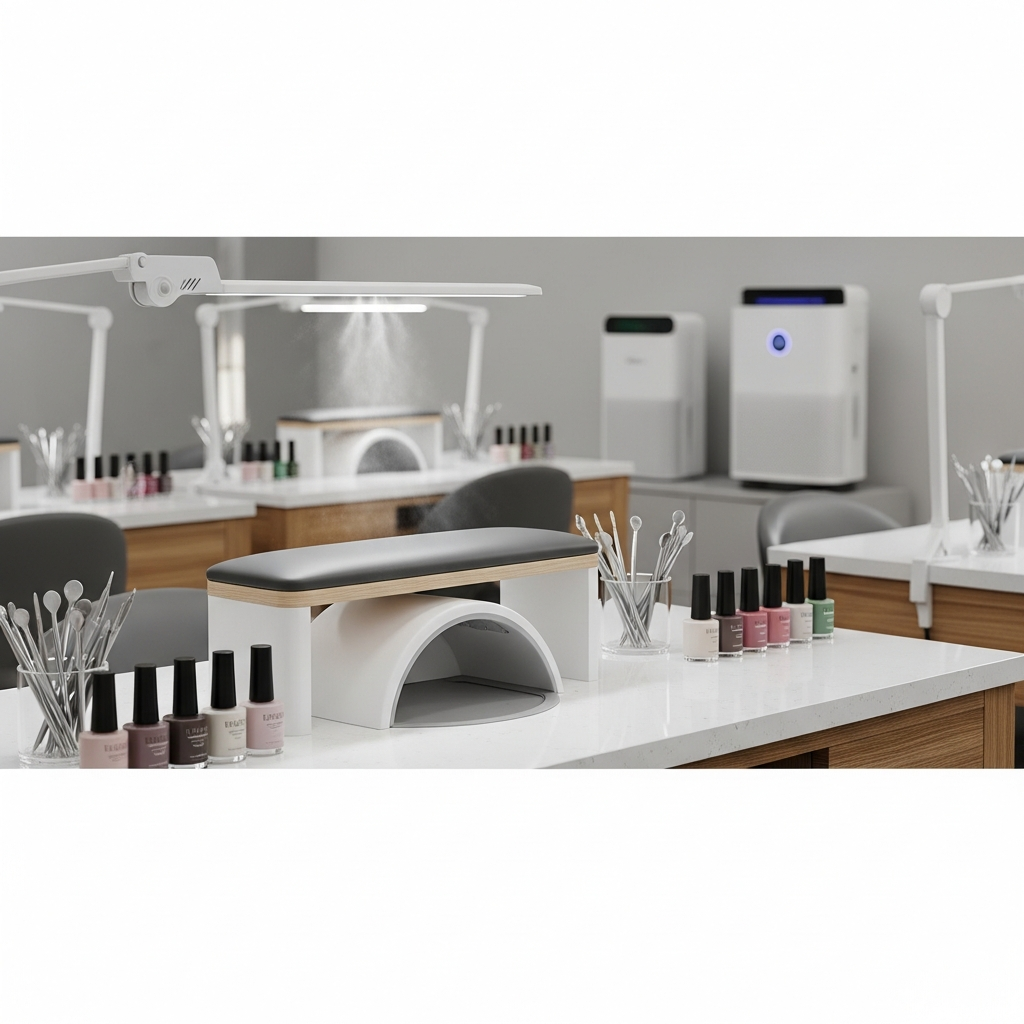
Implementing Professional Air Purification Systems in Nail Salons
Maintaining high indoor air quality is a critical responsibility for every nail salon owner. The nail industry utilizes various chemicals that, while safe when handled correctly, require robust ventilation to manage vapors and dust.
Professional air purification systems are not merely an amenity; they are a fundamental safety standard. These systems protect the long-term health of nail technicians and provide a professional environment for clients.
The Necessity of Source-Capture Ventilation
The most effective method for managing air quality in a nail salon is source-capture ventilation. These systems capture contaminants at the point of origin—the nail technician’s workstation—before they enter the breathing zone.
Unlike general room purifiers, source-capture units utilize extraction arms or vented nail tables. This technology is specifically designed to pull heavy acrylic monomer vapors and fine filing dust away from the technician and client.
- Vapor Extraction: Specifically targets ethyl methacrylate (EMA) and solvent fumes.
- Dust Collection: Captures fine polymer particles generated during e-filing and buffing.
- Zoned Protection: Ensures that each nail station remains a localized clean-air zone.
HEPA and Activated Carbon Filtration Standards
For a nail salon purification system to be effective, it must utilize multi-stage filtration. Standard filters used in residential units are insufficient for the specific chemical load found in professional nail environments.
HEPA filters are required to trap microscopic dust particles created during the removal of gel or acrylic enhancements. These particles can otherwise settle on salon surfaces or be inhaled by staff throughout the workday.
Activated carbon filters are essential for chemical adsorption. A thick bed of activated carbon is necessary to neutralize the volatile organic compounds (VOCs) found in nail primers, adhesives, and liquid monomers.
Maintenance Protocols for Salon Air Systems
Consistent maintenance is mandatory to ensure the efficacy of air purification equipment. Owners must establish clear workflows for filter replacement to avoid system failure and air stagnation.
- Daily: Clean the intake grilles of desk vents to remove visible filing debris.
- Monthly: Inspect pre-filters and replace them if they show significant dust accumulation.
- Bi-Annually: Evaluate the saturation of activated carbon filters to ensure odor-free operation.
Operational Benefits of Clean Air Systems
Investing in high-quality air purification systems provides significant business advantages. A salon that is free from heavy chemical odors projects a professional image and improves client retention rates.
Furthermore, providing a clean workspace reduces staff fatigue and respiratory complaints. This commitment to technician safety is a key factor in reducing turnover and maintaining a high standard of nail service excellence.
Nail salon owners must prioritize systems that comply with local mechanical codes and industry safety standards. Proper ventilation is a pillar of a successful, professional, and compliant nail salon operation.
