Implementing Professional Sterilization Standards in Your Nail Salon
For nail salon owners, maintaining the highest level of hygiene is not just a regulatory requirement; it is a pillar of business reputation. Understanding the distinction between cleaning, disinfecting, and sterilizing is critical for protecting both your staff and your clients.
In a high-volume nail environment, tools like cuticle nippers, pushers, and E-file bits are constantly exposed to biological debris. Failing to implement a rigorous sterilization system can lead to the transmission of nail fungus, bacterial infections, or bloodborne pathogens.
The Difference Between Disinfection and Sterilization
Many nail salon owners confuse disinfection with sterilization. Disinfection uses EPA-registered, hospital-grade chemicals to kill most microorganisms on non-porous surfaces, but it may not eliminate highly resistant bacterial spores.
Sterilization is the highest level of decontamination, achieved through heat and pressure. This process ensures that every living microorganism on your metal nail tools is completely destroyed, providing the safest possible experience for your clientele.
The Role of Autoclaves in the Nail Industry
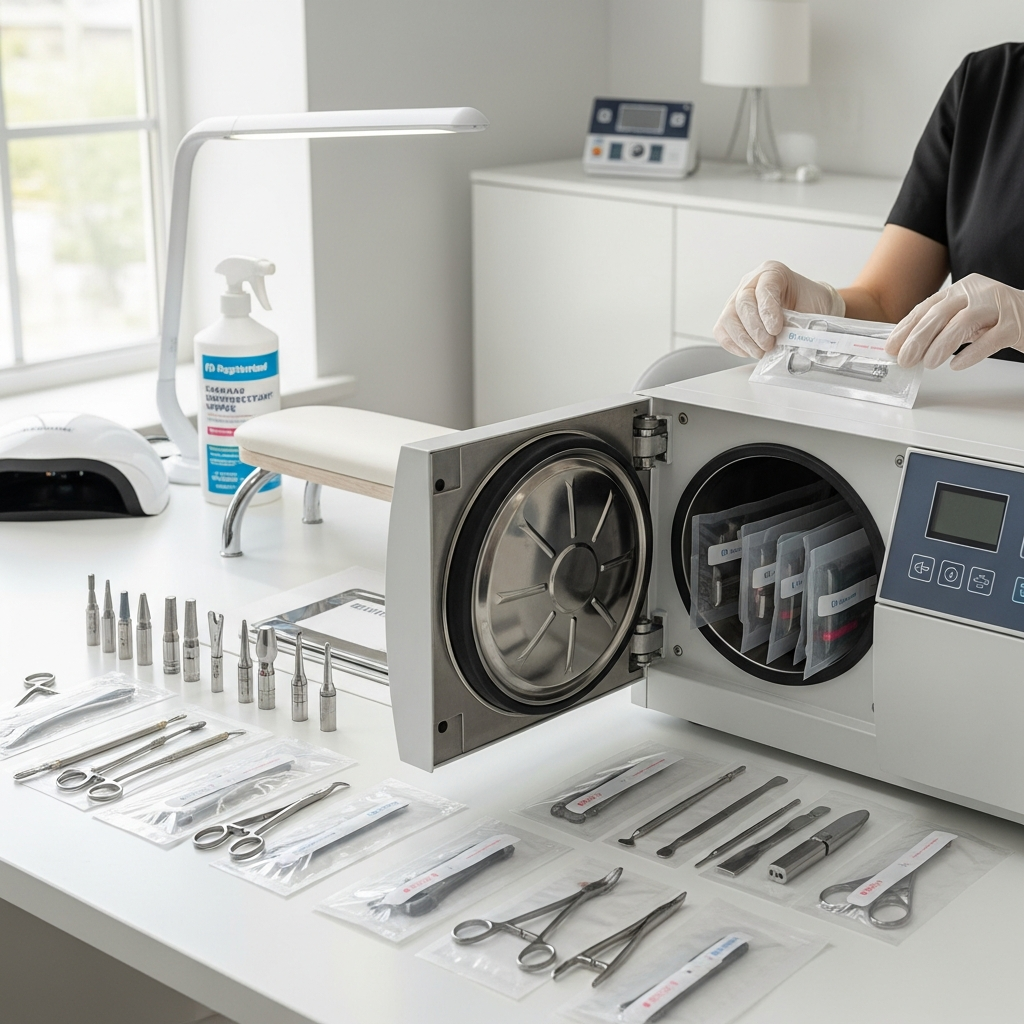
Medical-grade autoclaves are the gold standard for nail tool sterilization. These devices use pressurized steam to reach temperatures that dry heat or chemical soaks simply cannot match, ensuring the integrity of your stainless steel implements.
Investing in an autoclave demonstrates a commitment to safety that sets your salon apart from competitors. It also streamlines the workflow for senior nail staff, as tools are processed in sealed pouches that remain sterile until opened in front of the client.
Standard Operating Procedures for Nail Tool Reprocessing
To maintain a safe salon environment, every owner-technician must establish a consistent workflow for tool maintenance. This process begins immediately after a service is completed to prevent cross-contamination between nail stations.
- Manual Cleaning: Scrub tools with a brush and warm, soapy water to remove all visible debris and nail dust before they enter the sterilizer.
- Ultrasonic Cleaning: Use an ultrasonic cleaner with specialized solution to vibrate away microscopic particles from the hinges of nippers and fine grooves of E-file bits.
- Rinsing and Drying: Thoroughly dry all implements before sterilization. Trapped moisture can lead to corrosion or prevent the sterilizer from reaching the required internal temperature.
- Sterilization Cycle: Place tools in sterilization pouches with internal indicators and run the cycle according to the manufacturer’s specifications.
Surface Decontamination at the Nail Station
While tools require sterilization, the nail station surface, LED lamps, and armrests require high-level disinfection between every client. Use EPA-registered wipes or sprays with a proven tuberculocidal or virucidal efficacy for the nail industry.
Ensure that the disinfectant remains wet on the surface for the full contact time listed on the label. This “dwell time” is essential for the chemicals to effectively neutralize pathogens common in nail salon settings.
Spore Testing and Compliance for Salon Owners
For salon owners, documentation is as important as the sterilization process itself. Regular spore testing, or biological monitoring, is the only way to verify that your autoclave is functioning correctly and reaching the necessary parameters.
Keep a sterilization log that records the date, time, temperature, and pressure of every cycle. This practice not only ensures safety but also provides a vital paper trail in the event of state board inspections or liability claims.
Investing in Quality Nail Implements
The success of your sterilization system depends on the quality of your tools. Only use high-quality, professional-grade stainless steel implements designed to withstand repeated exposure to high-pressure steam and heat without dulling or rusting.
Properly sterilized, high-end nippers and pushers last longer and perform better, providing a smoother service for the technician and a more comfortable experience for the client. This operational efficiency is key to long-term salon profitability.
