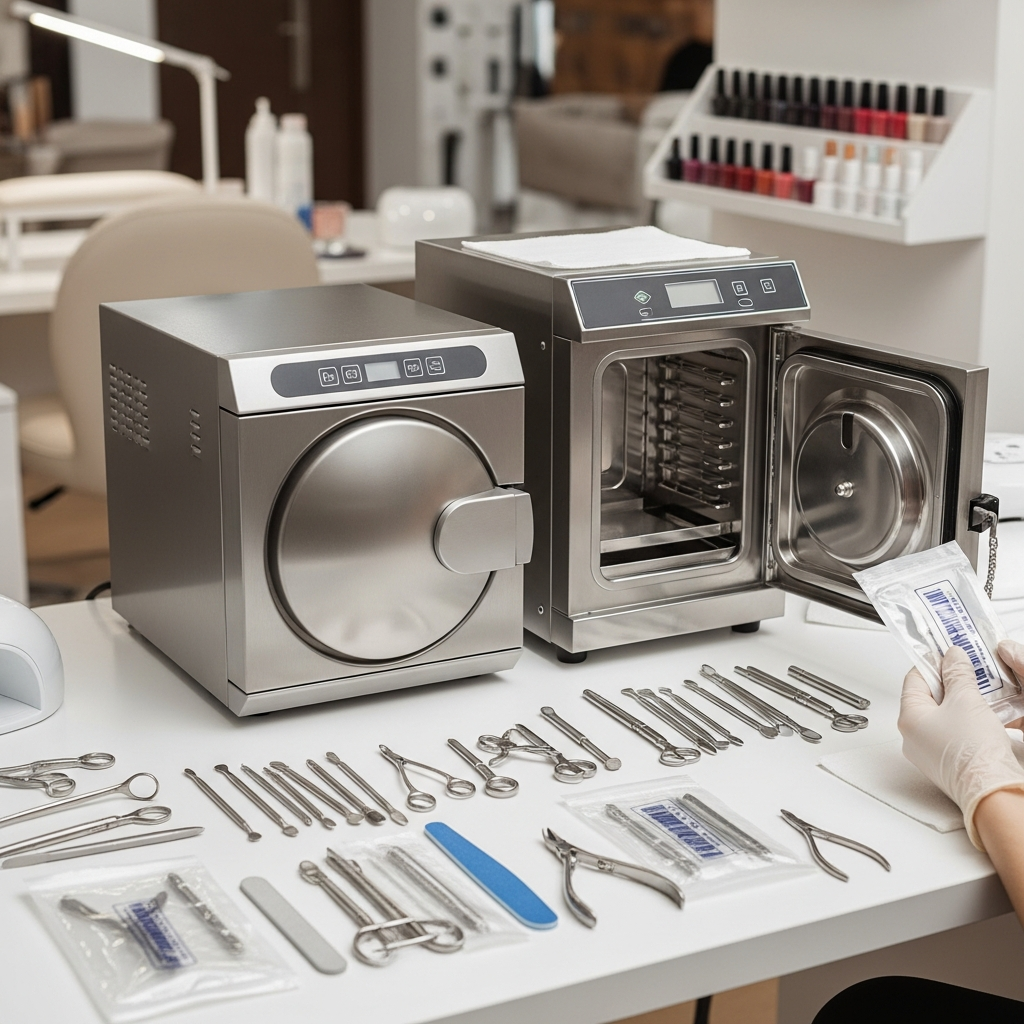
Selecting the Right Sterilization System for Your Nail Salon
Choosing the correct sterilization method is a critical decision for nail salon owners and managers. Maintaining high infection control standards protects both your nail technicians and your clientele while ensuring professional compliance.
This guide evaluates the two primary sterilization systems used for stainless steel nail implements. Understanding the differences between steam and dry heat is essential for long-term tool maintenance and salon safety.
Steam Autoclaves in the Professional Nail Industry
Steam autoclaves use high-pressure saturated steam to eliminate all forms of microbial life. They are widely considered the gold standard for sterilizing professional nail tools like nippers, pushers, and e-file bits.
Autoclaves offer significantly faster cycle times than dry heat alternatives. This allows nail salon owners to maintain a smaller inventory of tool kits while supporting a high volume of back-to-back appointments.
However, the moisture involved in steam sterilization requires specific care. Nail technicians must ensure all tools are thoroughly dried before and after the cycle to prevent oxidation and rusting of high-carbon steel implements.
Dry Heat Sterilizers for Nail Tool Management
Dry heat sterilizers utilize high temperatures without moisture to achieve sterilization. Many owner-technicians prefer this method for carbon steel nail implements that are prone to corrosion in steam environments.
These systems are generally more cost-effective to purchase and maintain. They do not require distilled water or specialized plumbing, making them a practical choice for smaller nail studios or boutique nail bars.
The primary drawback is the extended cycle time, which can take up to sixty minutes or longer. This requires a nail salon to have a larger rotation of sterilized tool sets to maintain continuous operations throughout the day.
Impact on Nail Tool Longevity and Precision
High-quality nail nippers and carbide bits are significant investments for any salon owner. Repeated exposure to high heat or moisture can eventually impact the sharpness and temper of the metal.
Autoclaves are generally gentler on the temper of the steel but can lead to spotting if the water quality is poor. Dry heat avoids moisture damage but can dull the cutting edges of nippers faster due to the intense, prolonged heat exposure.
Operational Workflows and Safety Standards
Effective sterilization requires a disciplined workflow within the nail salon. Tools must be manually cleaned and processed in an ultrasonic cleaner to remove nail debris and oils before entering the sterilizer.
Salon managers must also implement regular spore testing to ensure the equipment is functioning correctly. This documentation is vital for meeting professional nail industry standards and passing state board inspections.
Comparing Systems for Your Nail Salon
- Cycle Efficiency: Autoclaves offer 15-30 minute cycles; Dry Heat requires 60+ minutes.
- Tool Compatibility: Dry heat is superior for non-stainless carbon steel nail tools.
- Maintenance: Autoclaves require distilled water and seal replacements; Dry Heat is low maintenance.
- Initial Investment: Dry heat systems typically have a lower entry price for new nail salon owners.
Final Considerations for Salon Owners
The choice between autoclave and dry heat depends on your salon’s daily appointment volume and your specific tool inventory. Fast-paced salons usually benefit from the speed of an autoclave to keep workstations stocked.
Regardless of the system chosen, professional sterilization elevates your nail salon’s reputation. Investing in high-grade sterilization equipment demonstrates a commitment to the highest level of nail industry safety and professional excellence.
