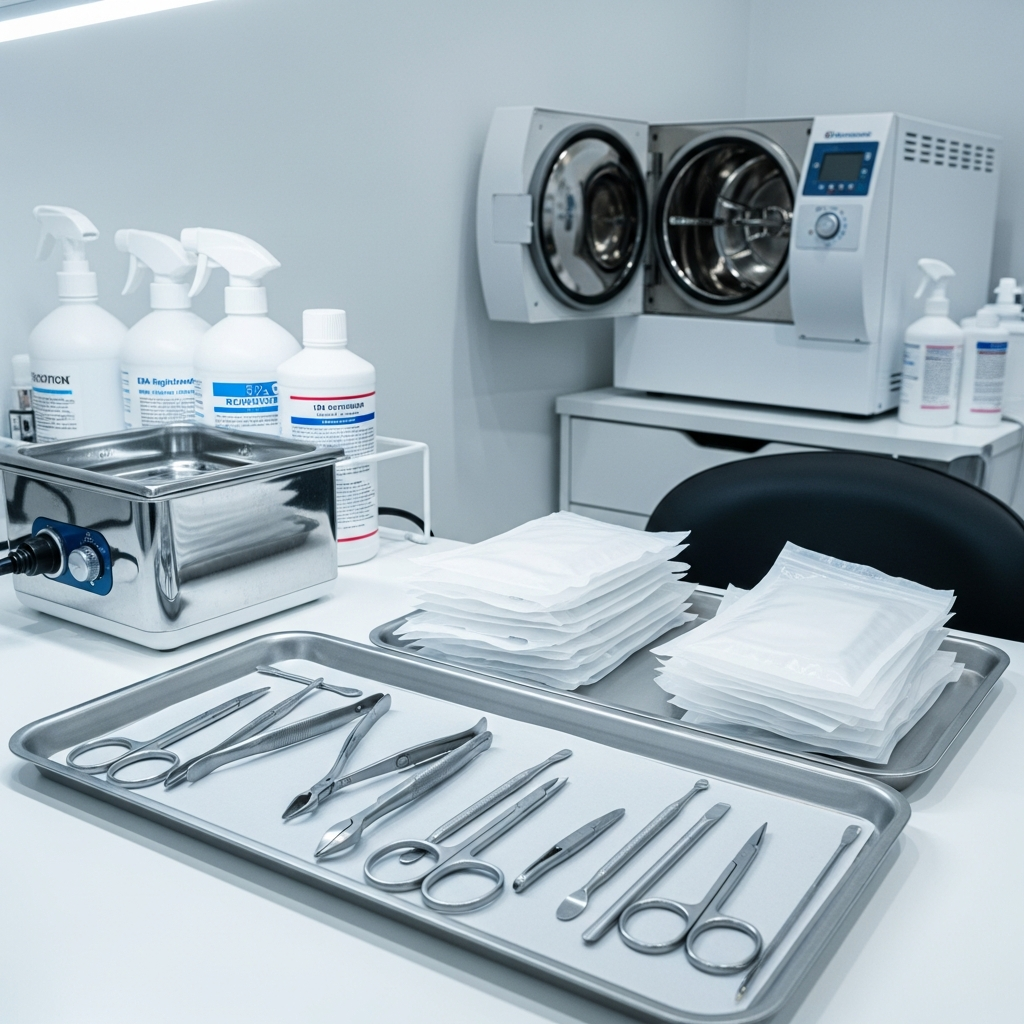
Professional Sterilization and Disinfection Systems for Nail Salons
Maintaining rigorous sanitation standards is the foundation of a successful nail salon operation.
For nail salon owners, implementing a multi-tiered disinfection system is a legal requirement and a business necessity.
This guide outlines the professional standards for tool and surface sterilization within the nail industry.
Distinguishing Between Cleaning, Disinfection, and Sterilization
In the nail industry, understanding the hierarchy of decontamination is critical for staff safety.
Cleaning involves removing visible debris from nail pushers, nippers, and e-file bits using soap and water.
Disinfection uses EPA-registered chemicals to destroy pathogens on non-porous nail tools.
Sterilization is the highest level, utilizing pressurized steam to eliminate all microbial life on metal implements.
Implementing Medical-Grade Sterilization with Autoclaves
High-volume nail salons are increasingly adopting autoclaves to ensure absolute tool safety.
An autoclave uses saturated steam under high pressure to process stainless steel nail nippers and pushers.
Unlike UV “sterilizers,” which only provide surface disinfection, autoclaves penetrate all crevices of professional nail tools.
Owners should implement a logging system to track every sterilization cycle performed in the salon.
Managing Non-Porous vs. Porous Nail Implements
Nail salon staff must distinguish between tools that can be reused and those that must be discarded.
Porous items, such as wooden orange wood sticks, certain nail buffers, and high-grit files, cannot be disinfected.
These single-use items must be disposed of immediately after a single nail service to prevent cross-contamination.
Non-porous tools, including glass files and metal implements, must undergo full immersion in a hospital-grade disinfectant.
Effective Use of EPA-Registered Liquid Disinfectants
Liquid disinfection remains the most common method for sanitizing nail station surfaces and implements.
Salon managers must ensure the disinfectant is bactericidal, virucidal, and fungicidal as per state board requirements.
Tools must be fully submerged for the exact contact time specified on the manufacturer’s label.
Changing the disinfectant solution daily, or more frequently if it becomes cloudy, is a vital operational standard.
Safe Handling of E-File Bits and Specialty Attachments
Electric file bits require specific cleaning protocols due to their complex surface textures.
Use a brass or nylon brush to remove dust and nail product buildup from the flutes of the bit.
After mechanical cleaning, bits should be processed through an ultrasonic cleaner or soaked in disinfectant.
Properly dried bits should be stored in a clean, closed container to maintain their sanitized state before use.
Standardized Workflows for Nail Station Sanitation
Nail salon owners must enforce a strict sanitation workflow between every client appointment.
All work surfaces, including the nail table and technician lamp, must be wiped with a professional-grade disinfectant.
Technicians must wash their hands and require clients to use a hand sanitizer before beginning any nail service.
Consistent application of these protocols protects the salon’s reputation and ensures compliance with industry health standards.
