Implementing Professional Disinfection Systems in Nail Salons
Maintaining a sterile environment is the foundation of a successful nail salon operation. For salon owners, choosing the right disinfection system is about more than just passing inspections.
It is about protecting technicians from bloodborne pathogens and ensuring clients feel safe during every service. High-standard disinfection protocols prevent the spread of nail fungi and bacterial infections.
Professional nail salon disinfection systems involve chemical solutions, specialized equipment, and strict workflows. Understanding these components is essential for operational excellence and long-term business growth.
EPA-Registered Disinfectants for Nail Stations
The first line of defense in any nail salon is the use of EPA-registered, hospital-grade disinfectants. These chemicals must be bactericidal, virucidal, and fungicidal to meet industry standards.
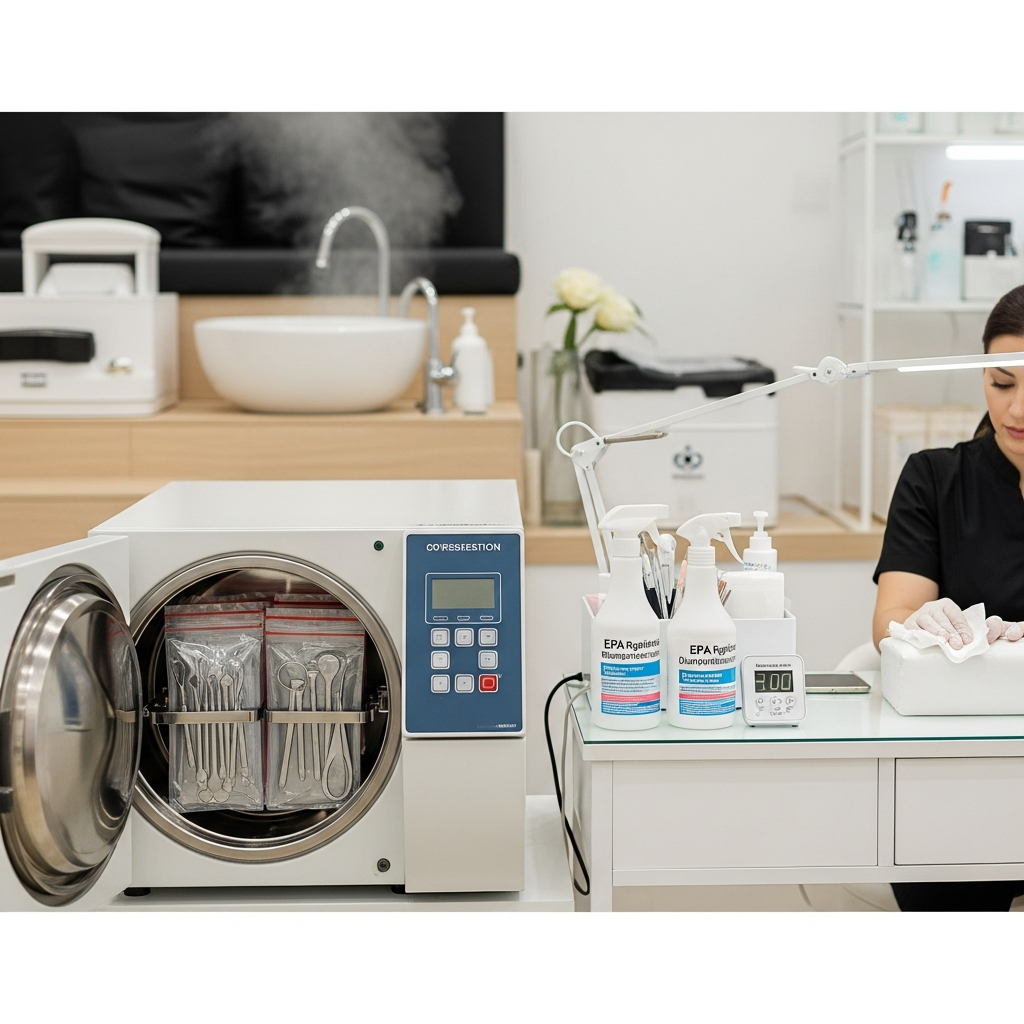
Nail station surfaces, including manicure tables and LED lamps, require frequent wiping between every client. Using pre-mixed sprays or wipes ensures the correct chemical concentration is applied every time.
Owners must ensure that the contact time, or “dwell time,” is strictly followed. Most professional nail disinfectants require the surface to remain wet for 2 to 10 minutes to be effective.
Advanced Sterilization for Metal Nail Tools
While disinfection kills most organisms, sterilization is required for metal tools that can draw blood. This includes cuticle nippers, metal pushers, and diamond e-file bits.
Dry heat sterilizers or autoclaves are the gold standard for nail professional tool maintenance. These systems use high pressure and temperature to eliminate all microbial life, including spores.
Sterilized tools should be kept in sealed pouches until the moment of use. This practice demonstrates a high level of professionalism and builds immediate trust with your nail salon clientele.
Pedicure Bowl Sanitation Systems and Protocols
Pedicure chairs represent the highest risk of cross-contamination in a nail salon if not managed correctly. Owners must implement a rigorous multi-step cleaning system for all foot basins.
Whirlpool jets and footplates must be dismantled and cleaned after every service to remove biofilm. For high-volume salons, pipe-less pedicure systems are often preferred for their easier disinfection cycles.
Daily and Weekly Maintenance Workflows
- Post-Service: Scrub basin with soap, rinse, and circulate EPA disinfectant for 10 minutes.
- End of Day: Remove all filters and screens to flush out trapped debris and monomer dust.
- Weekly Deep Clean: Soak the entire system in a bleach solution or specialized flush overnight.
Integrating Safety into Nail Salon Workflows
A disinfection system is only effective if the nail technicians follow the protocol consistently. Owners should provide dedicated sanitation stations where staff can easily clean their e-file bits and nippers.
Clear signage and checklists help maintain these standards during busy salon shifts. Regular training sessions ensure that every staff member understands the chemistry and mechanics of the tools they use.
Investing in high-quality disinfection systems reduces the risk of liability and enhances the salon’s reputation. Cleanliness is the most important service a professional nail salon can provide to its community.
