Implementing Effective Chemical Odor Control in Your Nail Salon
Managing chemical odors is a critical operational requirement for any professional nail salon specializing in acrylic and gel enhancements.
Nail salon owners must prioritize air quality to ensure the safety of technicians and the comfort of clients visiting the facility.
Persistent odors often signal the presence of Volatile Organic Compounds (VOCs) that require specific filtration and ventilation strategies.
Understanding the Impact of Nail Monomer Fumes
Ethyl Methacrylate (EMA) is the primary liquid monomer used in acrylic nail services, known for its distinct and heavy scent.
Without a proper mitigation system, these vapors settle in the salon environment, potentially causing headaches and respiratory discomfort.
Effective odor control focuses on removing these vapors at the source before they circulate throughout the entire nail salon.
Source Capture Systems for Nail Technicians
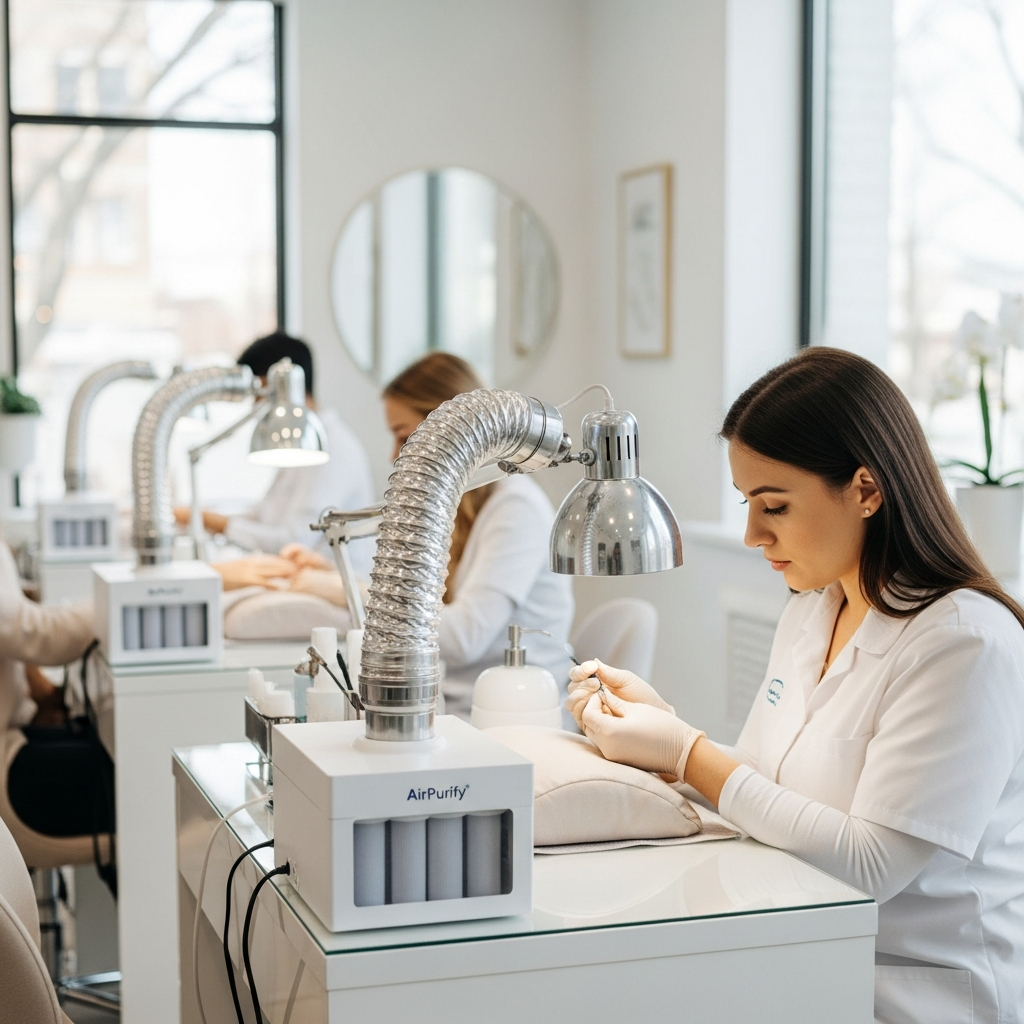
Source capture ventilation is the gold standard for professional nail stations, drawing fumes away directly from the work zone.
These systems utilize flexible ducts or integrated table vents to pull monomer vapors and nail dust into a filtration unit.
By capturing chemicals at the technician’s desk, salon owners prevent cross-contamination of air between different service areas.
HEPA and Activated Carbon Filtration Standards
Standard air purifiers are often insufficient for the heavy chemical load found in a busy nail salon environment.
A professional-grade system must feature a thick bed of activated carbon, which chemically bonds with nail monomer vapors.
HEPA filters should also be used to capture fine nail dust particles generated during filing and e-file operations.
Best Practices for Nail Chemical Waste Management
Odor control extends beyond mechanical ventilation to include daily operational habits and technician workflows.
Always use small-neck dappen dishes to minimize the surface area of the monomer exposed to the open air during services.
Emptying trash cans frequently and using sealed waste containers prevents chemical-soaked wipes from off-gassing into the salon.
Proper Disposal of Acrylic-Soaked Materials
Wipes and table towels contaminated with liquid monomer should be placed in a small plastic bag and sealed immediately.
Technicians should avoid over-priming brushes, which leads to excess liquid being absorbed into disposable materials.
Managing chemical waste at the desk level significantly reduces the workload on the salon’s primary ventilation system.
Operational Benefits of Odor-Free Nail Environments
A nail salon that smells clean and fresh projects a higher standard of professionalism and attracts a more discerning clientele.
Owners who invest in high-quality air purification systems see improved staff retention and reduced health-related absences.
Compliance with local nail industry ventilation codes also protects the business from potential regulatory fines and inspections.
Maintaining Your Salon Air Purification System
Regular maintenance of filtration units is essential for maintaining the efficacy of chemical odor control solutions.
Carbon filters should be replaced according to the manufacturer’s schedule, typically every three to six months in high-volume salons.
Consistent filter changes ensure that the system continues to neutralize nail chemicals effectively throughout the workday.
