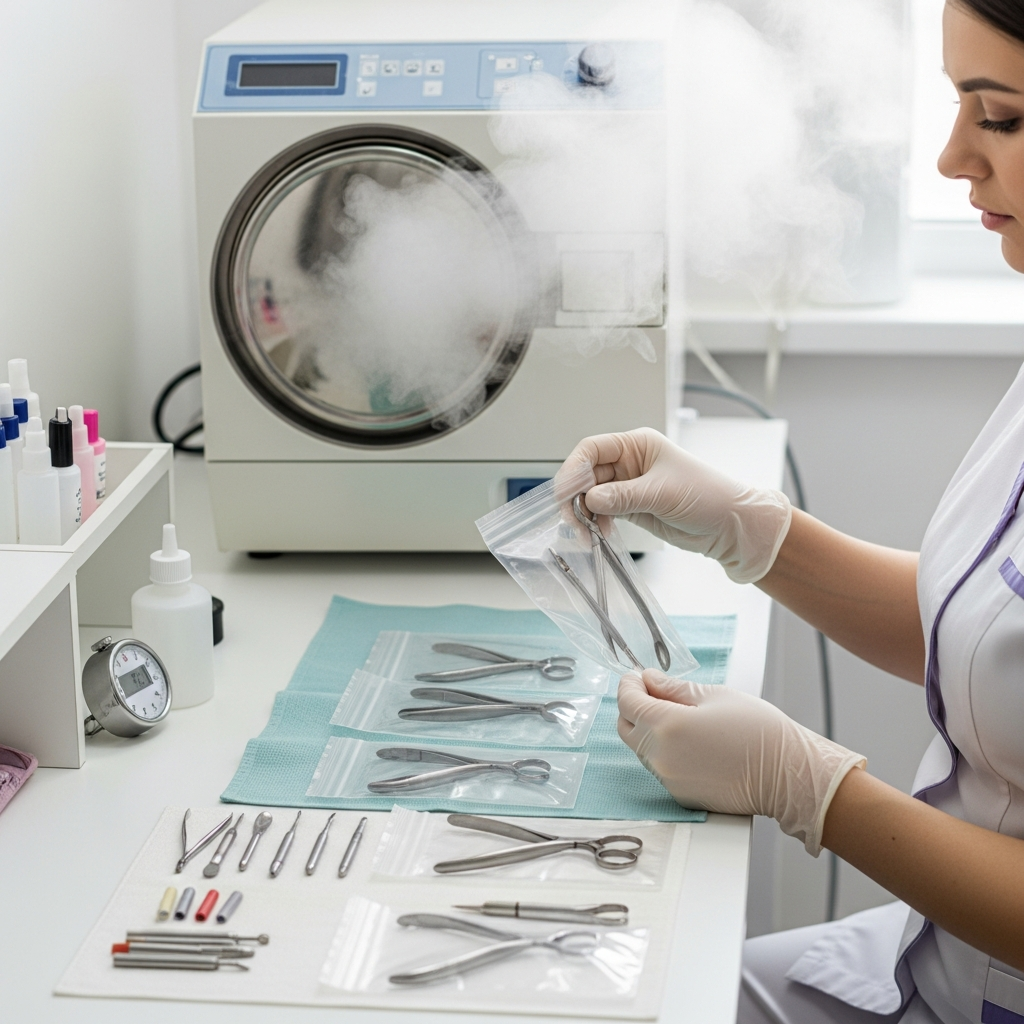
Implementing Professional Sterilization Systems in Your Nail Salon
In the modern nail industry, transitioning from basic disinfection to medical-grade sterilization is a hallmark of elite salon ownership.
Protecting your clients from cross-contamination requires a rigorous understanding of how nail tools interact with pathogens during services.
As a nail salon owner, selecting the right sterilization system impacts your workflow, tool longevity, and professional reputation.
The Difference Between Disinfection and Sterilization in Nail Care
Disinfection kills most microorganisms on non-porous nail tools but does not eliminate highly resistant bacterial spores.
Sterilization is the only process that completely destroys all microbial life, including spores, on metal nail implements.
Nail salon owners must distinguish between these levels to meet high-end safety standards and local regulatory requirements.
Advanced Autoclave Systems for Metal Nail Implements
Pressure steam sterilization, or autoclaving, is the gold standard for metal nail tools like nippers, pushers, and e-file bits.
These systems use high-pressure saturated steam to achieve total lethality against pathogens within a sealed chamber.
Using an autoclave demonstrates a commitment to safety that differentiates your nail business from standard discount salons.
Key Workflow for Autoclave Use in Nail Salons
- Pre-Cleaning: Scrub nail tools with a nylon brush and detergent to remove debris and oils.
- Drying: Ensure all nail implements are completely dry to prevent rusting or spotting during the cycle.
- Pouching: Place tools in sterilization pouches with internal indicators to verify steam penetration.
- Validation: Perform weekly spore testing to ensure the autoclave is functioning according to nail industry standards.
Chemical Cold Sterilization for Heat-Sensitive Nail Tools
Certain nail implements cannot withstand the high temperatures of an autoclave and require high-level chemical sterilants.
Solutions such as 2% glutaraldehyde or stabilized hydrogen peroxide are used for professional cold sterilization protocols.
These chemicals require precise handling, specialized soaking trays, and strict adherence to immersion timing for efficacy.
Safety Protocols for Chemical Handling in Nail Salons
- Ventilation: Always use chemical sterilants in areas with dedicated nail salon air filtration systems.
- PPE: Ensure nail technicians wear nitrile gloves and eye protection when handling concentrated solutions.
- Contact Time: Strictly follow the manufacturer’s duration to ensure nail tools reach a sterile state.
- Rinsing: Use distilled or sterile water to rinse tools after chemical immersion to prevent skin irritation.
Maintaining Your Sterilization Equipment and Records
Consistent maintenance of your nail tool sterilization systems prevents mechanical failure and ensures ongoing salon safety.
Keep a detailed sterilization log including date, time, cycle temperature, and the initials of the nail technician responsible.
Documented sterilization cycles protect your nail salon from liability and provide peace of mind for your professional staff.
