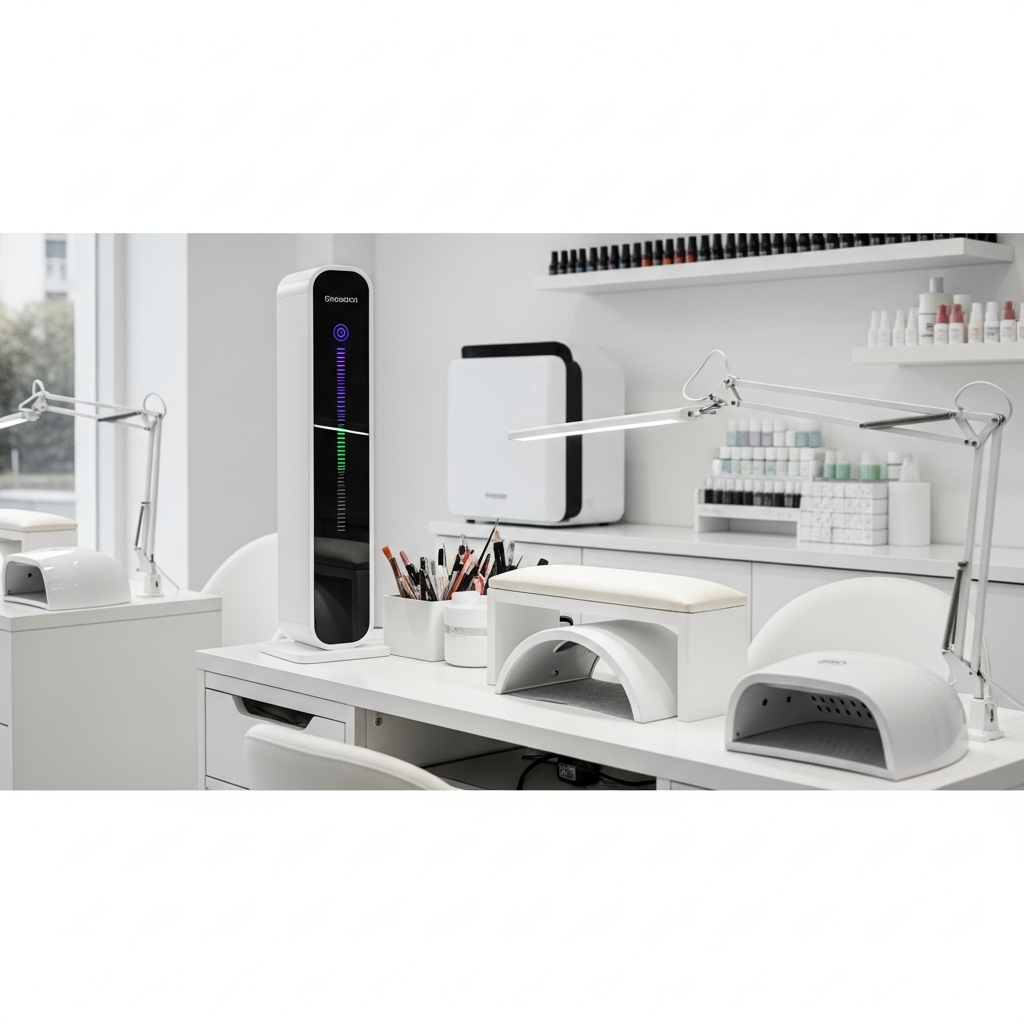
Advanced Chemical Odor Control Solutions for Nail Salons
Managing air quality is a critical operational requirement for every professional nail salon owner. Chemical odors, particularly from ethyl methacrylate (EMA) monomer and various nail solvents, can impact the health of your technicians and the comfort of your clients.
Effective odor control is not just about masking smells with fragrances. It requires a systematic approach to removing Volatile Organic Compounds (VOCs) and fine nail dust at the source before they circulate throughout the service area.
Understanding VOCs and Nail Monomer Fumes
Professional nail products release vapors during the application and curing processes. Acrylic liquid monomers and gel systems contain chemicals that transition into gas at room temperature, creating the distinct scent associated with nail services.
High concentrations of these vapors can lead to headaches, dizziness, and respiratory irritation for staff members who are exposed to them daily. Implementing a robust chemical control strategy protects your team and ensures compliance with safety standards.
The Role of Source Capture Ventilation
Source capture systems are the most effective way to manage nail fumes. These units use flexible ducts or vented nail tables to pull air directly from the technician’s “breathing zone” where the product is being applied.
By capturing vapors at the point of origin, these systems prevent chemical odors from drifting into the waiting area or neighboring service stations. This localized exhaust is a hallmark of a high-standard professional nail environment.
Essential Filtration for Nail Salon Air Quality
Standard air conditioners are designed for temperature control, not for chemical filtration. To properly clean the air, nail salons must utilize specialized filtration systems equipped with activated carbon and HEPA filters.
- Activated Carbon Filters: These are essential for adsorbing chemical vapors and monomers that cause strong odors.
- HEPA Filtration: These filters trap 99.97% of fine nail dust particles created during electric filing and manual buffing.
- Pre-Filters: These capture larger debris, extending the life of your more expensive carbon and HEPA components.
Professional Chemical Storage and Disposal
Proper workflow management can significantly reduce the volume of odors in the salon. Salon owners should enforce strict protocols regarding how chemicals are handled between nail services.
Always use small-neck dappen dishes to minimize the surface area of liquid monomer exposed to the air. Additionally, ensure that all trash cans have tight-fitting lids and are emptied frequently throughout the day to prevent used wipes from off-gassing.
Operational Benefits of Odor Management
Investing in high-quality air purification systems provides a competitive advantage. A salon that smells clean and professional attracts a higher-end clientele who value a premium, health-conscious nail experience.
Furthermore, maintaining a vapor-free environment reduces staff turnover. Technicians are more likely to remain loyal to a salon that prioritizes their long-term health and provides a comfortable workspace for performing intricate nail art and enhancements.
Checklist for Improving Nail Salon Ventilation
- Inspect HVAC Systems: Ensure your building’s ventilation provides enough fresh air exchanges per hour for a high-traffic nail salon.
- Evaluate Source Capture: Verify that every nail station is equipped with a functioning dust and fume extractor.
- Monitor Filter Life: Establish a maintenance schedule to replace carbon filters before they become saturated and lose effectiveness.
- Seal Containers: Ensure all professional nail products, including acetone and primers, are tightly capped when not in immediate use.
Strong odor management is a fundamental pillar of professional nail salon operations. By combining source capture technology with proper chemical handling, owners can create a safer, more prestigious business environment.
