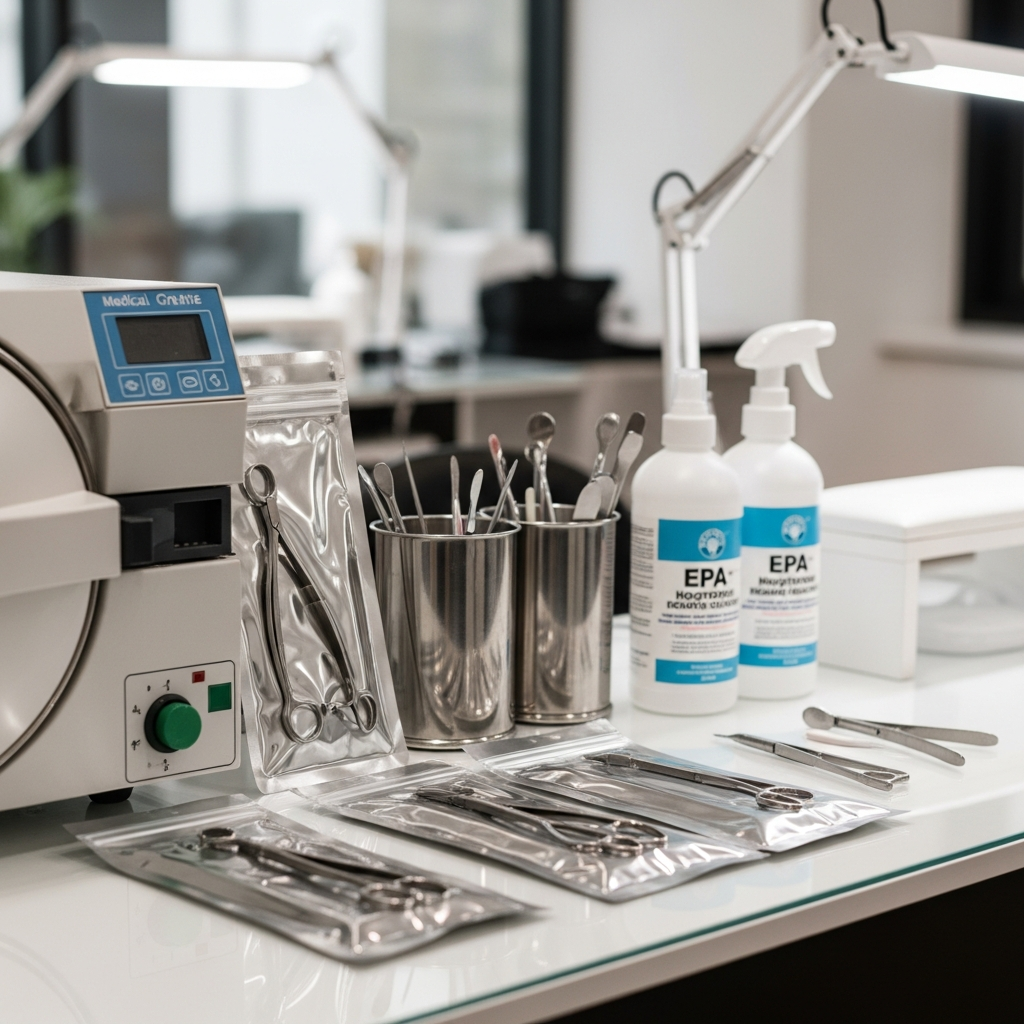
Advanced Tool and Surface Sterilization for Nail Salons
The Critical Hierarchy of Nail Tool Decontamination
Understanding the distinction between cleaning, disinfecting, and sterilizing is vital for any nail salon owner. While cleaning removes visible debris, only sterilization eliminates all microbial life on professional implements.
For nail professionals, this process specifically applies to multi-use metal implements. These include cuticle nippers, steel pushers, and carbide e-file bits that contact the nail plate or surrounding skin.
Why Every Nail Salon Needs a Medical-Grade Autoclave
An autoclave uses saturated steam under high pressure to achieve true sterilization for nail tools. This is the gold standard for high-volume nail salons aiming for maximum safety and state board compliance.
Unlike chemical baths, autoclaves provide a monitored and repeatable process. Using Class B sterilizers ensures that even the internal hinges of nail nippers are fully decontaminated through vacuum pulses.
Professional Workflow for Sterilizing Nail Implements
To maintain the integrity of your professional nail tools, a specific workflow must be followed. Failure to clean tools before sterilization can result in baked-on debris and permanent equipment damage.
- Manual scrubbing with a nylon brush and pH-neutral detergent to remove skin cells and dust.
- Complete drying of all metal implements to prevent corrosion during the high-heat cycle.
- Sealing tools in sterilization pouches with internal chemical indicators to track heat exposure.
- Processing in the autoclave according to the specific manufacturer’s time and pressure parameters.
Chemical Sterilants and High-Level Disinfectants for Nail Techs
When an autoclave is not accessible, certain liquid chemical sterilants may be permitted depending on local regulations. However, these require strict immersion times and specific ventilation for nail technicians.
Salon owners must ensure that any liquid solution used is an EPA-registered, hospital-grade disinfectant. These solutions must be changed daily or whenever they become cloudy or contaminated by nail dust.
Surface Decontamination at the Nail Station
The nail table and technician stool are high-touch areas that require constant attention throughout the day. Porous surfaces should be avoided in salon furniture design to facilitate easier station sterilization.
Use a broad-spectrum disinfectant spray or wipe between every nail service. Focus on the client armrest, the LED lamp interior, and the e-file handpiece to prevent cross-contamination between appointments.
Monitoring and Documentation for State Board Compliance
Keeping a sterilization log is a non-negotiable responsibility for nail salon managers and owners. Documenting every cycle ensures you are prepared for unexpected state board inspections and liability claims.
- Recording the date, time, and technician responsible for every sterilization cycle.
- Retaining color-change indicators from sterilization pouches as physical proof of processing.
- Performing weekly spore tests to verify the mechanical efficacy of the salon’s autoclave.
