Evaluating Air Purification Systems for Professional Nail Salons
Managing air quality is a critical operational requirement for modern nail salon owners.
The inhalation of acrylic monomer vapors and fine filing dust poses long-term health risks.
Selecting the right system requires understanding the difference between general and source capture solutions.
Source Capture Systems vs. General Air Purifiers
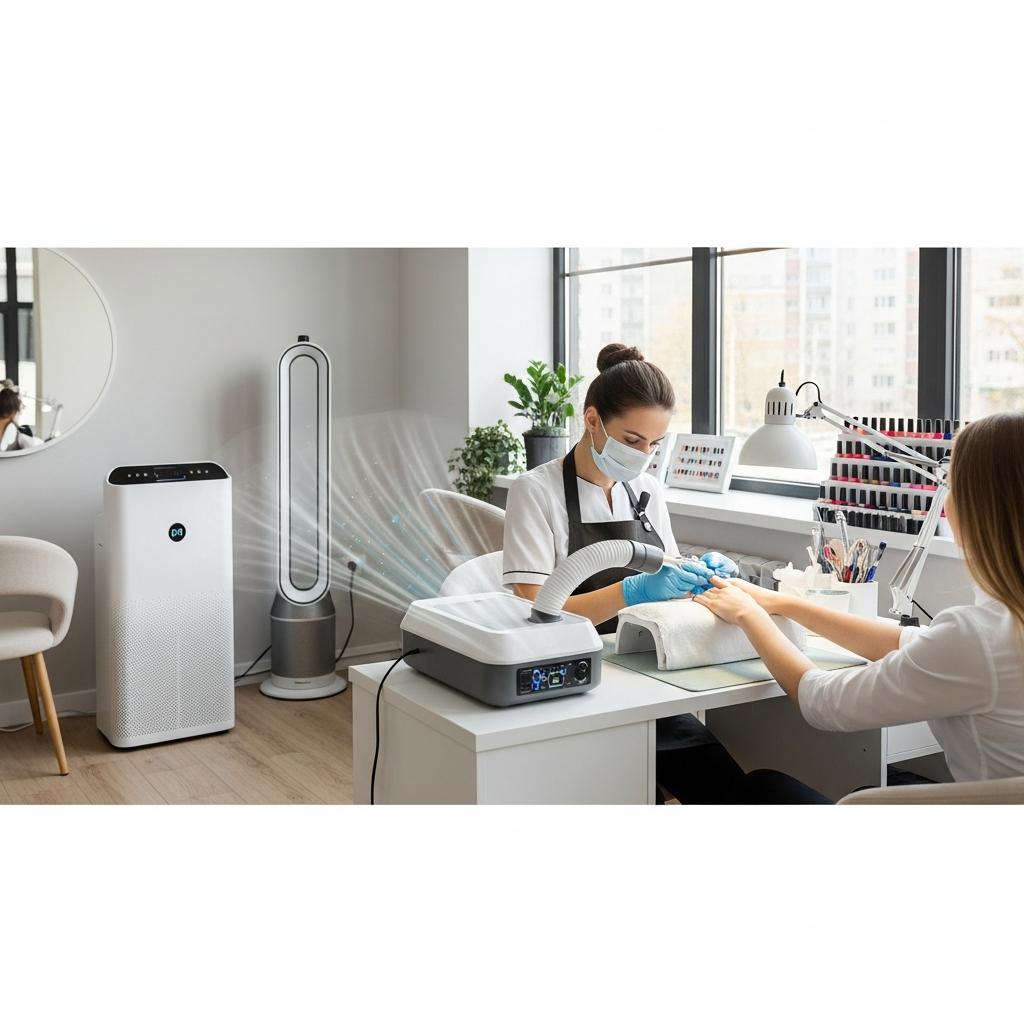
Source capture systems are designed to pull contaminants away from the breathing zone.
These units feature flexible hoses positioned directly at the nail technician’s workstation.
This prevents dust and VOCs from circulating throughout the salon environment.
General room air purifiers are supplemental tools for larger salon spaces.
They help maintain overall air freshness but cannot replace localized extraction.
Effective nail salon ventilation requires a combination of both for maximum safety.
The Importance of Activated Carbon Filtration
Nail salon odors are primarily caused by Volatile Organic Compounds (VOCs).
Standard HEPA filters cannot trap these gaseous chemical molecules effectively.
Ensure your system includes a deep-bed activated carbon filter for monomer odor control.
Check the weight of the carbon used in the purification unit.
Professional-grade systems often contain several pounds of carbon to ensure longevity.
This reduces the frequency of filter replacements and maintains a pleasant salon atmosphere.
Managing Nail Dust and Particulate Matter
Electric filing generates microscopic dust that stays suspended in the air for hours.
High-efficiency particulate air (HEPA) filters are mandatory for capturing these particles.
A HEPA filter ensures that 99.97% of nail debris is trapped within the machine.
Review the Clean Air Delivery Rate (CADR) specifically for dust and smoke.
Higher CADR ratings indicate faster air cleaning cycles during busy salon hours.
This keeps workstations clean and prevents dust from settling on wet gel or polish.
Operational Costs and Maintenance Workflows
- Filter Lifespan: Evaluate how often pre-filters and carbon filters need replacement.
- Noise Levels: Choose units that operate quietly to maintain a relaxing client experience.
- Energy Efficiency: Look for variable speed motors to control power usage during off-peak hours.
- Portability: Consider wheeled units for salons with flexible table layouts.
Compliance and Professional Standards
Many state boards now require specific ventilation rates for nail salon licensure.
Investing in high-quality air systems ensures your facility meets professional safety standards.
This protects your staff from respiratory issues and enhances your salon’s reputation.
Consult with HVAC professionals to ensure your internal system handles exhaust properly.
Balanced air pressure prevents chemical odors from leaking into neighboring businesses.
A clean-air environment is a premium selling point for high-end nail services.
