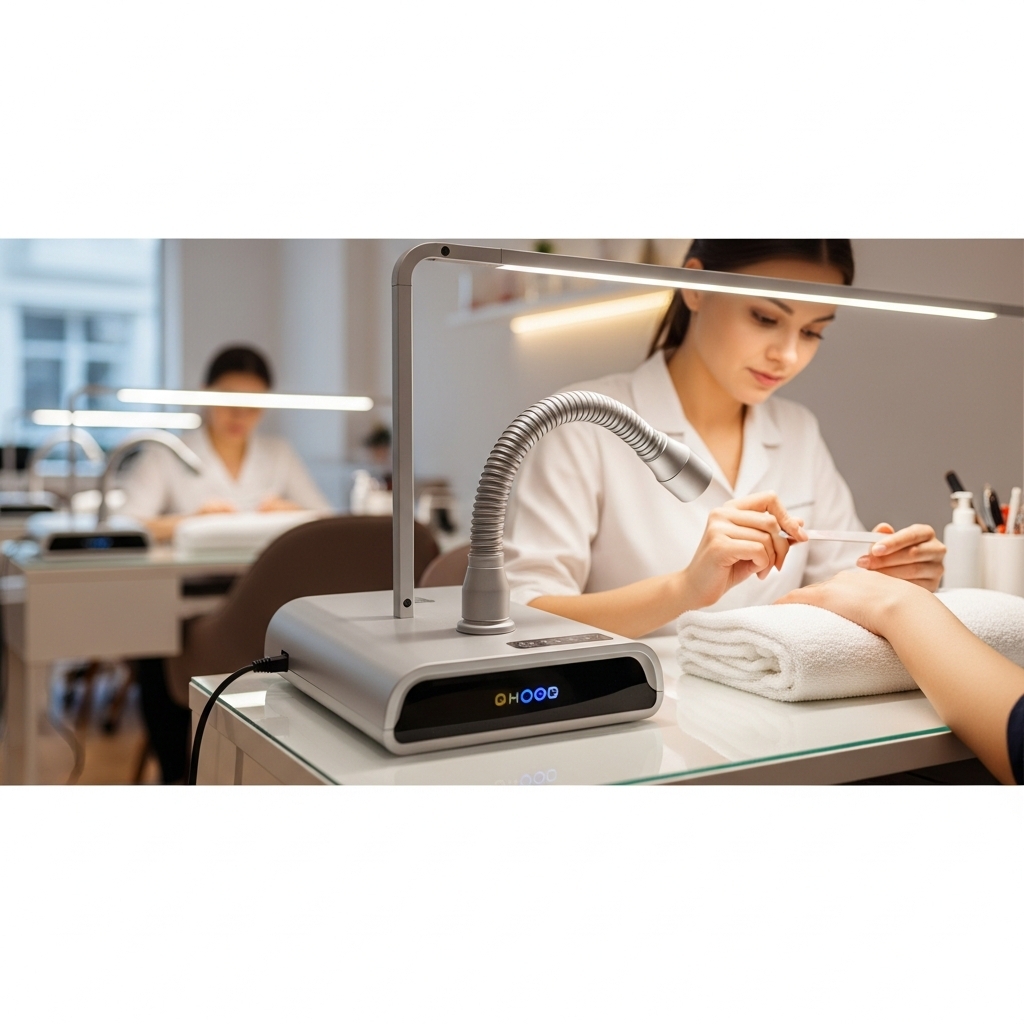
Evaluating Professional Air Purification Systems for Nail Salons
Investing in a high-quality air purification system is a critical decision for nail salon owners.
Poor air quality from acrylic monomer vapors and fine nail dust affects staff health and client comfort.
This guide evaluates the most effective systems designed specifically for the professional nail industry.
Source Capture Systems vs. Ambient Air Filtration
Source capture systems are the gold standard for nail salon safety and odor management.
These units use adjustable hoods or ventilated nail tables to extract vapors directly at the manicurist’s station.
They prevent EMA (Ethyl Methacrylate) fumes and filing dust from entering the salon’s general breathing zone.
Ambient air filtration units clean the air throughout the entire salon space.
While these are excellent for general air circulation, they should supplement source capture, not replace it.
Relying only on room-wide cleaners allows chemicals to travel past the technician’s face before being filtered.
Key Features of Source Capture Units
- Activated Carbon Weight: Look for units with at least 5-10 lbs of carbon to effectively neutralize monomer odors.
- HEPA Filtration: Ensure the system uses HEPA-rated filters to trap 99.97% of microscopic nail dust particles.
- Adjustable Flex Hoses: The extraction arm must be maneuverable to sit close to the technician’s workspace.
Comparing Filtration Technologies for Nail Professionals
Not all filters are designed to handle the specific chemical load of a busy nail salon.
Standard HEPA filters alone will trap dust but will not remove the volatile organic compounds (VOCs) found in nail liquids.
You must ensure your chosen system includes a thick bed of activated carbon specifically treated for nail vapors.
Pre-filters are equally important for salon owners looking to protect their long-term investment.
These low-cost filters trap larger dust particles from electric filing before they clog expensive HEPA or carbon stages.
Check how easily your staff can access and replace these pre-filters during weekly maintenance routines.
Operational Costs and Maintenance for Salon Owners
When comparing systems, salon owners must evaluate the total cost of ownership beyond the initial purchase.
Calculate the annual cost of replacement filters based on your salon’s daily service volume.
A cheaper unit often requires more frequent filter changes, leading to higher long-term operational expenses.
Evaluation Checklist for Nail Salon Systems
- Noise levels measured in decibels (dB) during active nail services.
- Ease of filter replacement without specialized tools or professional service calls.
- Compliance with local mechanical codes and ventilation standards for nail salons.
- Footprint size to ensure the unit fits comfortably under or beside the nail station.
Choosing the right system ensures a professional, odor-free environment that attracts high-end clientele.
Prioritizing air quality demonstrates a commitment to technician safety and professional salon standards.
Investing in validated nail industry technology protects your brand and your team’s respiratory health.
