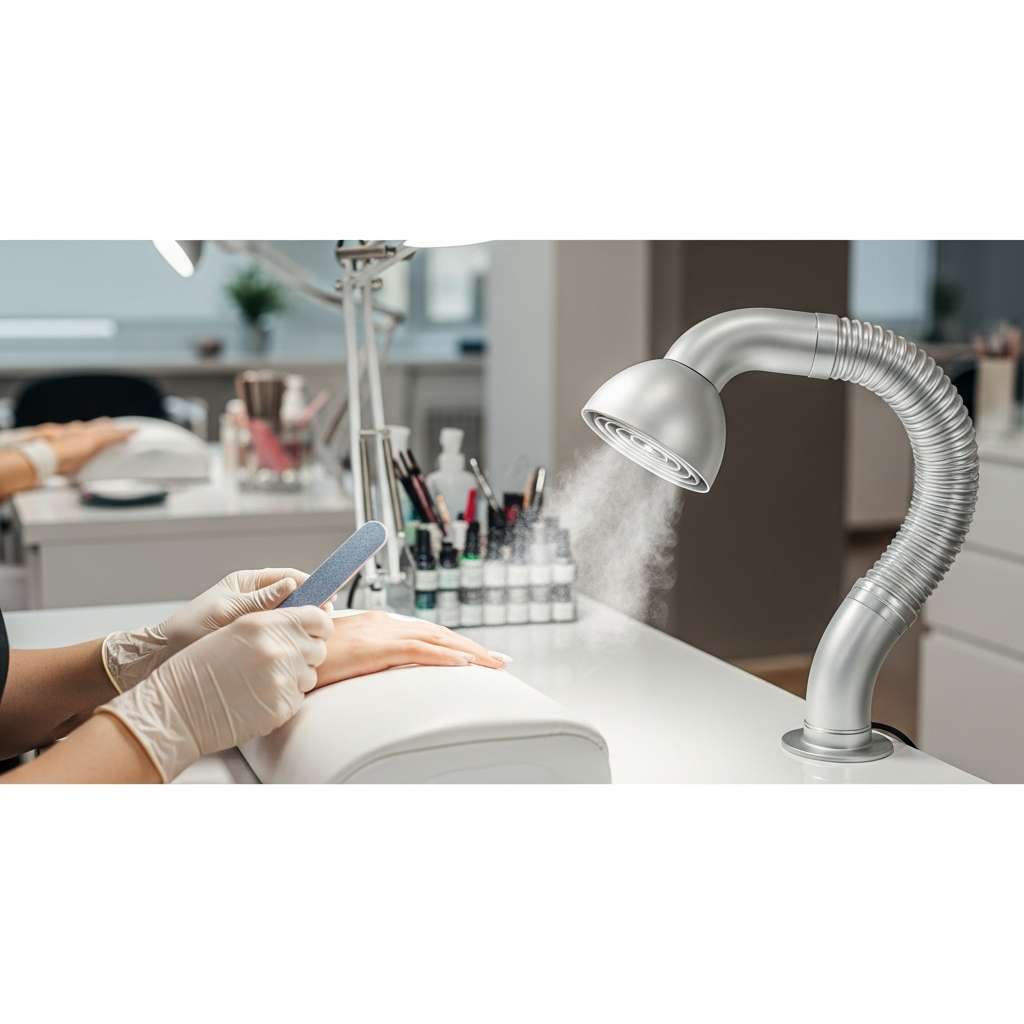
Evaluating Source Capture Exhaust Systems for Nail Salons
Managing air quality is a critical operational priority for every nail salon owner.
Professional nail services generate fine particulate dust and chemical vapors that require specialized extraction.
A source capture system is the most effective way to protect your staff and maintain a professional environment.
Unlike general ventilation, these systems capture contaminants at the point of origin.
This prevents monomer vapors and e-file dust from circulating throughout the nail salon.
Investing in the right system ensures compliance with modern building codes and safety standards.
The Importance of Local Exhaust Ventilation in Nail Studios
Nail technicians are exposed to various chemicals, including ethyl methacrylate (EMA) and cyanoacrylates.
Standard HVAC systems are designed for temperature control, not for removing chemical fumes.
Source capture systems use high-suction motors to pull these vapors into a filtration unit immediately.
Effective dust management is equally important during professional nail enhancements.
Fine dust from acrylic and gel filing can linger in the air for hours if not properly extracted.
A dedicated nail exhaust system captures these particles before they reach the technician’s breathing zone.
Key Features to Evaluate in Nail Source Capture Systems
When comparing systems, salon owners must look at the specific filtration stages provided.
A professional-grade unit should include a pre-filter, a HEPA filter, and a deep-bed activated carbon filter.
The carbon filter is essential for neutralizing the heavy odors associated with liquid and powder systems.
Check the Cubic Feet per Minute (CFM) rating of the extraction arm or desk-mounted vent.
The airflow must be strong enough to pull vapors away but quiet enough for client communication.
High-quality systems balance powerful suction with low decibel levels for a better salon experience.
Advanced Filtration for Monomer and Adhesive Vapors
Not all carbon filters are created equal for the nail industry.
Ensure the system uses a high volume of activated carbon specifically treated for nail chemical fumes.
This prevents the “sweet” chemical smell from saturating the furniture and walls of your nail salon.
HEPA Technology for E-file Dust Control
HEPA filters are the industry standard for capturing 99.97% of microscopic nail dust particles.
Using a system with a replaceable HEPA filter extends the life of the internal motor.
It also ensures that your nail salon remains clean, reducing the time spent on daily surface dusting.
Compliance with IMC 502.20 and Nail Salon Regulations
Many jurisdictions now require nail salons to meet the International Mechanical Code (IMC) Section 502.20.
This code mandates that each nail station has a source capture system capable of exhausting air outdoors.
Verify if the system you are evaluating is designed for outdoor venting or high-efficiency recirculation.
Compliance protects your business from potential fines during health or building inspections.
It also demonstrates a commitment to professional standards that modern nail clients value.
Properly ventilated salons often see higher staff retention and better client reviews regarding air quality.
Implementation Checklist for Nail Salon Owners
- Verify the CFM rating at the point of extraction for each nail station.
- Ensure the carbon filter is specifically rated for nail chemical vapors.
- Confirm the system meets local mechanical and building code requirements.
- Evaluate the cost and frequency of replacement filters for long-term budgeting.
- Test the noise level during a live nail service to ensure acoustic comfort.
Choosing the right source capture system is a long-term investment in your nail salon’s infrastructure.
Prioritize units that are easy to maintain and have a proven track record in the nail industry.
A cleaner, odor-free salon is the hallmark of a high-end professional nail establishment.
