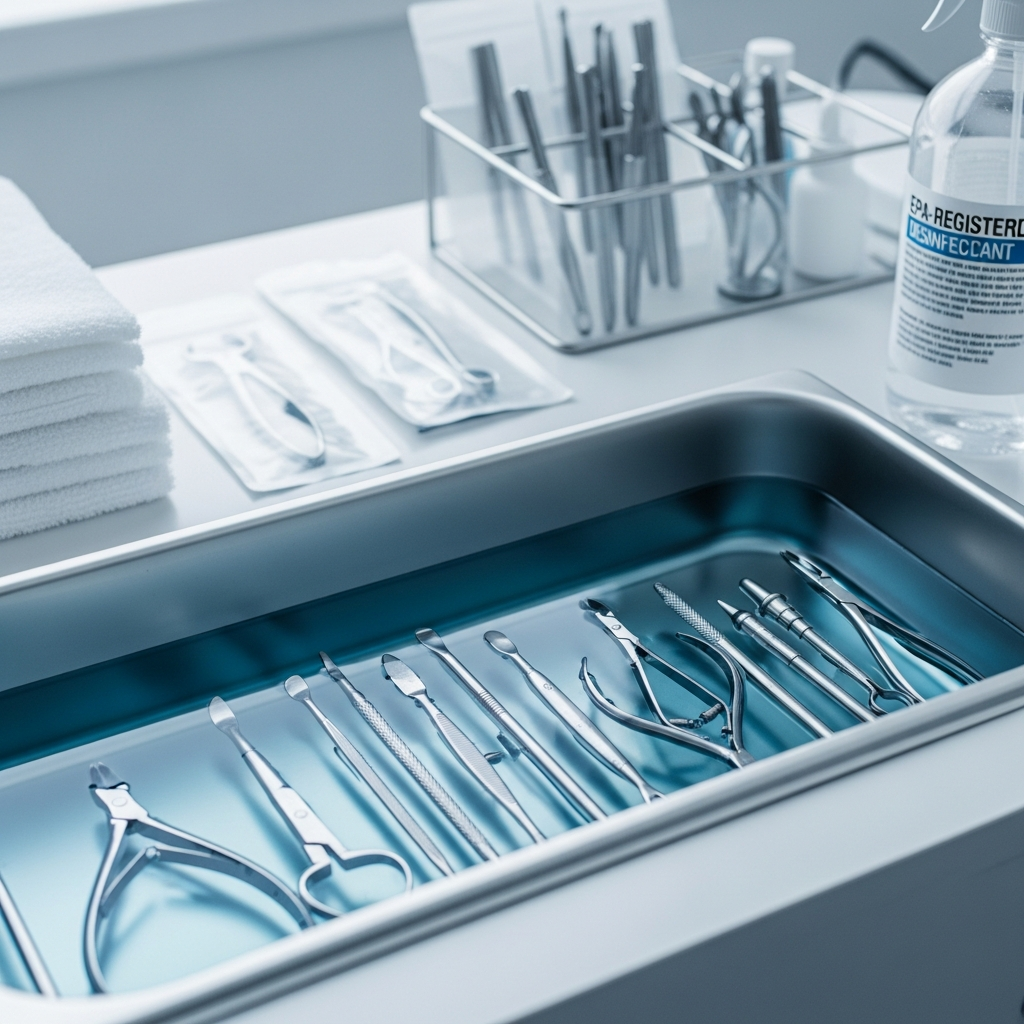
Implementing Professional Nail Tool Disinfection Systems
Establishing a robust disinfection system is a non-negotiable responsibility for every nail salon owner.
Professional standards require more than just a cursory rinse between client appointments.
Effective systems protect your business reputation and ensure the long-term health of your nail technicians and clients.
Choosing EPA-Registered Disinfectants for Nail Implements
The foundation of any nail salon safety protocol is the use of a hospital-grade, EPA-registered disinfectant.
These chemicals are specifically formulated to eliminate pathogens often found in nail environments, including fungi and bacteria.
Owners must ensure these solutions are used according to the exact manufacturer instructions for dilution and contact time.
Selecting the right disinfectant involves checking for compatibility with professional nail tools.
Ensure your solution will not corrode high-quality stainless steel nippers or specialized carbide e-file bits.
Using specialized nail industry disinfectants helps preserve the integrity and sharpness of your expensive professional implements.
Optimal Immersion Practices for Nail Tools
Complete immersion is necessary to achieve total disinfection for non-porous nail tools.
Tools like metal cuticle pushers and heavy-duty nippers must be fully submerged in the disinfectant solution.
Most professional-grade solutions require a full ten minutes of contact time to be effective against resilient pathogens.
- Step 1: Scrub tools with soap and water to remove visible debris or nail dust.
- Step 2: Rinse and dry the implements thoroughly before chemical immersion.
- Step 3: Submerge tools completely in the disinfection tray for the required duration.
- Step 4: Remove, rinse, and dry tools before storing them in a clean environment.
Managing Porous vs. Non-Porous Nail Supplies
A critical aspect of nail salon management is the strict separation of porous and non-porous items.
Non-porous tools, such as glass files and metal implements, are designed for multi-client use after proper disinfection.
These items are durable enough to withstand repeated chemical exposure without losing structural integrity.
Porous items, including wooden orange sticks, standard grit files, and buffing blocks, cannot be disinfected.
These materials trap biological material and nail debris within their fibers, making them a high risk for cross-contamination.
Professional standards dictate that these items must be discarded immediately after a single service.
Safe Storage and Organization of Clean Nail Kits
Once tools have undergone the disinfection process, they must be stored in a way that prevents re-contamination.
Use clean, closed containers or specialized drawers that are labeled specifically for sanitized implements.
Storing clean tools in a dedicated area away from the nail station minimizes exposure to filing dust.
Maintain a clear workflow that prevents staff from confusing used tools with disinfected ones.
Many high-end salons utilize a color-coded system or dated pouches to track the status of tool kits.
This organization demonstrates a high level of professionalism to your clients and streamlines salon operations.
Advanced Sterilization with Autoclave Systems
For nail salons prioritizing the highest level of infection control, an autoclave system is a superior investment.
Autoclaves use high-pressure steam to achieve complete sterilization, killing all microbial life including spores.
This level of care far exceeds the basic requirements of most state boards and sets your salon apart.
While the initial investment in an autoclave is higher, it provides definitive proof of safety to your clientele.
It also reduces the reliance on harsh liquid chemicals for every single metal tool in the salon.
Many premium nail studios now market their use of autoclaves as a primary competitive advantage.
Operational Standards and Staff Compliance
A disinfection system is only effective if every member of the nail staff follows the protocol consistently.
Maintain a detailed disinfection logbook to track when solutions are changed and when tools are processed.
This documentation is vital during state board inspections and for internal quality control management.
Regularly train your nail technicians on the risks of cross-contamination and the chemistry of the products they use.
Providing clear, written standard operating procedures ensures that even during busy shifts, safety is never compromised.
A well-trained staff is the most effective tool in maintaining a clean and safe nail salon environment.
