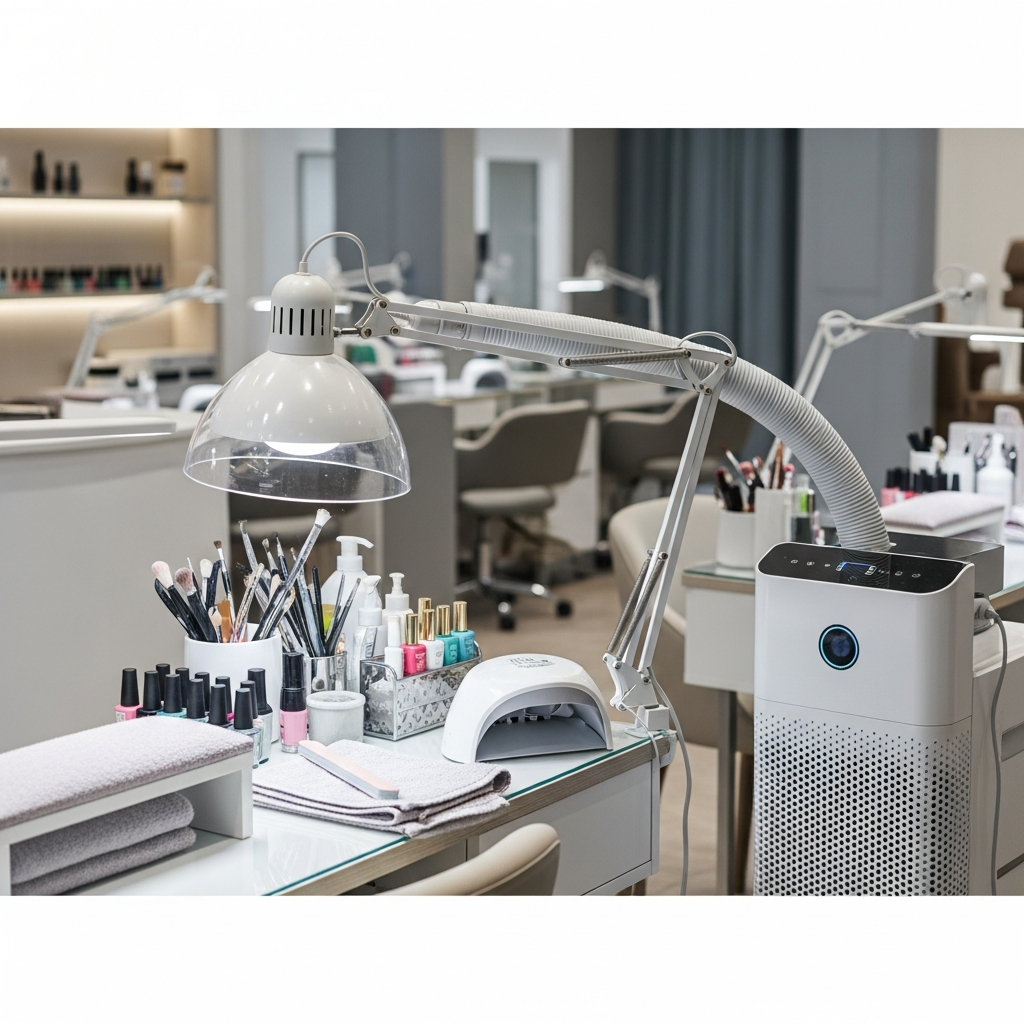
Selecting the Best Air Purification Systems for Nail Salons
Managing air quality is a critical operational requirement for modern nail salon owners.
Effective ventilation protects the health of nail technicians and ensures a professional environment for clients.
Choosing the right system requires understanding the difference between dust collection and vapor mitigation.
Evaluating Source Capture Systems for Nail Technicians
Source capture systems are the gold standard for professional nail stations.
These units pull acrylic dust and chemical vapors directly from the breathing zone during service.
By capturing particulates at the point of origin, they prevent cross-contamination across the salon floor.
When comparing models, salon owners should prioritize units with adjustable flexible arms.
These allow for precise positioning during intricate nail art or heavy e-file removal.
High-suction motors are essential for capturing fine dust before it settles on salon surfaces.
The Role of HEPA and Activated Carbon Filtration
Nail salon air purification must address two distinct types of pollutants: particulates and gases.
HEPA filters are designed to trap microscopic dust generated during nail filing and shaping.
Look for medical-grade HEPA filters that capture 99.97% of particles as small as 0.3 microns.
Activated carbon filters are necessary for neutralizing volatile organic compounds (VOCs).
These chemicals are found in monomers, cyanoacrylate resins, and gel polish systems.
Ensure the system contains a high volume of activated carbon to effectively adsorb strong odors.
Comparing Maintenance Requirements and Filter Longevity
Operational costs are a key factor when investing in nail salon air systems.
Pre-filters should be easy to access and clean to protect the more expensive main filters.
Frequent filter changes are necessary in high-volume salons to maintain optimal airflow and suction.
- Daily Maintenance: Check intake vents for visible nail dust accumulation.
- Monthly Maintenance: Inspect pre-filters and replace them if airflow is restricted.
- Annual Requirements: Replace core HEPA and carbon filters to ensure chemical safety.
Commercial Grade vs. Residential Air Purifiers
Nail salon owners must avoid using residential air purifiers for professional operations.
Residential units lack the specialized carbon density required to manage professional-strength nail monomers.
Commercial-grade systems are engineered for continuous use and high-volume chemical exposure.
Investing in a dedicated nail industry system reduces long-term liability and improves staff retention.
Properly ventilated salons report fewer respiratory complaints and higher employee satisfaction.
Check for UL listing and compliance with local salon safety regulations before purchasing.
Noise Levels and Client Comfort Standards
While suction power is vital, noise levels impact the nail salon atmosphere.
High-quality systems feature insulated motors that operate quietly during full-day shifts.
Select a system that offers variable speed controls to balance power with acoustic comfort.
Positioning units correctly ensures that air is exhausted away from the client and technician.
A well-designed system integrates seamlessly into the nail desk workflow without obstructing movement.
Prioritizing air quality is a strategic investment in the salon’s professional reputation.
