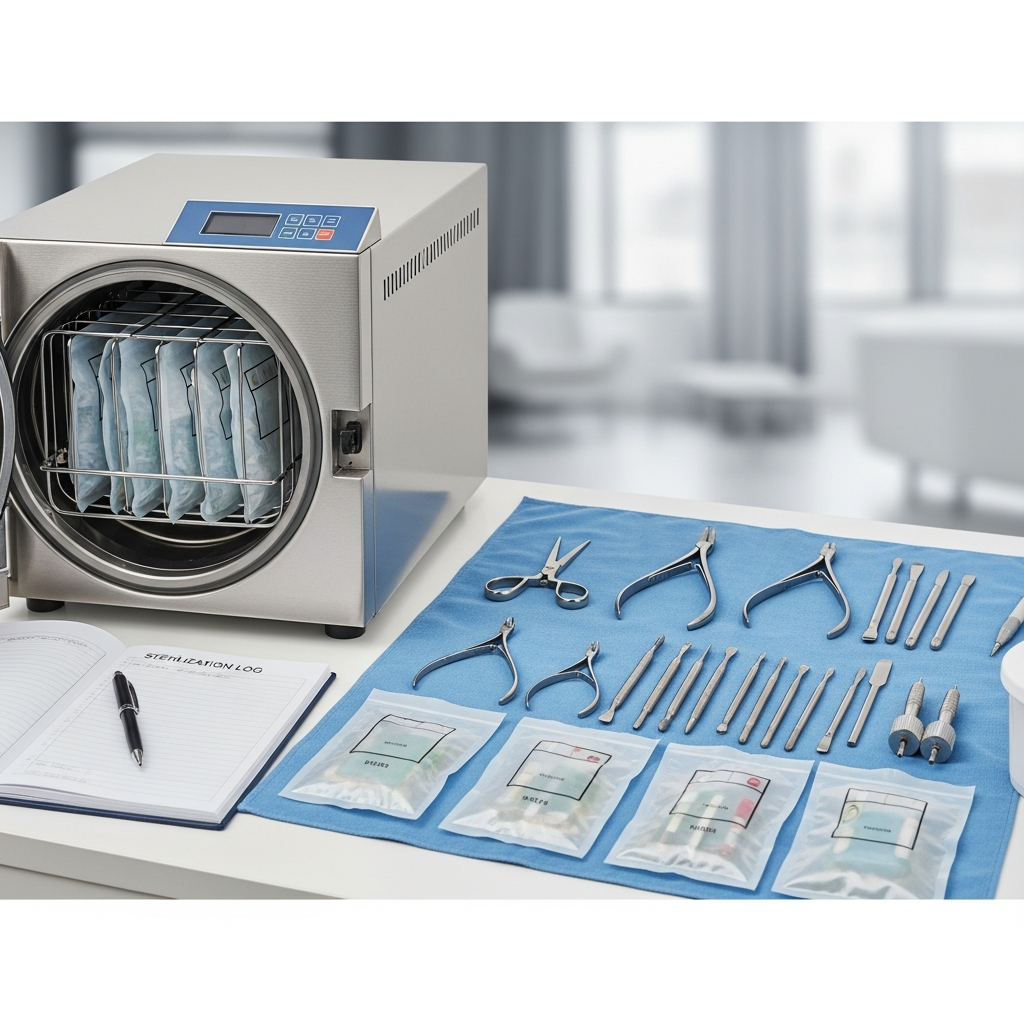
Sterilization Standards for Professional Nail Implements
In the professional nail industry, the distinction between sanitation and sterilization is critical for client safety.
Nail salon owners must implement rigorous protocols to eliminate the risk of cross-contamination.
Properly sterilized tools are the foundation of a reputable and compliant nail business.
Understanding the Levels of Decontamination in Nail Salons
Sanitation is the lowest level of decontamination, involving the removal of visible debris from nail tools.
While necessary, sanitation alone does not kill bacterial spores or resistant pathogens.
Nail salon managers must ensure all staff understand that washing a cuticle nipper is only the first step.
Disinfection involves using EPA-registered chemicals to destroy most organisms on non-porous surfaces.
However, for metal nail implements that can draw blood, sterilization is the industry gold standard.
Sterilization completely destroys all microbial life using high-pressure saturated steam.
The Autoclave Workflow for Professional Nail Technicians
Implementing an autoclave system is a significant investment that enhances nail salon safety.
Owners should establish a standardized workflow that every nail technician must follow after every service.
This process begins with manual cleaning to ensure no biological material remains on the tool.
Step 1: Ultrasonic Cleaning of Nail Tools
Before sterilization, metal nail pushers and nippers should be placed in an ultrasonic cleaner.
This device uses high-frequency sound waves to dislodge microscopic debris from the hinges of nail tools.
Only use enzymatic detergents specifically formulated for professional nail implements during this phase.
Step 2: Rinsing and Drying Protocols
Once the ultrasonic cycle is complete, tools must be thoroughly rinsed with distilled water.
Moisture can interfere with the sterilization process and cause corrosion on expensive nail nippers.
Nail technicians must dry each tool completely using a lint-free professional towel before pouching.
Step 3: Pouching and Loading the Autoclave
Place dried nail tools into sterilization pouches equipped with internal and external chemical indicators.
Ensure the pouches are not overcrowded to allow steam to circulate freely around each nail implement.
Seal the pouches tightly to maintain a sterile environment until the next nail service begins.
Compliance and Record Keeping for Nail Salon Owners
Maintaining a sterilization log is a mandatory practice for high-standard nail salons.
Owners must record the date, time, cycle temperature, and pressure for every sterilization batch.
This documentation provides essential proof of safety during state board inspections or liability reviews.
The Importance of Regular Spore Testing
Mechanical and chemical indicators only show that the autoclave reached specific conditions.
Nail salon owners must perform weekly spore testing to verify that the equipment is actually killing microorganisms.
Keep all third-party laboratory results on-site as part of your nail salon safety records.
Maintaining Professional Nail Equipment Longevity
Proper sterilization not only protects nail clients but also preserves the life of your tools.
High-quality stainless steel nail nippers and drill bits respond best to steam sterilization.
Avoid using low-grade metal tools that may rust or dull during the high-heat sterilization process.
Regularly inspect the gaskets and filters of your nail salon autoclave to ensure peak performance.
A well-maintained sterilization system is a critical asset for any professional nail environment.
Prioritizing these standards elevates the professional status of your nail salon in a competitive market.
