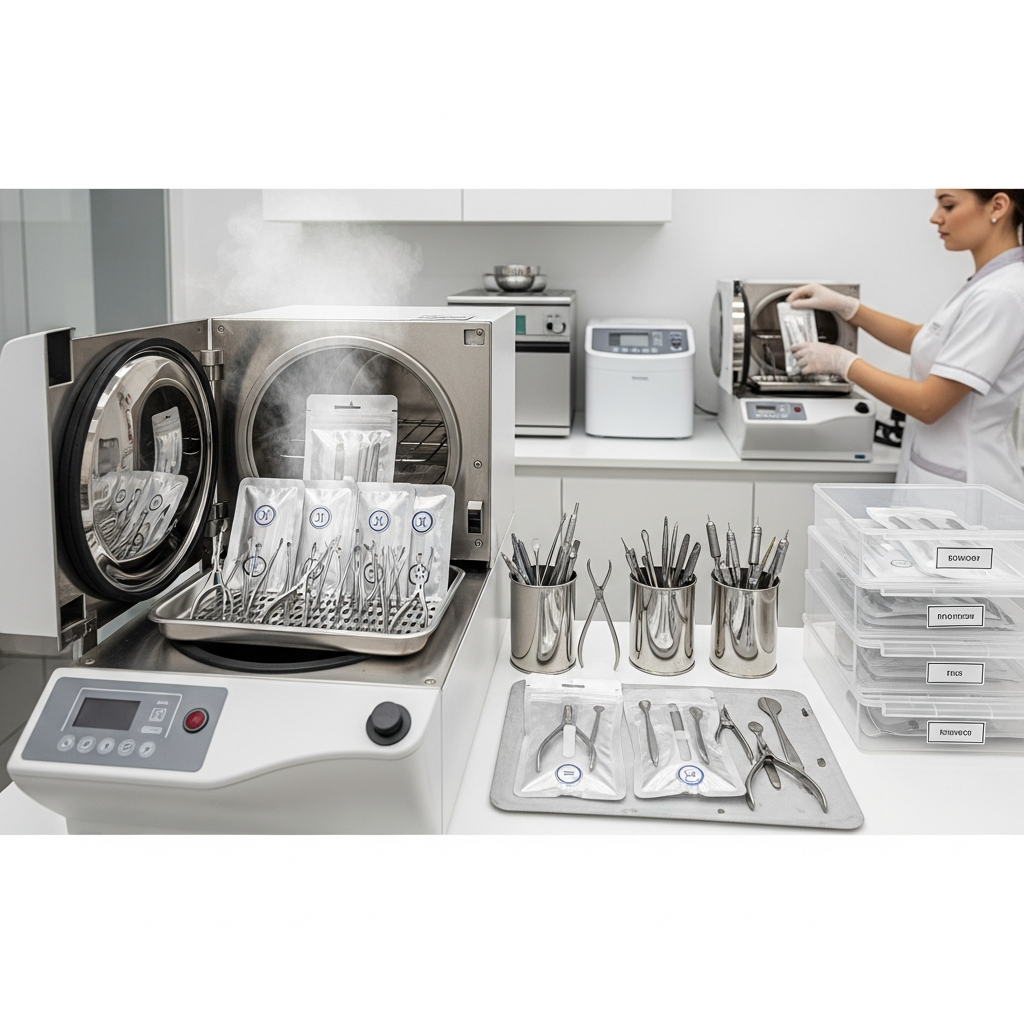
Advanced Sterilization Systems for Professional Nail Salons
Establishing a rigorous sterilization system is the most critical operational standard for any nail salon owner.
Professional nail services involve repetitive contact with skin and nails, making infection control a primary responsibility.
Implementing medical-grade protocols protects your technicians, your clients, and your business reputation.
Implementing Medical-Grade Sterilization Protocols
Sterilization is the highest level of decontamination, essential for all metal nail implements.
Unlike simple cleaning, sterilization destroys all microbial life, including fungal spores and viruses.
Nail salon owners should invest in FDA-cleared autoclaves to meet the highest industry safety standards.
The Role of High-Pressure Steam Autoclaves
Autoclaves use pressurized steam to reach temperatures that kill resistant pathogens on metal tools.
Nail nippers, pushers, and drill bits must undergo this process after every professional service.
Using sterilization pouches with internal indicators allows staff to verify that the cycle was successful.
Dry Heat Sterilizers in the Nail Industry
Dry heat is an alternative for tools that might be sensitive to moisture-induced corrosion.
This system requires higher temperatures and longer cycle times compared to steam autoclaves.
Nail salon managers must ensure that tools are arranged correctly to allow for uniform heat distribution.
Multi-Step Decontamination Workflow for Nail Technicians
A systematic workflow ensures that no step in the sanitation process is overlooked by staff.
Every nail implement must follow a strict path from the service station to the sterilization area.
This workflow prevents cross-contamination and ensures the longevity of your professional nail tools.
- Pre-Cleaning: Scrubbing tools with soap and water to remove organic debris and nail dust.
- Disinfection: Submerging non-porous items in an EPA-registered, hospital-grade liquid disinfectant.
- Sterilization: Processing cleaned metal tools through an autoclave or dry heat system.
- Storage: Placing sterilized implements in airtight, labeled containers until the next service.
Surface Sanitation Standards for Nail Stations
Manicure tables and pedicure thrones are high-touch areas that require constant attention between clients.
Porous surfaces should be avoided in salon design to prevent the absorption of nail chemicals and debris.
Use hospital-grade disinfectant wipes or sprays that are specifically rated for salon environments.
Managing Chemical Contact Time
Disinfectants are not instantaneous and require a specific “wet time” to be effective against pathogens.
Most professional nail disinfectants require the surface to remain visibly wet for ten full minutes.
Salon owners must train staff to respect these timing requirements to ensure a truly sanitary station.
Pedicure Basin Decontamination Procedures
Pedicure bowls, especially those with pipes, are prone to biofilm buildup and bacterial growth.
Systems must be flushed with specialized cleaners designed to dissolve skin cells and oil residue.
Maintain a detailed log of every cleaning cycle to remain compliant with state board regulations.
Storage and Maintenance of Professional Nail Tools
The sanitation process is incomplete if tools are not stored in a manner that maintains their cleanliness.
Clean and disinfected tools must never be stored in airtight plastic bags unless they have been sterilized.
Ensure that the “clean” storage area is physically separated from the “soiled” tool collection zone.
Regular maintenance of your sterilization equipment is mandatory for consistent operational safety.
Perform weekly spore tests on autoclaves to confirm the system is effectively killing all microorganisms.
Documenting these tests provides a legal safety net and reinforces your commitment to professional nail standards.
