Effective Chemical Odor Control Solutions for Nail Salons
Maintaining a scent-neutral environment is essential for the professional reputation of any nail salon. Chemical odors from acrylic monomers and solvents can impact client comfort and staff health.
Nail salon owners must implement specialized systems to manage Volatile Organic Compounds (VOCs). These solutions ensure a safe, breathable atmosphere that meets professional industry standards.
Understanding Nail Chemical Vapors and VOCs
The primary source of odor in nail salons is Ethyl Methacrylate (EMA), used in liquid monomer systems. While EMA is a standard industry chemical, its high volatility leads to rapid evaporation and strong odors.
Beyond monomers, nail professionals also work with cyanoacrylates, acetone, and various gel solvents. These chemicals release vapors that require active management to prevent accumulation in the workspace.
Source Capture Ventilation for Nail Technicians
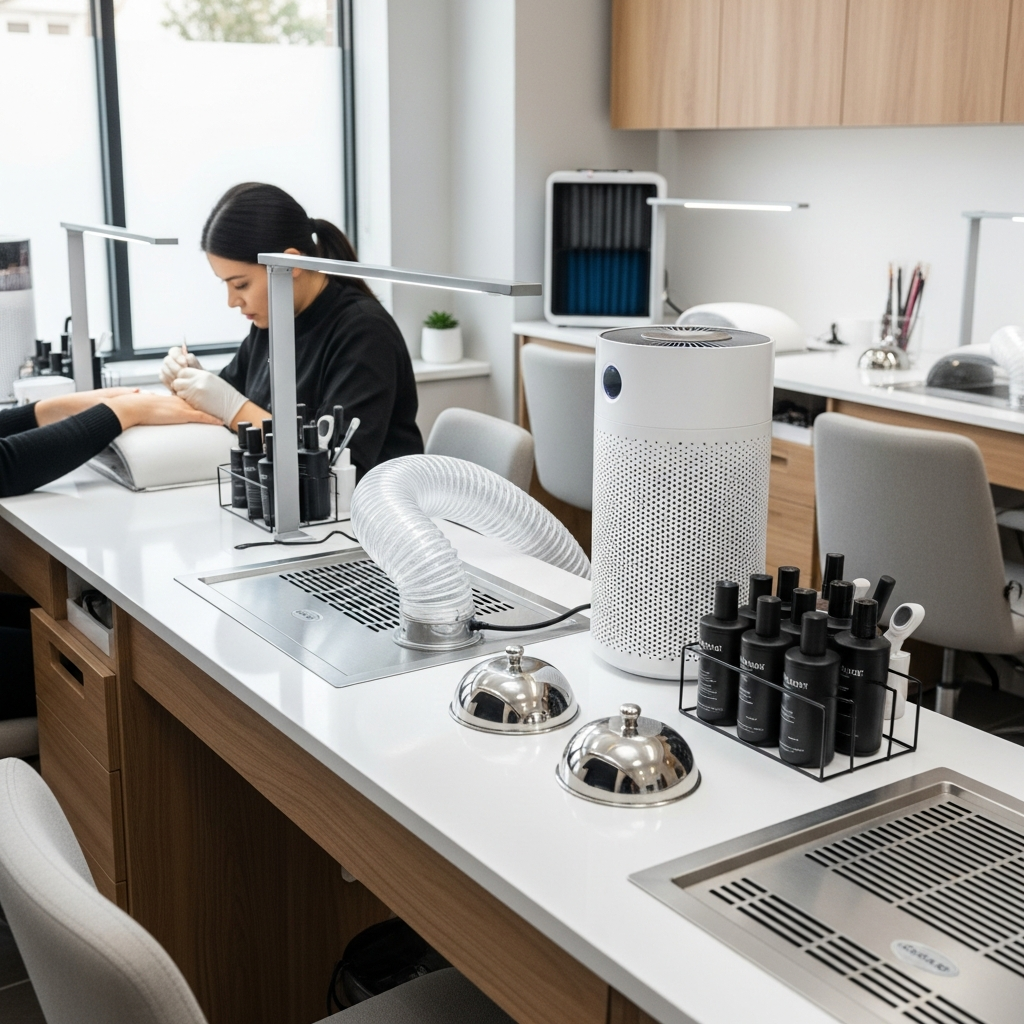
General HVAC systems are typically insufficient for localized nail chemical fumes. Source capture systems are the most effective solution for extracting vapors directly at the nail table.
These systems pull contaminated air through a flexible duct or vented table before it reaches the breathing zone. This prevents the spread of nail chemical odors throughout the entire salon floor.
Professional Carbon Filtration Systems
Activated carbon filtration is the gold standard for neutralizing nail-related chemical odors. These filters contain porous charcoal that chemically bonds with vapor molecules to remove them from the air.
Nail salon owners should invest in high-capacity air purifiers specifically designed for the nail industry. Look for units with heavy carbon loads rather than standard HEPA filters meant for dust only.
Best Practices for Chemical Handling and Storage
Operational habits significantly influence the odor levels within a nail salon. Using small-opening dappen dishes reduces the surface area of the liquid, slowing down the rate of chemical evaporation.
- Always use lidded dappen dishes during acrylic nail services.
- Dispose of monomer-soaked wipes in a metal, foot-pedal trash can with a tight seal.
- Ensure all nail product containers are tightly closed when not in use.
Optimizing Nail Salon Air Exchange Rates
Proper air exchange is a critical component of professional nail salon safety. Owners must ensure their facility meets or exceeds the ventilation requirements set by local building codes for nail services.
Increasing the intake of fresh outdoor air helps dilute any residual nail chemical concentrations. This creates a more inviting environment for clients and a safer workplace for nail technicians.
Routine Maintenance of Odor Control Equipment
Odor control solutions are only effective if maintained regularly by salon staff. Clogged carbon filters lose their ability to adsorb nail monomers and will eventually return odors to the room.
Establish a strict schedule for filter replacements and system inspections. Consistent maintenance protects your investment and ensures the long-term air quality of your nail salon facility.
