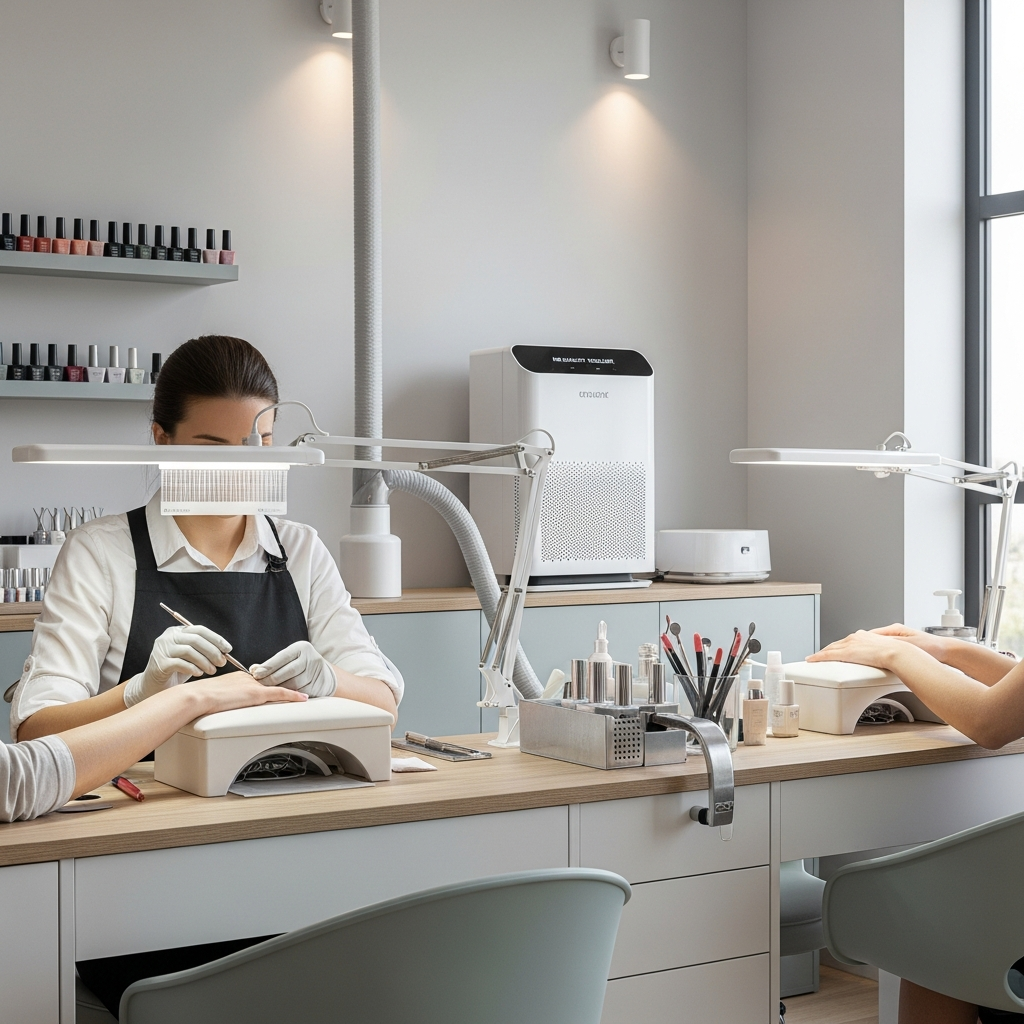
Essential Air Purification Systems for Professional Nail Salons
For nail salon owners, maintaining air quality is a critical operational standard. Professional nail services generate fine dust from e-filing and volatile organic compounds (VOCs) from acrylic monomers and gels.
Implementing a dedicated air purification strategy is not just about comfort; it is about meeting safety standards and protecting the long-term health of your nail technicians and clients.
Understanding the Impact of Chemical Fumes and Nail Dust
Daily exposure to cyanoacrylates, methacrylate monomers, and filing debris can lead to respiratory issues. These particulates are often too fine for standard building HVAC systems to filter effectively.
Professional nail salon environments require specialized equipment that targets pollutants at the point of origin. This prevents chemicals from lingering in the breathing zone of the technician and the client.
The Role of Source Capture Ventilation Systems
A source capture system is the most effective tool for localized air purification. These units feature flexible ducts positioned directly next to the nail table to vacuum dust and fumes immediately.
By capturing debris at the source, owners can significantly reduce the accumulation of nail dust on salon surfaces. This keeps the workstation sanitary and reduces the time needed for daily cleaning cycles.
HEPA Filtration for E-File Dust Control
High-Efficiency Particulate Air (HEPA) filters are mandatory for capturing microscopic dust generated during gel removal and acrylic shaping. These filters trap 99.97% of particles as small as 0.3 microns.
Without HEPA-grade filtration, fine nail dust remains suspended in the air, where it can be inhaled or settle into the ventilation ductwork of the salon building.
Activated Carbon for Monomer Odor Absorption
Chemical odors, specifically from liquid monomer, require activated carbon filtration. Carbon filters use a process called adsorption to chemically bond with VOCs and neutralize strong salon smells.
For salon owners, this creates a more professional atmosphere. A salon that does not smell like heavy chemicals attracts a higher tier of clientele and improves staff retention rates.
Operational Benefits of Enhanced Air Purification
Investing in high-quality air systems reduces the risk of occupational asthma and contact dermatitis among nail staff. This leads to fewer sick days and a more productive work environment.
Furthermore, clean air prevents the “cloudy” appearance of glass displays and polish racks caused by settling dust. This maintains the aesthetic integrity and professional image of your salon facility.
Implementation Checklist for Nail Salon Owners
- Assess Air Exchange Rates: Ensure your salon meets local mechanical codes for fresh air intake and exhaust.
- Install Source Capture Units: Place one unit at every active nail station for maximum protection.
- Monitor Filter Life: Establish a strict maintenance schedule to replace HEPA and carbon filters every 3 to 6 months.
- Verify CADR Ratings: Choose purifiers with a high Clean Air Delivery Rate (CADR) suitable for the square footage of your salon.
Prioritizing air purification systems demonstrates a commitment to professional excellence. It positions your nail salon as a leader in safety, sanitation, and modern industry standards.
