Evaluating Air Purification Systems for Professional Nail Salons
Investing in high-quality air purification is a critical decision for nail salon owners. Proper ventilation ensures a safer environment for technicians and a better experience for clients.
Professional nail services generate two distinct types of pollutants: fine particulate dust from e-filing and chemical vapors from monomers and cyanoacrylates.
Understanding the difference between source capture systems and ambient air filtration is essential for maintaining professional salon standards and regulatory compliance.
Source Capture Systems vs. Ambient Air Filtration
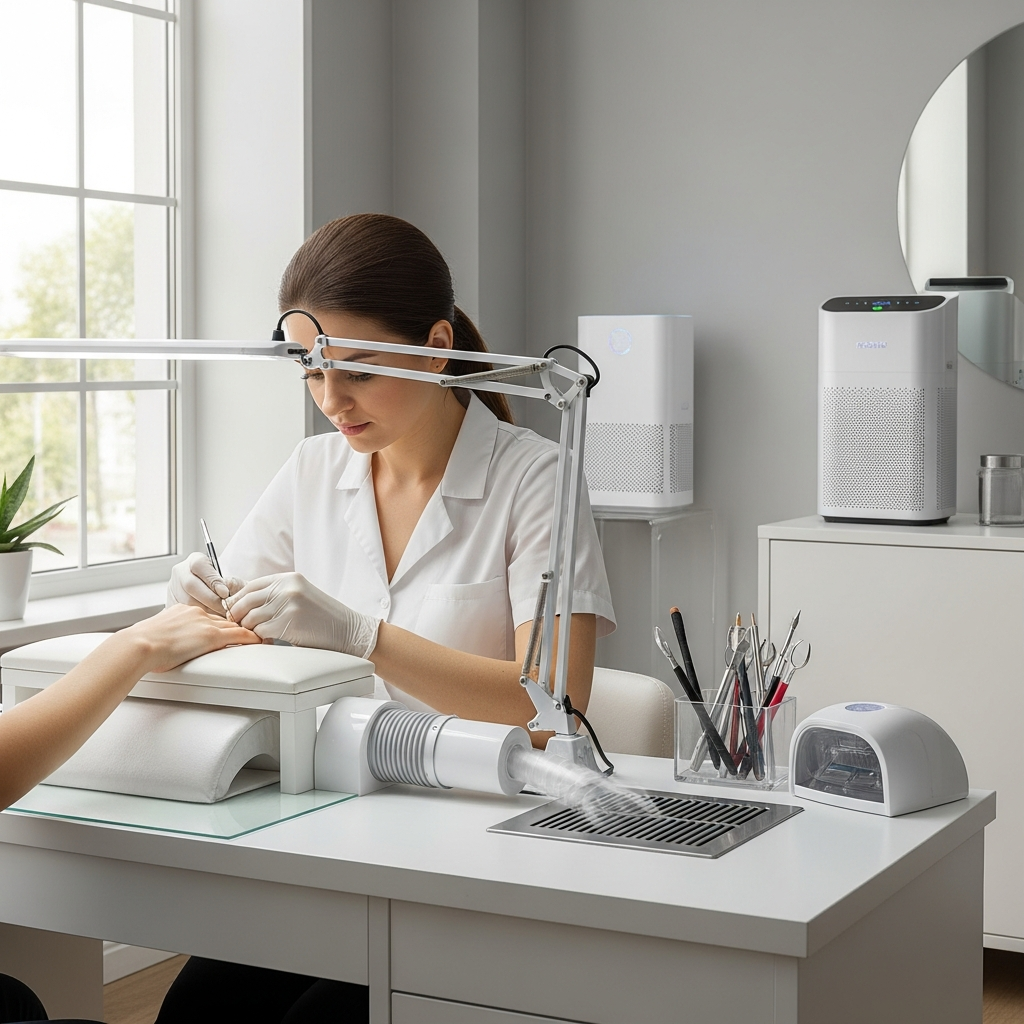
Source capture systems are designed to remove contaminants at the point of origin, typically directly at the nail technician’s manicure table.
These units use flexible ducts or ventilated desk inserts to pull nail dust and chemical fumes away from the breathing zones of both the tech and the client.
Ambient air filtration units focus on cleaning the air in the entire room, which is necessary but often insufficient as a standalone solution for nail services.
The Role of HEPA and Activated Carbon Filtration
Effective nail salon air systems must include a HEPA filter to capture microscopic nail dust generated during acrylic or gel removals.
Activated carbon filters are equally important as they absorb Volatile Organic Compounds (VOCs) and the heavy odors associated with liquid monomer (EMA).
When evaluating systems, salon owners should check the weight of the carbon canister; more carbon typically means better odor control and longer filter life.
Key Criteria for Evaluating Nail Salon Air Systems
- CFM Rating: Ensure the Cubic Feet per Minute (CFM) is sufficient for the square footage and number of nail stations.
- Filter Replacement Costs: Calculate the annual cost of maintaining HEPA and carbon filters based on high-volume salon usage.
- Noise Levels: Select units that operate quietly enough to allow for technician-client communication without disruption.
- Portability and Footprint: Consider if the unit fits under the nail desk or if it requires a dedicated floor space.
Regulatory Compliance and OSHA Standards
Local building codes and OSHA standards often mandate specific ventilation requirements for nail salons to prevent overexposure to chemical vapors.
Commercial-grade air purifiers help salon owners demonstrate a commitment to safety, potentially lowering insurance risks and improving staff retention.
A well-ventilated salon reduces the risk of respiratory issues and skin sensitivities caused by lingering nail dust and chemical residues.
Implementing Professional Air Standards in Your Salon
Start by assessing the specific needs of your service menu, such as high-volume acrylic application or heavy e-file usage.
Prioritize source capture at every manicure station to manage heavy dust, while using a secondary ambient system for general air turnover.
Maintaining these systems through a strict filter-change schedule ensures the long-term health of your nail technicians and the reputation of your business.
