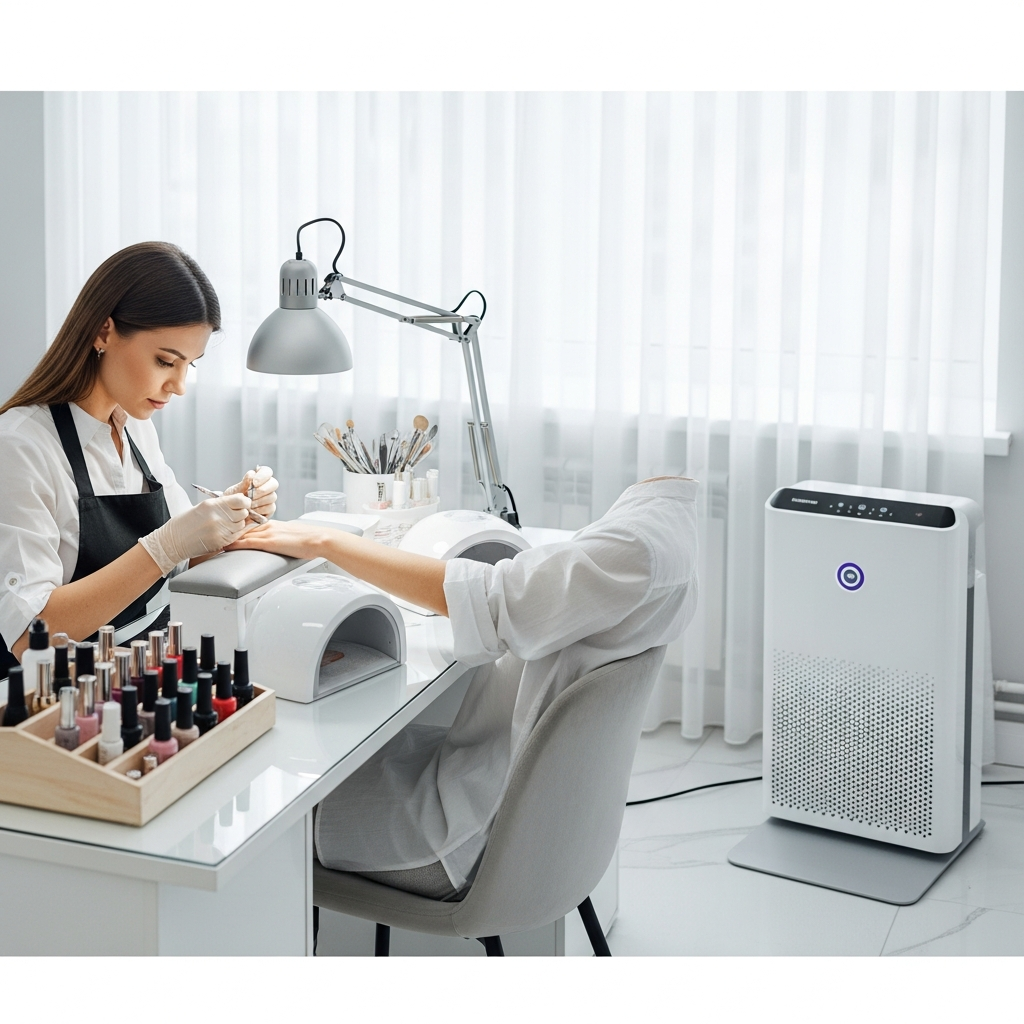
Evaluating Air Purification Systems for Your Nail Salon
As a nail salon owner, maintaining high air quality is a critical operational priority. Managing nail dust and chemical vapors ensures a safer workplace for your technicians and a comfortable environment for clients.
Professional air systems protect your business reputation and help meet local health department regulations. Choosing the right system requires comparing specific filtration technologies designed for nail industry chemicals.
Understanding Source Capture vs. Room-Wide Filtration
Source capture systems are designed to pull nail dust and monomer odors directly from the point of origin. These units are typically portable extractors with flexible arms or are built directly into the nail desk.
These systems are highly effective at capturing fine particles generated by e-files during acrylic or gel removals. This prevents heavy dust from settling on salon surfaces and entering the technician’s breathing zone.
The Importance of Activated Carbon for Nail Chemicals
Activated carbon filters are essential for neutralizing Volatile Organic Compounds (VOCs) found in nail products. These filters specifically absorb the heavy odors associated with liquid monomer and specialized adhesives.
A standard air purifier may only trap dust, leaving chemical odors to linger in the salon. For professional nail applications, a thick carbon bed is necessary to chemically bond with and remove monomer vapors.
HEPA Filtration for E-File Dust Management
High-Efficiency Particulate Air (HEPA) filters target microscopic nail dust and airborne allergens. In a nail salon setting, these filters capture the debris produced during filing and shaping procedures.
For maximum efficacy, a professional nail salon system should combine both medical-grade HEPA and activated carbon. This dual-action approach handles both the physical debris and the chemical gases simultaneously.
Key Factors for Nail Salon Owners to Evaluate
When comparing air purification systems, consider the Clean Air Delivery Rate (CADR) relative to your salon’s square footage. High-volume salons require more frequent air exchanges to remain odor-free.
Evaluate the maintenance schedule and the ease of filter replacements. In busy nail environments, filters may need changing more frequently than in general office settings due to heavy dust loads.
Operational Noise and Salon Atmosphere
Noise levels are a significant factor in the client experience and the ability of technicians to communicate. Look for systems that operate at lower decibel levels during standard nail service applications.
Adjustable fan speeds allow technicians to increase suction power during heavy e-file work. This provides operational flexibility between quiet gel polish changes and intensive acrylic full-set applications.
Comparison Checklist for Professional Nail Air Systems
- Filtration Type: Ensure the system includes a dedicated activated charcoal tray for monomer odor control.
- Placement: Determine if the salon layout favors table-mounted source capture or large floor-standing room units.
- Certifications: Verify that the equipment meets OSHA or local nail salon ventilation standards for safety.
- Filter Cost: Calculate the annual cost of replacement filters based on your salon’s service volume.
- Warranty: Check for commercial-grade warranties that cover continuous use in a professional nail salon environment.
Investing in a professional-grade air purification system is a long-term asset for your nail business. Proper filtration reduces health risks for staff and creates a premium, odor-free experience for your clientele.
By comparing the technical specifications of source capture and room-wide systems, you can implement a solution that fits your salon’s workflow. Prioritizing air quality is a hallmark of a modern, professional nail establishment.
