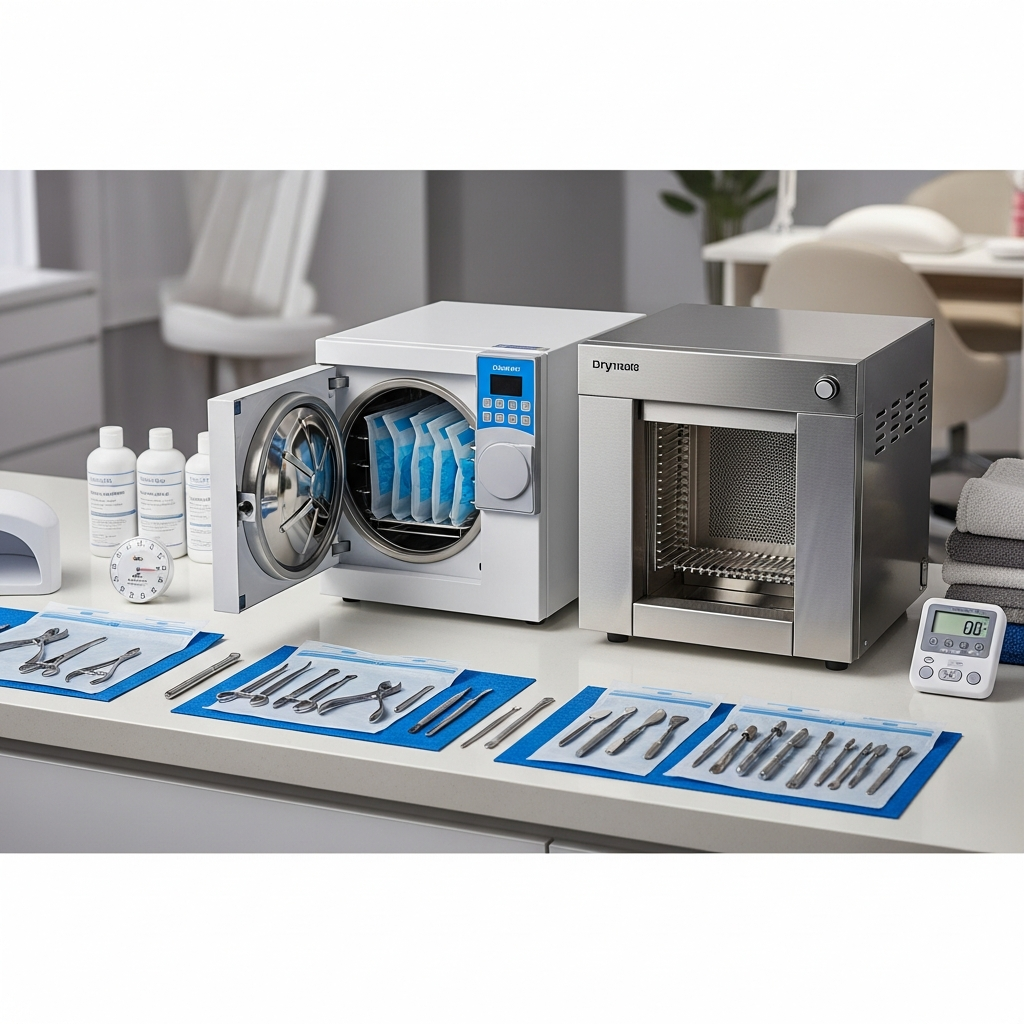
Evaluating Professional Nail Tool Sterilization Systems
Selecting the right sterilization system is a critical operational decision for any nail salon owner. It directly impacts client safety, tool longevity, and your salon’s professional reputation.
This guide compares medical-grade sterilization methods to help you evaluate which system fits your nail salon workflow, tool inventory, and compliance requirements.
Medical-Grade Autoclaves for Nail Implements
Steam autoclaves are the gold standard for sterilization in the nail industry. They use pressurized steam to eliminate all microbial life, including resistant fungal spores.
Most premium nail salons utilize autoclaves to process metal nippers, pushers, and drill bits. This ensures the highest level of safety for every manicure and pedicure service.
- Efficiency: High-speed cycles allow for faster tool turnover between nail appointments.
- Verification: Use of chemical integrators and spore testing provides physical proof of sterilization for inspectors.
- Investment: While the initial cost is higher, it significantly reduces the risk of cross-contamination incidents.
Dry Heat Sterilizers in the Nail Salon Environment
Dry heat sterilizers use high-temperature air to achieve sterilization. They are a popular alternative for salons that focus exclusively on stainless steel nail tools.
Because these systems do not use moisture, they are often gentler on the sharp edges of high-quality nail nippers, preventing premature dulling and rusting.
Operational Considerations for Dry Heat
Dry heat cycles typically take longer than steam autoclaves. This requires salon owners to maintain a larger inventory of nail implement sets to cover back-to-back services.
It is vital to ensure that only 100% metal tools are placed in these units. Any plastic handles or synthetic components will melt under the high heat requirements.
Chemical Disinfection vs. True Sterilization
Many salons rely on hospital-grade liquid disinfectants. While effective against many pathogens, immersion is often classified as high-level disinfection rather than sterilization.
For tools that are heat-sensitive, such as certain electric file bits or plastic foot files, chemical immersion remains a necessary part of the salon sanitation workflow.
Managing Chemical Workflows
Owners must ensure staff strictly adhere to manufacturer contact times. Removing tools too early from the solution compromises the safety of the next nail client.
Chemical solutions must be changed daily or when visible debris is present. Using expired or cloudy solution is a major violation of professional nail standards.
The Role of UV Cabinets in Nail Salons
There is a common misconception that UV cabinets are sterilizers. In a professional nail setting, UV light is primarily used for the sanitary storage of already sterilized tools.
UV rays cannot penetrate hinges or shadowed areas of nail nippers. Relying on UV alone for tool processing does not meet the sterilization standards required for invasive nail tools.
Choosing the Right System for Your Salon
When evaluating systems, consider your daily client volume. High-volume salons benefit most from the rapid turnaround times provided by a Class B steam autoclave.
Review your local State Board regulations. Some jurisdictions are moving toward mandatory autoclaving for any nail tool that can pierce the skin, such as cuticle nippers.
Maintenance and Long-Term Costs
Consider the cost of consumables, such as sterilization pouches, distilled water, and spore testing kits. These are essential for maintaining a compliant nail salon operation.
A robust sterilization protocol not only ensures safety but also serves as a powerful marketing tool for clients seeking the cleanest nail services in the market.
