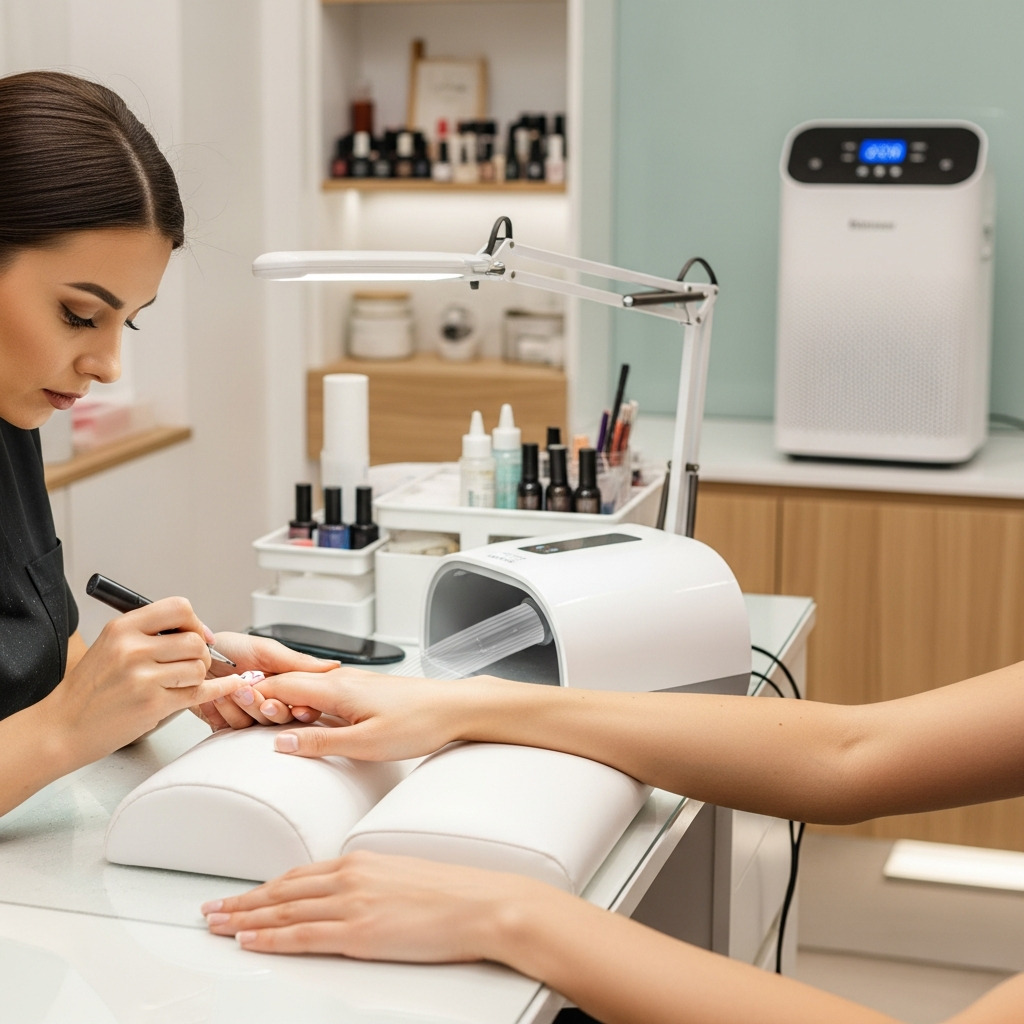
Implementing Professional Air Purification in Your Nail Salon
Managing Chemical Vapors and Nail Dust Hazards
Maintaining high air quality is a critical operational standard for every modern nail salon owner. Professional nail services often involve volatile organic compounds (VOCs) and fine particulate matter during daily tasks.
Acrylic monomers, cyanoacrylate resins, and gel polish solvents release vapors that can impact the long-term health of nail technicians and clients. Proper ventilation is not just a comfort issue; it is a professional safety requirement.
Fine dust created during e-file services or manual filing can linger in the air for hours. Without proper filtration, these particles are easily inhaled, leading to respiratory irritation for your nail staff.
Source Capture vs. Ambient Air Filtration
Local exhaust ventilation, often called source capture, is the most effective way to manage chemical odors at the workstation. These systems sit directly at the nail table to extract vapors before they enter the breathing zone.
Room-wide air purifiers serve as a secondary line of defense for the general salon environment. They help remove lingering dust particles that escape the primary source capture unit during heavy service hours.
Nail salon owners must distinguish between general air cleaners and industrial-grade systems designed for chemical extraction. A standard residential filter will not effectively neutralize the heavy vapors found in a nail salon.
The Role of Activated Carbon in Nail Salons
Standard HEPA filters are designed to trap dust but do not neutralize chemical odors. For nail salons, an air purification system must include a thick bed of activated carbon to absorb monomers and solvent vapors.
- System Capacity: Select systems with at least 5-10 lbs of high-grade activated carbon.
- Chemical Targeting: Ensure the carbon is treated to specifically target nail-specific chemicals like ethyl methacrylate.
- Replacement Schedule: Replace carbon filters according to your salon’s service volume to maintain maximum absorption.
Best Practices for Salon Air Quality Maintenance
Integrate air safety into your daily nail salon workflow by training staff on proper equipment positioning. Source capture hoods should be placed within six inches of the nail application area for maximum efficiency.
Regularly check and vacuum pre-filters to prevent dust buildup from reducing airflow in your ventilation units. A clean filtration system ensures that your nail salon remains a professional, odor-free environment for high-end clientele.
Encourage nail technicians to keep monomer dappen dishes covered whenever they are not actively dipping their brush. Small operational changes combined with powerful filtration significantly reduce the overall chemical load in the salon.
Operational Benefits for Nail Salon Owners
Investing in high-quality air purification reduces staff turnover by creating a significantly healthier workspace. It also improves the client experience by removing the intense chemical smell traditionally associated with nail services.
Compliance with local safety regulations and professional industry standards protects your business from potential liability. Clean air is a hallmark of a premium nail establishment and a commitment to technician well-being.
