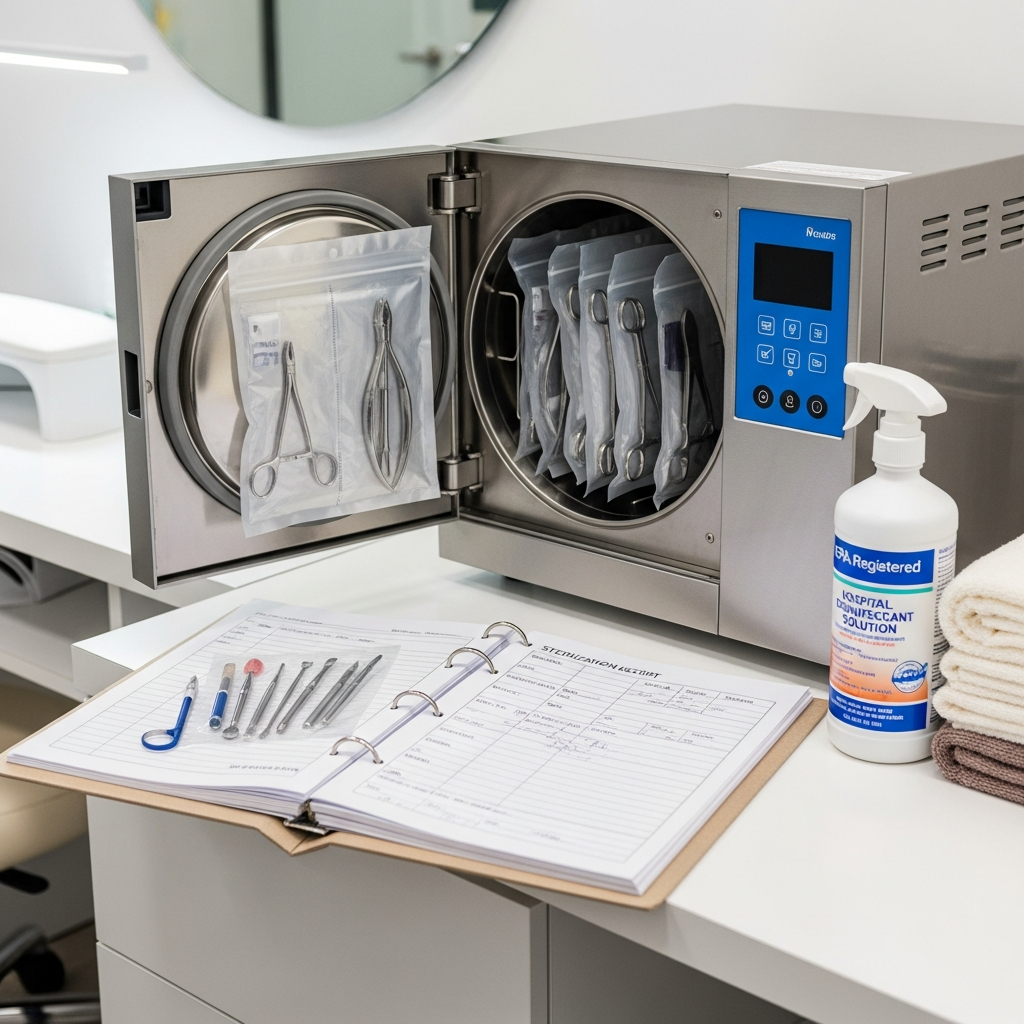
Implementing Professional Sterilization Standards in Nail Salons
Professional nail salon owners must prioritize infection control to protect both staff and clientele.
The distinction between cleaning, disinfecting, and sterilizing is critical for operational safety.
Understanding these levels ensures compliance with state boards and increases client retention.
Distinguishing Cleaning, Disinfection, and Sterilization
Cleaning is the essential first step, involving the removal of visible debris from nail implements.
Use warm water, detergent, and a dedicated nylon brush to scrub nippers, pushers, and e-file bits.
Debris left on tools can shield pathogens from subsequent disinfection or sterilization processes.
Disinfection kills most microorganisms but does not eliminate highly resistant bacterial spores.
This level is mandatory for non-porous surfaces like glass files and nail station tabletops.
Always use an EPA-registered, hospital-grade disinfectant specifically labeled for nail industry use.
Sterilization is the highest level of decontamination, destroying all microbial life, including spores.
This is the gold standard for metal nail implements that have the potential to break the skin.
Implementing an autoclave system demonstrates a commitment to the highest professional nail standards.
Advanced Sterilization for Metal Nail Implements
The Role of the Autoclave in Nail Salons
An autoclave uses high-pressure saturated steam to achieve total sterilization of metal tools.
Nail pushers, cuticle nippers, and carbide e-file bits should be processed in sterilization pouches.
Pouches feature indicators that change color, proving the tools reached the required temperature.
Workflow for Decontaminating Nail Tools
- Pre-Cleaning: Scrub tools to remove nail dust, skin, and oils.
- Drying: Moisture can interfere with chemicals or cause rusting during heat cycles.
- Packaging: Place dry tools into individual sterilization sleeves and seal them.
- Processing: Run the autoclave cycle according to the manufacturer’s specifications.
- Storage: Keep sealed pouches in a clean, dry drawer until the service begins.
Chemical Disinfection Protocols for Nail Stations
Proper chemical ratios are vital for effective disinfection of pedicure bowls and station surfaces.
Always follow the manufacturer’s instructions for mixing concentrated disinfectant solutions.
Incorrect mixing can lead to ineffective sanitation or damage to expensive nail salon equipment.
Contact time is the most overlooked factor in nail salon sanitation.
Surfaces must remain visibly wet with the disinfectant for the duration specified on the label.
Wiping a surface dry too early prevents the chemical from fully neutralizing pathogens.
Compliance and Documentation for Salon Management
Maintaining a detailed sterilization log is essential for nail salon management and inspections.
Record the date, time, cycle duration, and the staff member responsible for each sterilization batch.
Retain these logs alongside your MSDS (Material Safety Data Sheets) for all nail chemicals used.
Displaying your commitment to safety builds immense trust with high-value nail clients.
Opening a sterile pouch in front of the client reinforces the professional nature of your services.
A clean, organized sterilization area reflects the quality and integrity of the entire nail salon operation.
