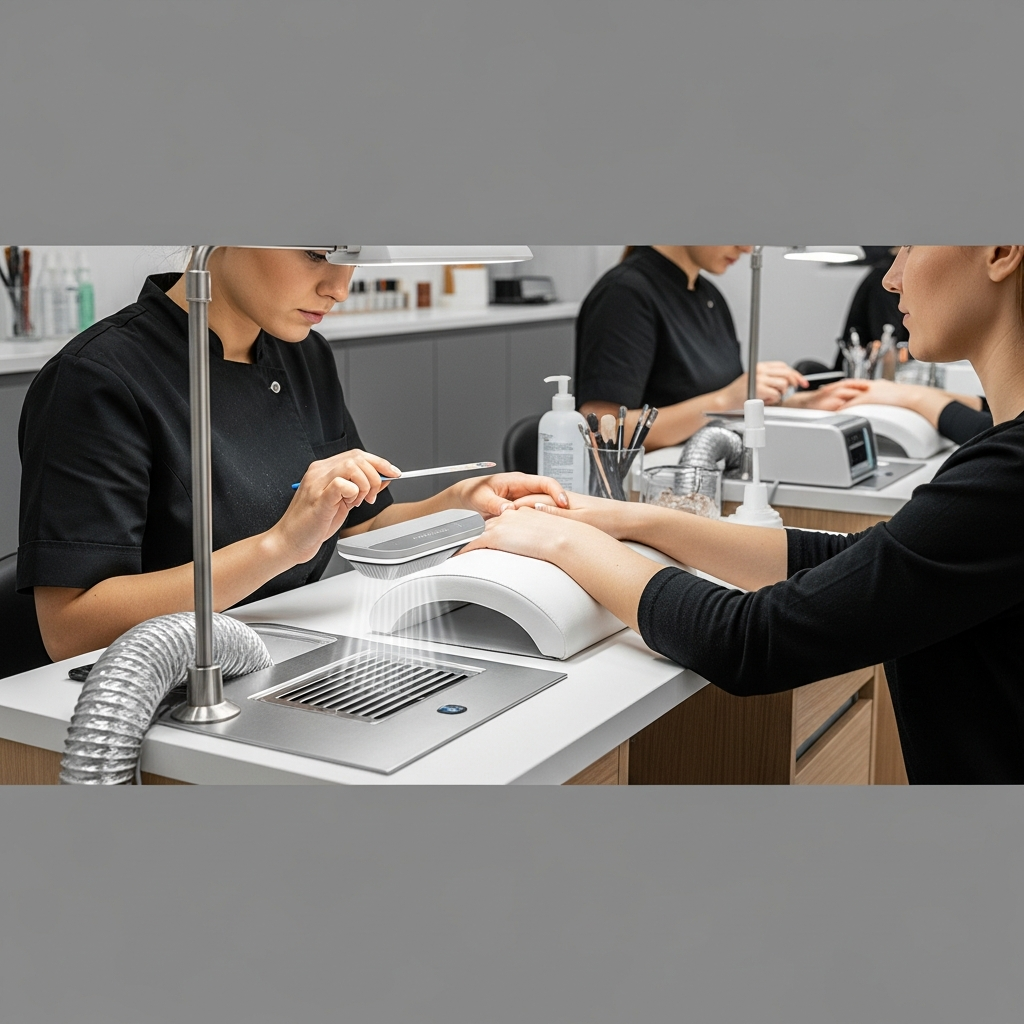
Implementing Source Capture Systems for Professional Nail Salons
Professional nail salon owners face unique challenges regarding air quality and chemical exposure. Managing the volatile organic compounds (VOCs) found in nail products requires more than standard building ventilation.
Source capture systems are the industry standard for localized exhaust ventilation. These systems remove monomer vapors and cyanoacrylate fumes before they enter the breathing zone of the technician or the client.
By investing in high-quality extraction technology, owners can ensure a safer workspace. This proactive approach reduces long-term health risks associated with nail chemical inhalation and improves the overall client experience.
Why Standard Ventilation Fails the Nail Industry
Most commercial HVAC systems only recirculate air rather than filtering specific nail industry contaminants. This often results in the lingering “salon smell” that can deter high-end clientele and impact staff retention.
Source capture units utilize flexible ducts or integrated table vents to pull air directly from the nail station. This ensures that Ethyl Methacrylate (EMA) vapors are neutralized at the point of application during acrylic services.
Without these systems, heavy dust particles from E-file removal and chemical vapors settle on surfaces. This leads to cross-contamination and an unprofessional environment that may fail local health department inspections.
Critical Components of Nail Salon Extraction Systems
Effective source capture requires a multi-stage filtration process designed for the nail industry. Owners must evaluate systems based on their ability to handle both fine particulate matter and gaseous chemicals.
- Pre-filters: These capture the heavy nail dust and filing debris generated during gel and acrylic shaping.
- HEPA Filters: High-Efficiency Particulate Air filters trap microscopic dust particles (PM2.5) that can irritate the respiratory system.
- Activated Carbon: A thick bed of activated carbon is essential for absorbing the heavy chemical odors produced by liquid and powder systems.
Maintaining Peak Performance in a Busy Salon
Regular maintenance is mandatory for keeping your air purification system effective. Clogged filters reduce suction power and allow odors to bypass the system, negating the investment.
Salon managers should implement a strict schedule for filter replacement based on service volume. High-volume salons may need to replace carbon filters every four to six months to ensure complete vapor neutralization.
Cleaning the intake hoods daily prevents the buildup of nail filings. This simple step ensures maximum airflow and prevents the system motor from overworking during back-to-back nail appointments.
Operational Benefits for Nail Salon Owners
Beyond safety, source capture systems offer significant business advantages. A clean, odor-free environment allows salons to position themselves as premium, health-conscious establishments.
Reducing chemical exposure leads to fewer staff complaints and lower turnover rates. Senior nail technicians are more likely to remain at a salon that prioritizes their long-term health and respiratory safety.
Complying with local mechanical codes and nail-specific safety standards protects your business from liability. It demonstrates a commitment to professional excellence that builds trust with both employees and clients.
