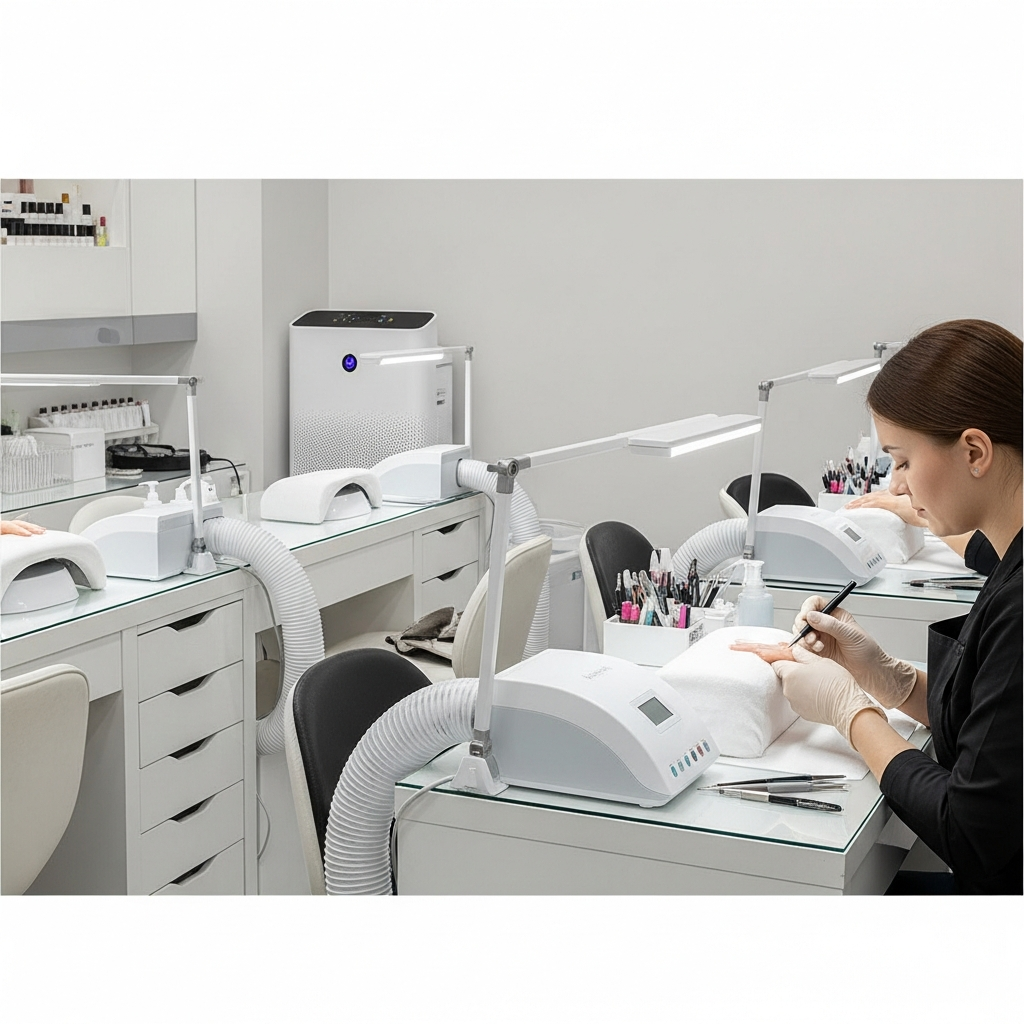
Evaluating Air Purification and Source Capture Systems for Your Nail Salon
Maintaining high air quality is a critical operational standard for modern nail salon owners. Proper ventilation protects the health of your nail technicians and ensures a professional environment for your clients.
When investigating air purification solutions, you must distinguish between general room air cleaners and specialized nail source capture systems. Each serves a specific purpose in managing nail industry byproducts.
Source Capture Systems vs. Room Air Purifiers
Source capture systems are designed to remove nail dust and chemical vapors at the moment they are created. These units feature flexible ducts that sit directly next to the nail technician’s workspace.
Room air purifiers cycle the air within the entire salon space to reduce lingering particles. For maximum safety and compliance with building codes, most nail salon owners utilize a combination of both technologies.
Source capture is the most effective way to manage EMA (Ethyl Methacrylate) monomer odors and fine particulate matter from electric filing. Room purifiers act as a secondary defense for general salon air freshness.
Essential Filtration for Nail Salon Chemicals
To effectively manage the chemical profile of a nail salon, your equipment must feature heavy-duty activated carbon filters. Carbon is the only medium capable of adsorbing volatile organic compounds (VOCs) found in nail products.
When comparing systems, evaluate the weight of the carbon canister. Systems designed for the nail industry should contain several pounds of treated carbon to ensure a long filter life against acrylic odors.
Standard HEPA filters are necessary for capturing fine nail dust created during gel removals and acrylic shaping. Look for medical-grade HEPA ratings to ensure 99.97% of microscopic nail debris is trapped.
Operational Costs and Maintenance for Owners
The initial purchase price of a nail ventilation system is only one part of the investment. Salon owners must evaluate the ongoing cost of replacement filters and the ease of maintenance for staff.
High-quality systems include pre-filters that protect the more expensive HEPA and carbon stages. These pre-filters should be checked weekly and replaced frequently to maintain optimal suction at the nail table.
Consider the noise level of the unit during operation. A system that is too loud may disrupt the salon atmosphere or prevent nail technicians from communicating effectively with their clients.
Compliance and Professional Safety Standards
Professional nail salon owners should prioritize systems that help meet OSHA requirements and local mechanical codes. Many jurisdictions now require specific CFM (cubic feet per minute) airflow rates for nail stations.
Investing in certified air purification demonstrates a commitment to technician wellness and professional excellence. This investment often leads to higher staff retention and a more premium brand reputation in the nail market.
Before purchasing, verify that the manufacturer specializes in the nail industry. General-purpose air cleaners often lack the specific filtration density required to handle professional nail service volumes.
Checklist for Comparing Nail Ventilation Systems
- Suction Power: Ensure the CFM rating is sufficient for the number of active nail stations.
- Filter Density: Confirm the presence of both high-grade HEPA and thick activated carbon layers.
- Portability: Evaluate if the unit needs to be built into the nail desk or if a mobile unit is preferred.
- Ease of Use: Check for simple controls that nail technicians can adjust quickly between services.
