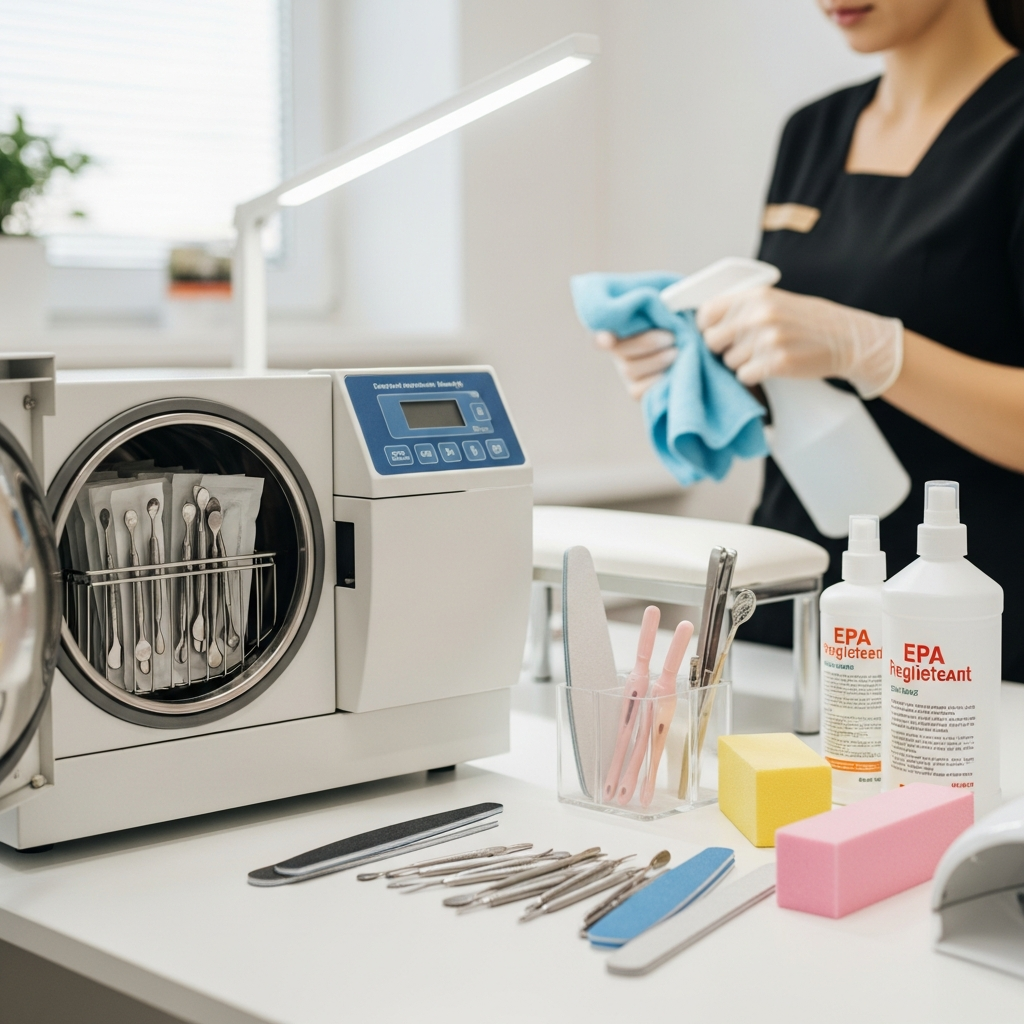
Implementing Professional Sterilization Standards in Your Nail Salon
For nail salon owners, maintaining the highest level of hygiene is not just a regulatory requirement but a cornerstone of business reputation. Effective sterilization prevents the spread of pathogens and ensures client safety during every manicure and pedicure service.
Understanding the distinction between cleaning, disinfection, and sterilization is critical for professional nail operations. This guide focuses on the rigorous standards required to maintain a sterile environment for all non-porous nail tools and surfaces.
Understanding the Nail Industry Sterilization Hierarchy
Nail salon sanitation follows a three-tier hierarchy that every owner must implement. Sanitation is the basic removal of visible debris from nail files, buffers, and towels using soap and water.
Disinfection involves using EPA-registered, hospital-grade disinfectants to kill most microorganisms on non-porous surfaces like glass nail files or metal pushers. However, disinfection does not eliminate highly resistant bacterial spores.
Sterilization is the highest level of decontamination, required for any tool that may accidentally break the skin barrier. This process kills all microbial life, including spores, using high-pressure steam or dry heat systems.
The Critical Role of Autoclaves in Nail Tool Processing
Professional nail salons are increasingly moving toward medical-grade autoclaves for processing metal implements. Autoclaves use pressurized steam to ensure that nippers, pushers, and e-file bits are completely sterile.
- Nail Tool Preparation: Scrub metal tools with a nylon brush to remove all biological debris before placing them in sterilization pouches.
- Indicator Strips: Use internal and external chemical indicators to verify that the required temperature and pressure were reached during the cycle.
- Drying Cycle: Ensure the autoclave completes its drying cycle to prevent “wet packs,” which can compromise the sterility of the nail tools.
Surface Disinfection Protocols for High-Traffic Nail Stations
Nail station surfaces, including the manicure table and the interior of LED lamps, require frequent disinfection between every client. These surfaces often come into contact with dust, skin cells, and chemical residues.
Owners should select EPA-registered disinfectants with a broad-spectrum “tuberculocidal” claim. These solutions are formulated to handle the specific microbial risks found in high-traffic nail salon environments.
Choosing the Right EPA-Registered Disinfectants
When selecting chemicals for your nail salon, consider the contact time required for the product to be effective. Some disinfectants require the surface to remain wet for ten minutes, while others work in as little as two minutes.
Always follow the manufacturer’s instructions for mixing and shelf-life. Expired or improperly diluted disinfectant solutions will fail to protect your nail technicians and clients from cross-contamination.
Daily Workflow for Maintaining a Sterile Nail Environment
Consistency is the key to salon safety, and owners must establish a clear workflow for the entire team. This prevents shortcuts that could lead to infections or regulatory fines from state boards.
- Station Reset: Remove all single-use items like wooden sticks and porous buffers immediately after each service.
- Tool Rotation: Maintain enough sets of metal tools to allow for full sterilization cycles without rushing the process between appointments.
- Log Documentation: Keep a daily sterilization log that records the date, time, and operator of every autoclave cycle for compliance and liability protection.
Staff Training and Professional Accountability
A sterile nail salon begins with educated staff members who understand the “why” behind every protocol. Conduct regular training sessions focused on the proper handling of sharps and the disposal of contaminated materials.
Empower your senior nail staff to monitor the sterilization area and ensure that all technicians are following the established safety standards. This proactive approach builds a culture of professional excellence and safety.
