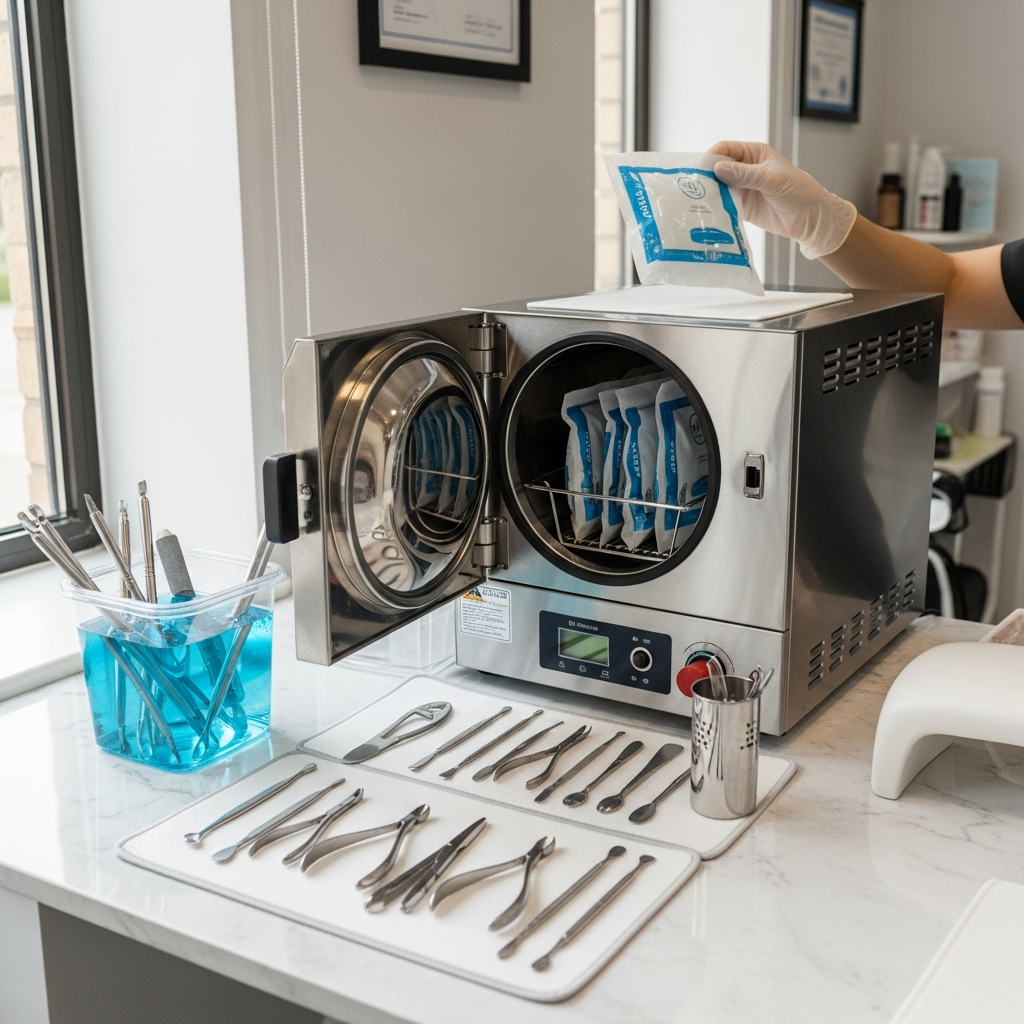
Medical-Grade Nail Tool Sterilization Systems for Professional Salons
Implementing a rigorous nail tool sterilization system is a fundamental requirement for modern salon owners.
Ensuring the safety of both technicians and clients requires more than basic cleaning.
A professional disinfection workflow distinguishes a high-standard nail business from competitors.
The Difference Between Cleaning and Sterilization
In the nail industry, cleaning is the physical removal of debris, such as nail dust and skin cells.
Disinfection kills most microorganisms on non-porous surfaces like stainless steel nippers.
Sterilization is the highest level of decontamination, destroying all microbial life, including spores.
Nail salon owners must distinguish between these levels to meet state board requirements.
Using an autoclave is the only recognized method for complete sterilization of metal nail implements.
Relying solely on liquid disinfectants may not be sufficient for invasive nail procedures.
Choosing the Right Autoclave for Nail Implements
A steam autoclave uses high pressure and heat to ensure all nail tools are sterile.
Nail salon owners should look for Class S or Class B sterilizers for maximum efficacy.
These systems are essential for tools that may come into contact with blood or broken skin.
Proper tool preparation is required before placing implements into the sterilization chamber.
Tools must be scrubbed with a pH-neutral detergent and dried thoroughly to prevent rust.
Nail technicians should then seal tools in sterilization pouches with integrity indicators.
Implementing EPA-Registered Disinfection Systems
For surfaces and tools that cannot withstand high heat, EPA-registered disinfectants are mandatory.
The solution must be labeled as bactericidal, virucidal, and fungicidal for professional use.
Owners must ensure the contact time specified on the label is strictly followed by staff.
Disinfectant trays should be placed at every nail station for immediate tool processing.
The solution must be changed daily, or sooner if the liquid becomes cloudy or contaminated.
This maintains the chemical efficacy required to neutralize pathogens in a high-volume salon.
Managing E-File Bit Decontamination
E-file bits require specialized attention due to their intricate grooves and metal composition.
Ultrasonic cleaners are highly effective for removing fine nail dust from carbide and diamond bits.
This automated system uses cavitation to reach areas that manual scrubbing might miss.
Once the ultrasonic cycle is complete, the bits must undergo high-level disinfection.
Store processed e-file bits in a dry, covered container to prevent airborne contamination.
Never reuse a bit on a client without completing the full decontamination workflow.
Documentation and Safety Compliance for Salon Owners
Maintaining a sterilization log is a critical operational standard for professional nail salons.
Each autoclave cycle should be recorded, including the date, time, and indicator results.
This documentation protects the business during inspections and builds client confidence.
- Daily Logs: Record every sterilization cycle and chemical change.
- Spore Testing: Perform weekly biological monitoring to verify autoclave function.
- Staff Training: Ensure every nail technician understands the infection control plan.
- Safety Data Sheets: Keep SDS for all salon chemicals accessible to all staff.
Optimizing Workflow for Maximum Safety
Developing a “dirty-to-clean” workflow prevents cross-contamination in the salon’s processing area.
Designate specific zones for receiving used nail tools, cleaning, and sterile storage.
This organized approach reduces the risk of accidentally using unsterilized tools on a client.
Investing in high-quality sterilization systems is an investment in the salon’s longevity.
Professional nail standards dictate that safety should never be compromised for speed.
A clean, sterile environment is the foundation of a successful and reputable nail business.
