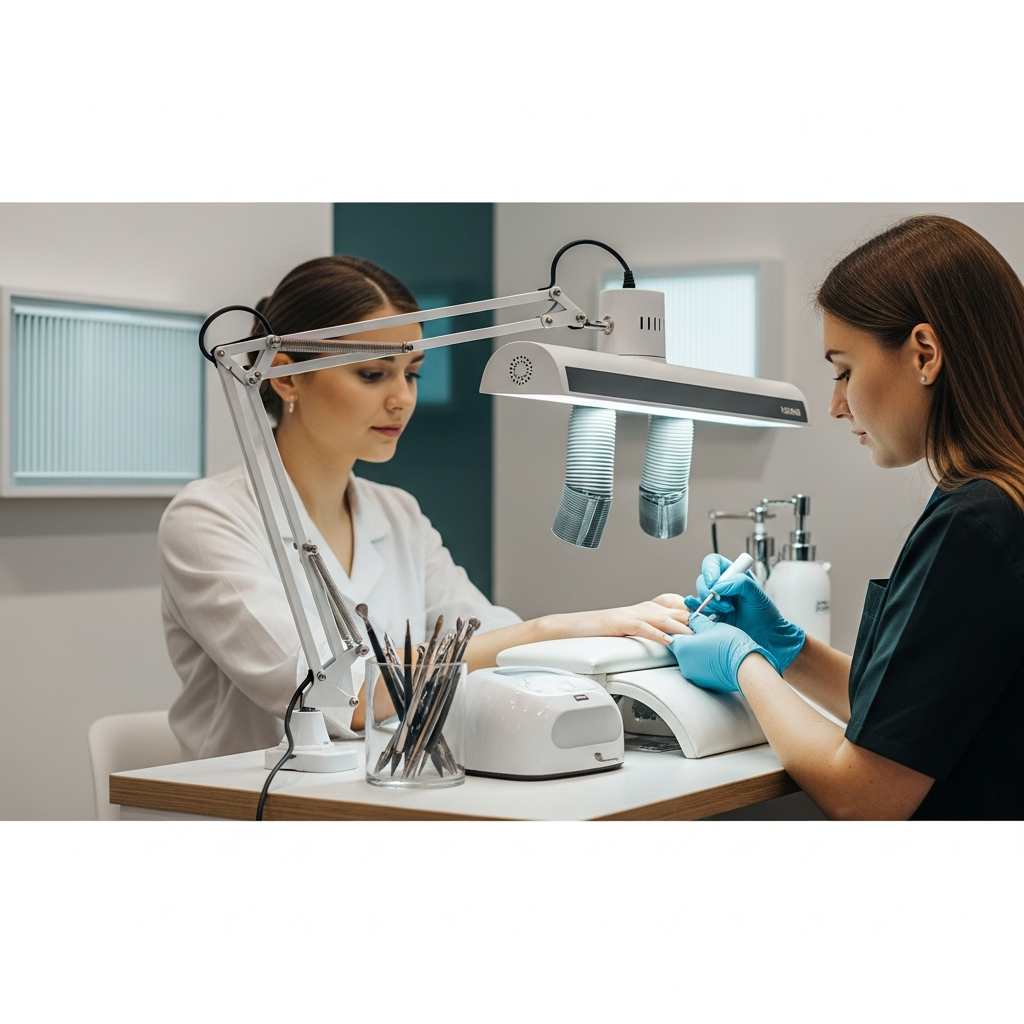
Professional Chemical Odor Control Systems for Nail Salons
Managing chemical odors is a primary operational challenge for nail salon owners. Maintaining high air quality standards is essential for technician longevity and client comfort within the nail environment.
Nail services utilize various chemicals that release Volatile Organic Compounds (VOCs) into the breathing zone. Without specialized systems, these vapors can cause respiratory fatigue and long-term health risks for staff.
Understanding Nail Industry VOCs and Monomer Vapors
The most prominent odor in a professional nail salon typically stems from Ethyl Methacrylate (EMA) monomers. These molecules are heavy and tend to linger near the floor and work surface if not extracted properly.
Beyond monomers, nail technicians work with cyanoacrylates in nail adhesives and various solvents in gel polish removers. Each of these chemicals requires specific filtration media to be effectively neutralized within the salon.
General HVAC systems are usually insufficient for the concentrated chemical loads found in busy nail salons. Dedicated chemical odor control systems are required to meet professional safety standards and local regulations.
Implementing Source Capture Ventilation at the Nail Station
Source capture ventilation is the gold standard for nail industry odor control. These systems use adjustable ducts to capture dust and chemical vapors directly at the nail table before they enter the room air.
Key benefits of source capture for nail salons:
- Immediate extraction of EMA monomer vapors during acrylic application.
- Reduction of fine nail dust particles generated during e-file services.
- Protection of the technician’s primary breathing zone from concentrated fumes.
- Minimized chemical cross-contamination between different service zones.
When selecting a source capture unit, owners must ensure the system includes a multi-stage filtration process. This should involve a pre-filter for dust and a thick activated carbon bed for chemical absorption.
The Role of Activated Carbon in Nail Chemical Neutralization
Activated carbon is the primary defense against nail-specific chemical odors. The carbon undergoes a process that creates millions of tiny pores to trap VOCs and monomer molecules through adsorption.
For a nail salon, the volume of carbon in the filtration system matters more than the airflow speed. A high “dwell time” allows the chemical-laden air to interact sufficiently with the carbon media for complete neutralization.
Owners should implement a strict maintenance schedule for carbon filter replacement. Once the carbon reaches its saturation point, it can no longer capture vapors, leading to a noticeable return of chemical odors.
Best Practices for Nail Salon Air Quality Management
Effective odor control requires a combination of high-quality equipment and disciplined salon workflows. Proper chemical storage and waste management are just as important as the ventilation system itself.
Operational workflows for cleaner salon air:
- Always use metal trash cans with tight-fitting, self-closing lids to dispose of monomer-soaked wipes.
- Keep nail liquid dappen dishes covered whenever the technician is not actively dipping the brush.
- Ensure the source capture hood is positioned within six inches of the nail service area.
- Perform weekly checks on pre-filters to prevent nail dust from clogging the expensive carbon filters.
Investing in professional-grade air purification is a commitment to the health of the nail professional. A clean-smelling salon reflects a high standard of technical expertise and safety for the entire business.
