Professional Evaluation of Nail Salon Air Purification Systems
For nail salon owners, managing chemical vapors and filing dust is a primary operational challenge. Effective air purification ensures a compliant and healthy workspace for every technician.
Selecting the right system requires a deep understanding of how EMA monomers and fine polymer dust move through the salon environment during daily services.
Owners must differentiate between units that merely move air and those that specifically filter the unique chemical profiles of professional nail enhancement products.
Understanding Source Capture vs. Ambient Filtration
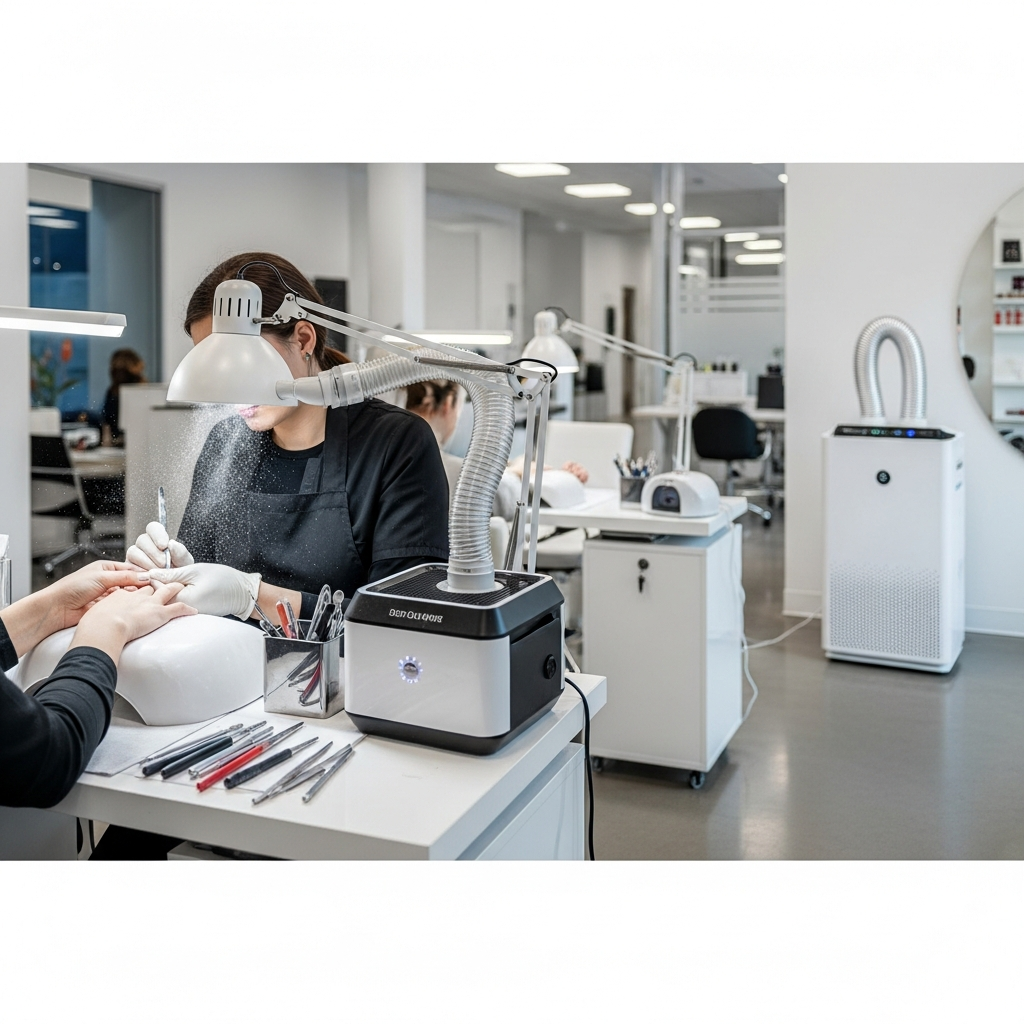
Source capture systems are designed to pull contaminants directly from the technician’s breathing zone. These units are essential during high-volume acrylic and gel applications.
By positioning the intake close to the nail plate, these systems trap heavy filing dust before it settles on salon surfaces or enters the respiratory system.
High-quality source capture units prevent the cross-contamination of nail art areas and keep the overall salon environment significantly cleaner for clients and staff.
The Role of Ambient Air Filtration for VOC Control
While source capture targets the workstation, ambient systems manage the overall air volume. They are critical for removing lingering chemical odors and Volatile Organic Compounds (VOCs).
High-capacity activated carbon filters are necessary to adsorb vapor molecules from monomers, adhesives, and professional UV gel enhancement products throughout the day.
Without adequate ambient filtration, chemical odors can permeate salon furniture and clothing, creating an unprofessional environment that may deter high-end clientele.
Key Specifications for Nail Salon Owners to Compare
When evaluating systems, owners must look beyond standard HEPA ratings. The weight and depth of the activated carbon filter determine its odor-neutralizing lifespan in a nail setting.
Systems should feature at least several pounds of specially treated carbon. This is required to effectively handle the high concentration of vapors found in professional nail salons.
Owners should also compare the CADR (Clean Air Delivery Rate) specifically for smoke and dust to ensure the motor can handle the volume of the service floor.
- Pre-filters: Should be washable or inexpensive to replace frequently to manage heavy nail dust.
- HEPA Filtration: Must be medical grade to capture microscopic polymer particles and fungal spores.
- Activated Carbon: Essential for chemical vapor adsorption; look for refillable canisters to reduce waste.
- Noise Levels: Systems must operate below 55 decibels to allow for professional consultation during nail services.
Operational Considerations and Maintenance Workflows
Consistent maintenance is vital for maintaining airflow. Owners must establish a strict schedule for cleaning pre-filters and replacing HEPA and carbon cartridges.
Clogged filters drastically reduce suction power. This leads to increased dust accumulation on manicuring tables and higher chemical exposure for the nail technicians.
A well-maintained purification system reduces the time spent on daily salon sanitation by preventing dust from traveling across the facility and landing on retail displays.
Evaluating Long-Term Investment Value
Compare the cost of replacement filters and the energy efficiency of the motor. A professional-grade system should offer variable speeds for different nail services.
High-efficiency motors allow for quiet operation during delicate nail art while providing maximum power during heavy acrylic removal and E-file usage.
Investing in a robust system reduces the wear on other salon equipment, such as UV lamps and nail drills, by keeping the internal components free of fine dust.
Safety Standards and Regulatory Compliance
Implementing professional air purification helps salons meet local ventilation requirements. This protects the business from liability and significantly improves employee retention rates.
A clean, odor-free salon enhances the client experience. It positions the business as a premium, health-conscious nail care provider in a competitive professional market.
Prioritizing air quality demonstrates a commitment to the long-term health of the nail technicians, who are the most valuable assets in any salon operation.
