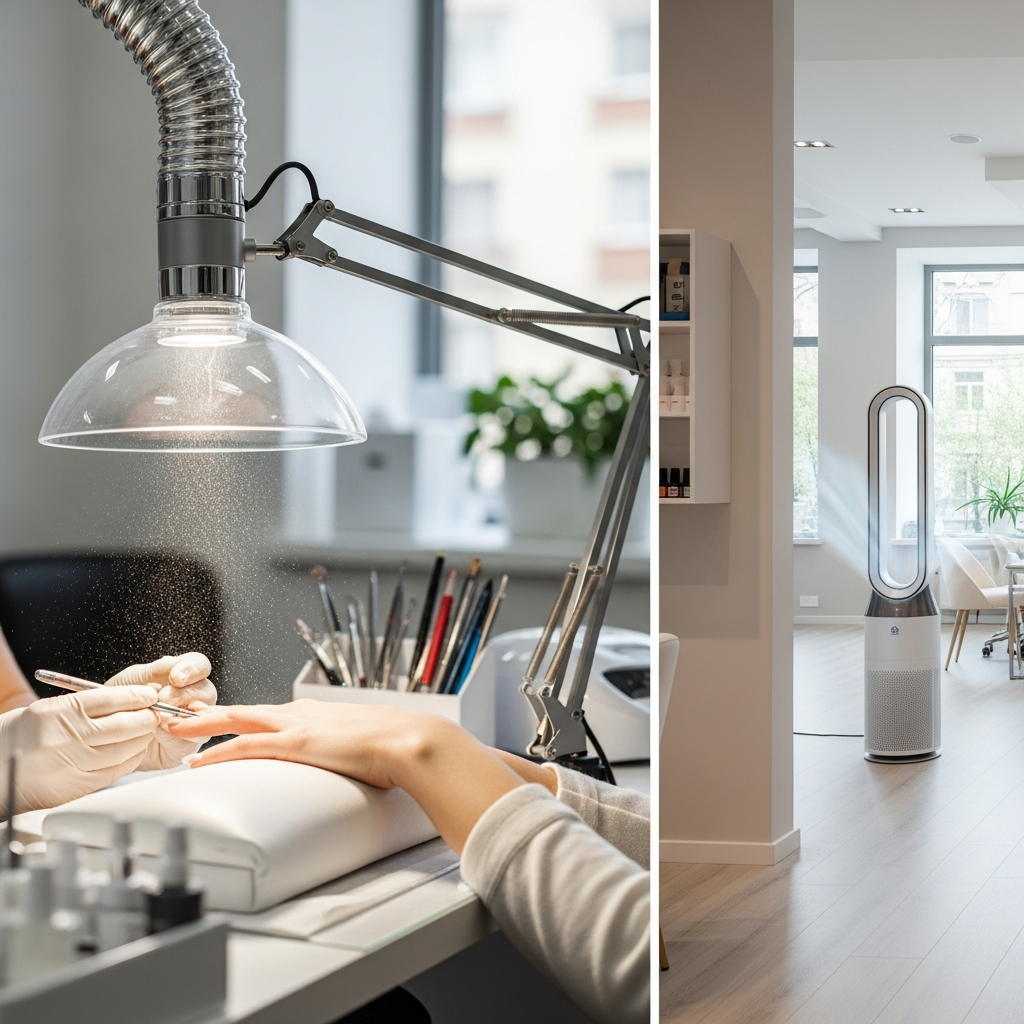
Comparing Air Purification Systems for Professional Nail Salons
Selecting the right air purification system is a critical decision for nail salon owners. High-quality air filtration ensures a safe environment for technicians and a premium experience for clients.
In the nail industry, air contaminants consist of two primary threats: fine particulate dust from filing and chemical vapors from monomer, adhesives, and gels.
This guide evaluates the most effective systems to help salon owners invest in technology that meets professional safety standards and operational workflows.
Source Capture Systems vs. Ambient Room Air Purifiers
Source capture systems are designed to remove contaminants at the point of origin. These units feature flexible ducts that sit directly next to the nail technician’s workstation.
By capturing acrylic dust and monomer vapors before they enter the breathing zone, these systems provide the highest level of protection for the nail professional.
Ambient room purifiers circulate the air throughout the entire salon. While useful for general freshness, they are often less effective at removing heavy nail dust once it has settled.
Evaluating Source Capture Efficiency for Nail Techs
- Dust Extraction: High-velocity suction removes fine dust during e-file services.
- Vapor Mitigation: Specialized carbon filters neutralize odors from EMA monomer and gel systems.
- Ergonomics: Adjustable arms allow technicians to position the intake without obstructing their workspace.
Essential Filtration Standards for the Nail Industry
A professional nail salon air purifier must utilize multi-stage filtration. Standard HEPA filters alone are insufficient for the chemical complexity of nail products.
HEPA filters are excellent for trapping 99.97% of particulate matter, such as the fine dust produced during acrylic and dip powder removals.
Activated carbon filters are mandatory for chemical odor control. These filters use adsorption to trap volatile organic compounds (VOCs) found in nail primers and lacquers.
Key Performance Indicators for Salon Owners
- CFM Ratings: Ensure the Cubic Feet per Minute (CFM) is high enough for the salon’s total square footage.
- Filter Depth: Professional systems should feature thick carbon beds specifically for chemical-heavy environments.
- Noise Levels: Systems must operate quietly enough to maintain a relaxing atmosphere for nail services.
Maintenance and Long-Term Operational Costs
When evaluating systems, salon owners must consider the cost of replacement filters and the ease of maintenance. Clogged filters reduce suction and increase energy consumption.
High-quality nail air systems often include pre-filters. These are inexpensive and can be changed frequently to extend the life of more expensive HEPA and carbon cores.
Investing in a dedicated nail salon air system reduces dust buildup on furniture and equipment, ultimately lowering overall cleaning costs and protecting salon assets.
