Implementing Professional Sterilization Standards in Your Nail Salon
Maintaining a sterile environment is the foundation of a successful nail salon operation. Professional sterilization protects your clients from infections and secures your business reputation.
As a nail salon owner, you must distinguish between basic cleaning and medical-grade sterilization. Each metal implement requires a specific protocol to meet health board regulations.
High-standard sanitation is not just about compliance; it is a marketing advantage. Clients today are highly educated about nail health and prioritize salons that demonstrate clinical safety.
The Critical Difference: Cleaning vs. Sterilization
Cleaning involves removing visible debris from nail tools using soap and water. This is the mandatory first step before any disinfection or sterilization process begins.
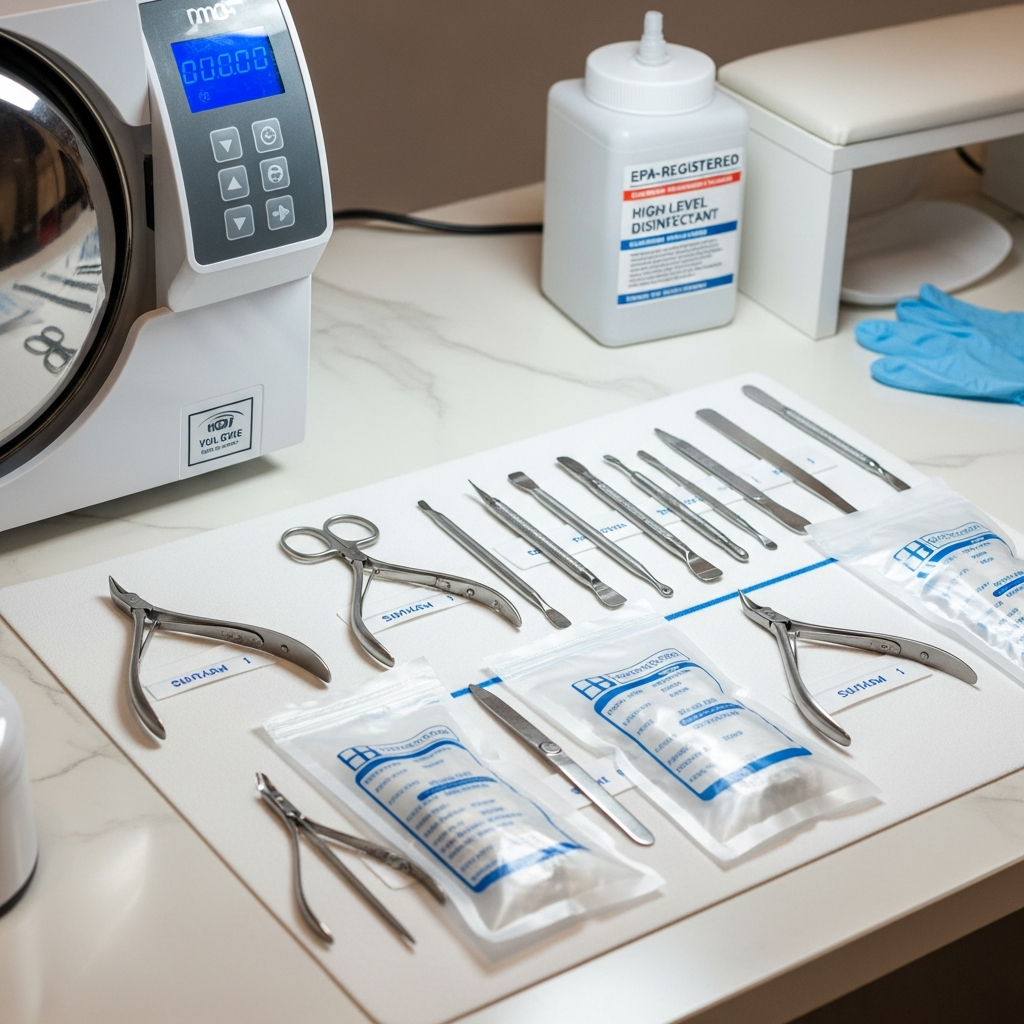
Sterilization is the total destruction of all microbial life, including bacterial spores. This level of safety is achieved primarily through the use of an autoclave system.
Disinfection, while effective for many pathogens, does not eliminate all spores. Use high-level, EPA-registered disinfectants specifically designed for nail industry tools and surfaces.
Professional Workflow for Nail Tool Decontamination
Your staff must follow a consistent, documented workflow for every client service. Consistency prevents cross-contamination and ensures the longevity of your professional nail implements.
Implement a “dirty-to-clean” flow in your salon layout. This prevents contaminated tools from ever coming into contact with sterilized equipment awaiting use.
Step 1: Mechanical Pre-Cleaning
Scrub metal nippers, pushers, and e-file bits with a nylon brush and detergent. This removes biological material that can shield pathogens during the sterilization phase.
Dry all tools thoroughly after rinsing them with clean water. Moisture can interfere with chemical disinfectants and cause corrosion on high-quality stainless steel tools.
Never place tools directly into a sterilizer without this mechanical cleaning step. Debris can bake onto the metal, rendering the sterilization process ineffective for future use.
Step 2: Choosing Your Sterilization System
- Steam Autoclaves: The gold standard in nail salons for high-pressure sterilization of all heat-resistant professional implements and bits.
- Dry Heat Sterilizers: Effective for metal tools but requires high temperatures and specific timing to ensure complete pathogen elimination.
- Liquid Chemical Sterilants: Reserved for items that cannot withstand high heat, requiring precise immersion times according to manufacturer instructions.
Managing Porous vs. Non-Porous Nail Supplies
Properly identifying tool materials is essential for salon safety compliance. Non-porous tools, like metal or glass, can be fully sterilized for reuse across multiple clients.
Porous items, such as wooden orange sticks, sanding bands, and buffer blocks, cannot be sterilized. These must be disposed of immediately after a single nail service.
Store your sterilized tools in individual, sealed pouches. This provides visual proof to your clients that the tools used on them are fresh and safe.
Surface Disinfection Protocols
The nail station surface and LED lamps must be disinfected between every client. Use hospital-grade wipes or sprays with a proven contact time for nail pathogens.
Focus on high-touch areas including the armrest, client chair, and technician stool. This prevents the transfer of dust and chemicals throughout the salon environment.
Ensure your ventilation systems are active during the use of strong disinfectants. Managing chemical odors is just as important as managing physical tool cleanliness.
Documentation and Compliance for Salon Owners
Maintain detailed logs of your sterilization cycles and chemical changes. These records are vital during health inspections and demonstrate your commitment to professional standards.
Regularly test your autoclave using biological indicators to verify it is functioning correctly. Professional maintenance of your sanitation equipment is a non-negotiable operational cost.
Train your senior nail staff to audit these logs weekly. Accountability ensures that no steps are skipped during busy salon shifts or weekend rushes.
E-File Bit Maintenance and Safety
Carbide and diamond bits require special attention due to their intricate grooves. Use an ultrasonic cleaner to vibrate debris out of the teeth before sterilization.
Inspect bits for wear and rust regularly. Damaged bits can cause heat spikes on the natural nail and are more difficult to clean effectively.
Store bits in a dedicated bit block after sterilization. This keeps them organized and prevents the tips from being damaged by other metal tools in the tray.
