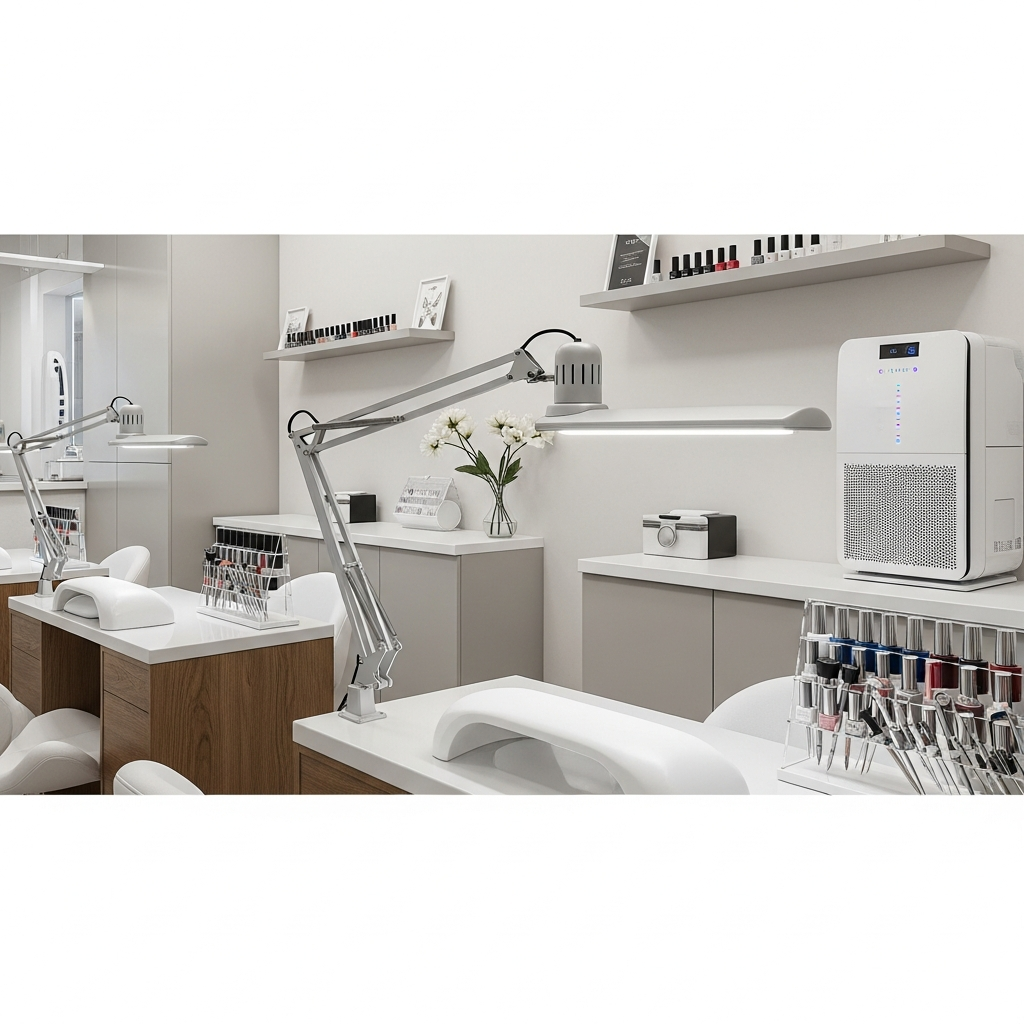
Professional Nail Salon Odor Control: A Comparison Guide
Managing chemical odors is a critical operational requirement for professional nail salon owners.
High concentrations of monomer vapors and nail dust impact technician health and client satisfaction.
Professional-grade extraction systems ensure a compliant and high-standard nail salon environment.
Source Capture Systems vs. Room Air Purifiers
Source capture systems are designed to pull vapors directly from the nail technician’s breathing zone.
This method prevents Ethyl Methacrylate (EMA) vapors from migrating into the main salon area.
General air purifiers often fail to capture heavy nail dust before it settles on salon surfaces.
Benefits of Source Capture in Nail Salons:
- Immediate removal of acrylic monomer odors at the nail table.
- Reduces fine dust inhalation during e-file manicures and gel removals.
- Prevents cross-contamination of chemical scents between service stations.
Activated Carbon Standards for Nail Monomers
Effective odor control requires specialized activated carbon filters designed for chemical vapors.
Standard air filters are insufficient for the specific molecular weight of nail industry chemicals.
Professional systems should utilize high-capacity carbon beds to neutralize volatile organic compounds.
When evaluating systems, salon owners must check the poundage of activated carbon.
Systems with minimal carbon depth will saturate quickly in high-volume nail salons.
Frequent filter replacement schedules are necessary to maintain a scent-free professional environment.
Managing Nail Dust and Particulate Matter
E-file services generate microscopic dust that can linger in the nail salon air for hours.
Hybrid extraction systems combine HEPA filtration with chemical carbon extraction for dual-action.
This setup protects the nail technician’s respiratory health during intensive shaping and filing.
Key Features to Evaluate:
- CFM Rating: Ensure the airflow is sufficient for the size of the nail station.
- Noise Levels: The system must be quiet enough to maintain a professional salon atmosphere.
- Filter Accessibility: Technicians must be able to change filters without disrupting workflows.
Operational ROI of Professional Ventilation
Investing in dedicated nail ventilation removes the chemical smell associated with lower-quality salons.
Improving air quality allows owners to command premium pricing and improve staff retention rates.
Cleaner air also reduces the time spent cleaning dust from nail polish displays and furniture.
Compliance and Safety Standards
Local building codes often require specific ventilation rates for nail professional workstations.
Source capture systems help salon owners meet or exceed state board sanitation and safety mandates.
Documenting your air quality protocols builds significant trust with inspectors and health-conscious clients.
Implementation Checklist for Salon Managers:
- Assess the number of active acrylic stations requiring dedicated extraction.
- Compare the annual cost of replacement filters across different nail ventilation brands.
- Verify that the extraction arm or desk vent does not obstruct the nail technician’s movement.
Choosing the right odor control system is a long-term investment in the salon’s infrastructure.
Prioritizing chemical extraction ensures a professional, safe, and welcoming space for all nail clients.
