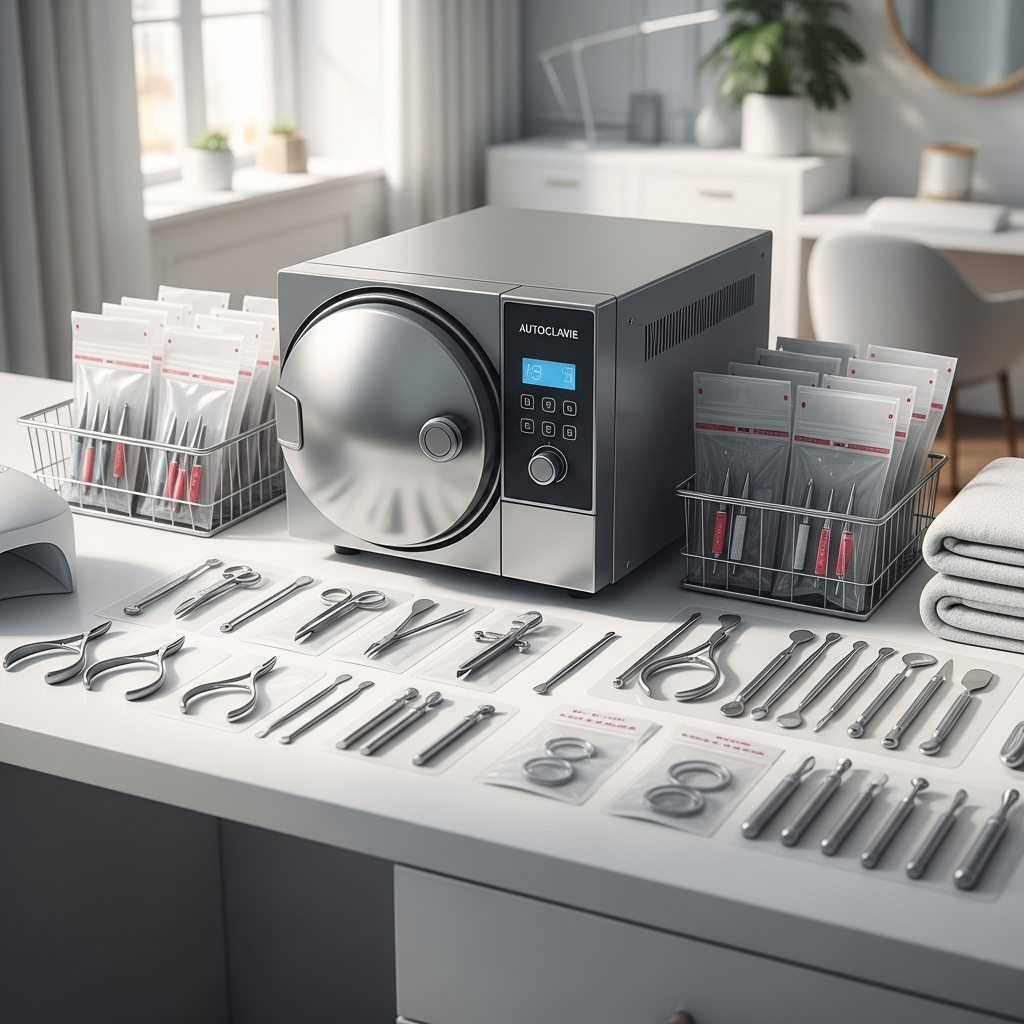
Professional Nail Tool Sterilization: Advanced Safety Standards for Salon Owners
Implementing a rigorous sterilization protocol is essential for any professional nail salon aiming to exceed basic sanitation requirements. High-level sterilization protects both the client and the technician from the transmission of bloodborne pathogens and fungal infections.
Salon owners must distinguish between simple cleaning, disinfection, and true medical-grade sterilization. While disinfection is suitable for non-porous surfaces, reusable metal nail implements require a more intensive approach to ensure total safety.
The Critical Role of Autoclaves in the Nail Industry
A steam autoclave is the gold standard for sterilizing metal nail tools such as cuticle nippers, pushers, and e-file bits. Unlike UV cabinets, which only provide low-level sanitization, autoclaves use pressurized steam to kill all microbial life.
Investing in a Class B or Class S autoclave allows nail salon owners to provide a verifiable level of hygiene. These systems ensure that steam reaches every crevice of the tool, including the hinges of nail clippers and the flutes of carbide bits.
Standardizing this workflow across all nail stations reduces the risk of cross-contamination and builds significant trust with a high-end clientele. It transforms the salon’s reputation from a basic service provider to a professional nail care facility.
Operational Workflow for Nail Tool Sterilization
- Pre-Cleaning: Manually scrub nail tools with a nylon brush and proteolytic detergent to remove nail dust and biological debris.
- Rinsing and Drying: Thoroughly rinse tools and dry them completely to prevent rusting or pitting during the heat cycle.
- Pouching: Place dry implements into sterilization pouches with internal chemical indicators to track cycle success.
- The Cycle: Run the autoclave according to the manufacturer’s specified temperature and pressure settings for nail implements.
- Storage: Store the sealed, sterilized pouches in a clean, dust-free drawer until they are opened in the presence of the nail client.
Maintenance and Regulatory Compliance for Nail Salons
Owning professional sterilization equipment requires a commitment to regular maintenance and meticulous record-keeping. Salon managers should implement a daily cleaning schedule for the autoclave chamber using distilled water only.
Biological monitoring, or spore testing, must be conducted weekly to verify that the autoclave is effectively killing resistant microorganisms. These results should be archived in a dedicated sterilization log for state board inspections.
Failure to maintain these logs can lead to significant fines and liability issues during routine salon audits. A transparent sterilization process is the best defense against regulatory scrutiny and ensures a safe working environment.
Surface Disinfection Protocols at the Nail Station
While tools require sterilization, the nail table and surrounding equipment must undergo intermediate-level disinfection between every client. Use an EPA-registered hospital-grade disinfectant specifically labeled for the nail industry.
Apply the disinfectant to the nail table, armrest, and the exterior of the LED nail lamp, ensuring the surface remains wet for the full contact time. This practice prevents the transfer of nail dust and pathogens between consecutive services.
By integrating these professional sterilization and disinfection systems, nail salon owners ensure operational excellence and long-term business sustainability in a competitive market.
