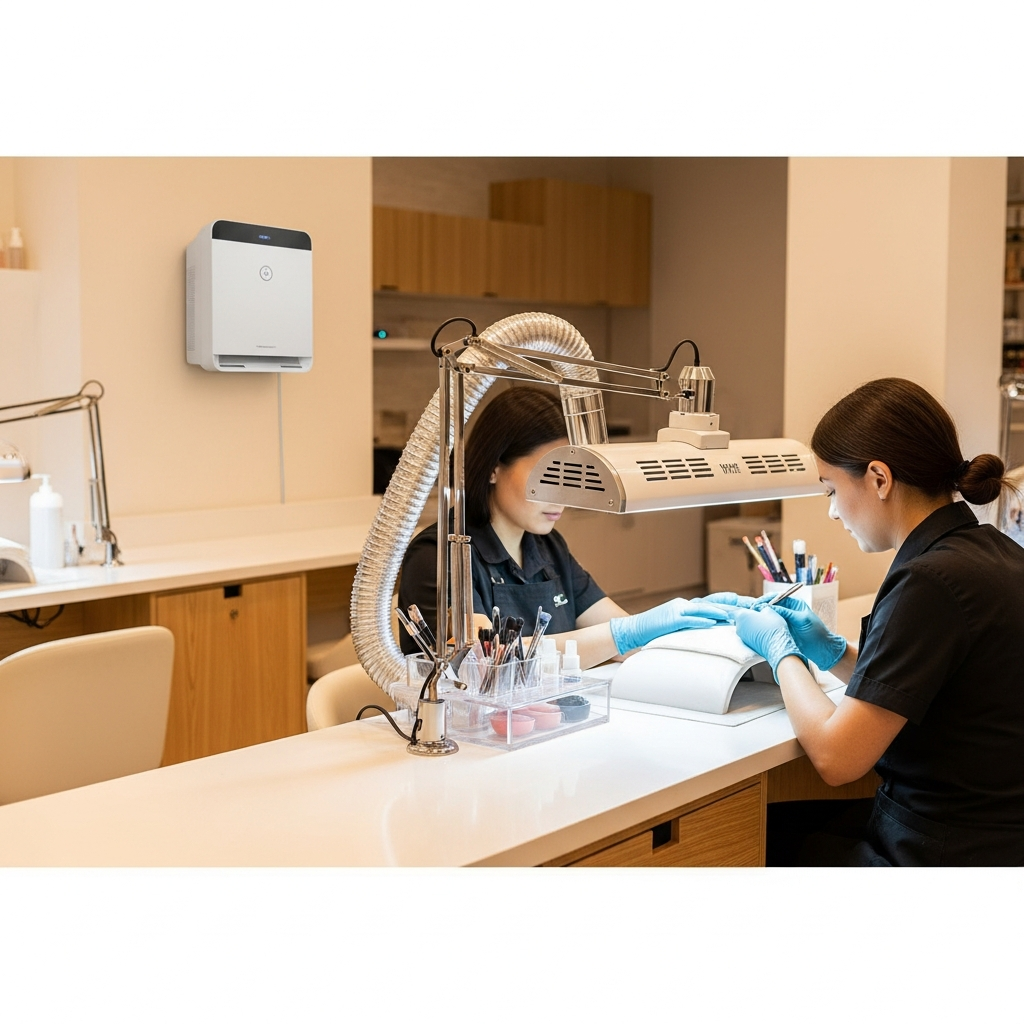
Implementing Effective Odor Control Systems in Professional Nail Salons
Managing chemical odors is a critical operational requirement for any professional nail salon owner.
Persistent monomer scents and chemical vapors can impact staff health and discourage high-end clientele.
Effective odor control requires a specialized approach beyond standard air conditioning systems.
Understanding Chemical Vapors in the Nail Environment
Nail salons utilize various volatile organic compounds (VOCs) during acrylic and gel enhancements.
The primary culprit for strong odors is ethyl methacrylate (EMA), the liquid monomer used in acrylic systems.
Without proper mitigation, these heavy vapors settle at the workstation level and circulate through the salon.
While odors are often the most noticeable issue, fine nail dust also poses a significant respiratory risk.
A comprehensive solution must address both gas-phase chemicals and particulate matter from filing and buffing.
Investing in industry-specific equipment ensures compliance with OSHA and local ventilation standards.
Source Capture Systems vs. Ambient Air Purification
The most effective way to manage odors is to capture them at the source before they disperse.
Source capture systems utilize flexible arms or vented tabletops to pull vapors directly away from the technician.
These systems are essential for high-volume acrylic services and intensive e-file work.
Ambient air purifiers work by cleaning the general air within the room through continuous filtration.
While these units help maintain overall air quality, they are less effective than source capture units alone.
The gold standard for modern nail salons is a dual approach combining both localized and room-wide filtration.
The Role of Activated Carbon Filtration
Standard HEPA filters are designed for dust but cannot trap chemical odors or gaseous vapors.
Professional nail salon systems must include deep-bed activated carbon filters to adsorb chemical molecules.
Owners should look for systems with a high carbon-to-airflow ratio for maximum odor removal efficiency.
- HEPA filters: Capture fine nail dust and allergens.
- Activated carbon: Absorbs monomer odors and chemical fumes.
- Pre-filters: Extend the life of expensive internal filtration components.
Professional Ventilation Standards and Workflows
Proper salon ventilation is measured by the number of air changes per hour (ACH).
Professional nail stations should ideally provide at least 50 cubic feet per minute (CFM) of localized exhaust.
Consulting with an HVAC professional familiar with nail industry requirements ensures your system meets local codes.
Operational Best Practices for Odor Mitigation
Beyond mechanical systems, salon workflows play a significant role in minimizing chemical exposure.
Ensuring all dappen dishes have tight-fitting lids prevents unnecessary evaporation of liquid monomers.
Discarding chemical-soaked wipes in metal, lidded trash cans immediately after use reduces ambient odor buildup.
Regular maintenance of filtration units is non-negotiable for salon safety and equipment longevity.
Technicians should check pre-filters weekly and replace main carbon filters according to the manufacturer’s schedule.
Neglected filters become saturated, losing their ability to clean the air and increasing energy costs.
Impact on Salon Reputation and Client Retention
A salon that smells clean and professional commands higher service prices and better talent.
Clients associate strong chemical odors with poor sanitation or low-quality product systems.
Eliminating the “nail salon smell” transforms the environment into a premium, professional space.
By prioritizing air quality, owners protect their staff from long-term occupational health risks.
This proactive approach reduces turnover and creates a more comfortable, productive workspace for nail technicians.
Professional odor control is not just a safety measure; it is a vital investment in your salon’s brand.
