Selecting the Right Air Purification System for Your Nail Salon
Nail salon owners face unique air quality challenges that general air filters cannot resolve. Managing chemical vapors from monomers and fine dust from e-files is critical for safety.
Maintaining high air quality standards protects the health of your technicians and enhances the client experience. A clean-smelling salon reflects professional operational standards and care.
Source Capture Systems vs. General Room Air Purifiers
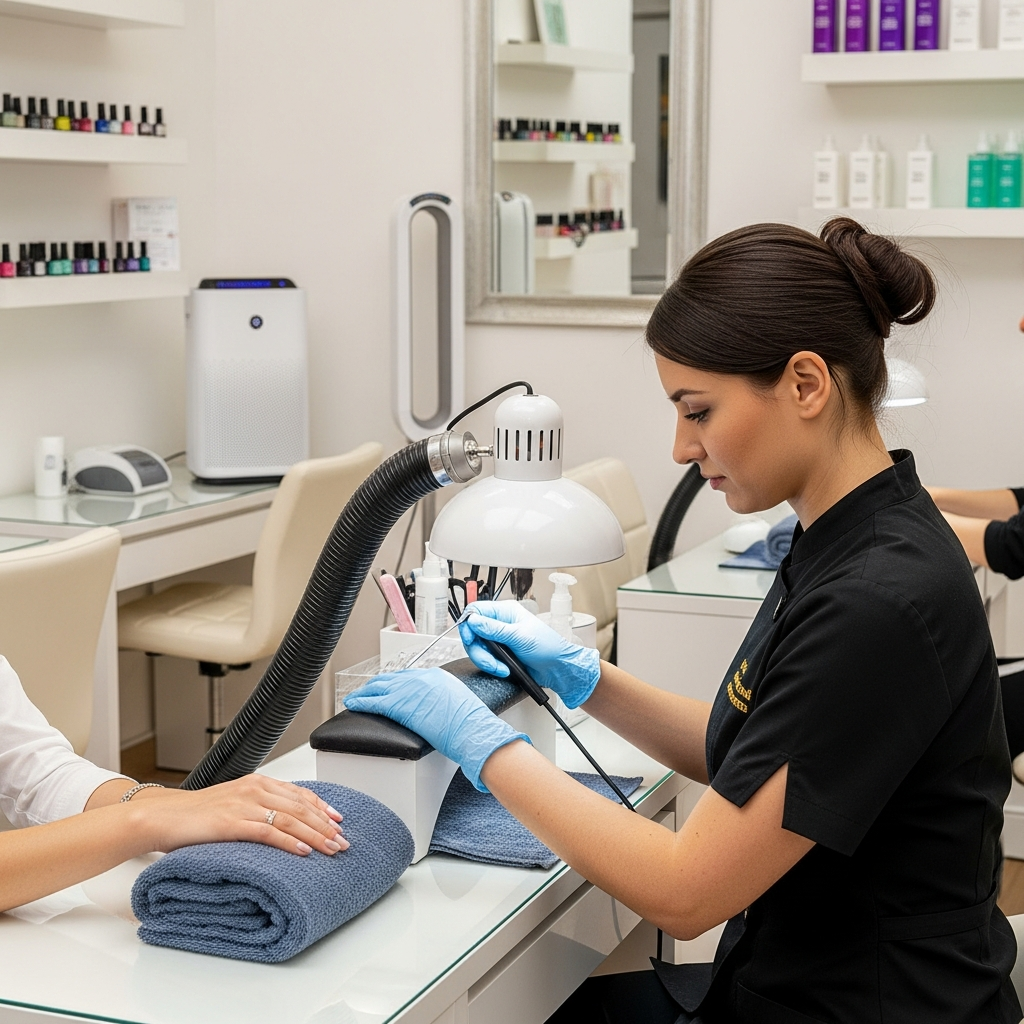
Source capture systems are designed to extract nail dust and chemical fumes directly at the manicure table. These units use flexible hoses to pull contaminants away from the technician’s breathing zone.
Room air purifiers focus on cleaning the ambient air throughout the entire salon space. While helpful for general odors, they often fail to capture heavy acrylic dust before it settles.
For a professional nail salon, a combination of both systems is often the most effective solution. This dual-layer approach ensures that both localized vapors and lingering airborne particles are removed.
Essential Filtration for Nail Dust and Chemical Odors
Effective nail salon filtration must include a medical-grade HEPA filter to capture microscopic nail filings. These particles are often too small to see but can cause long-term respiratory issues.
An activated carbon filter is mandatory for neutralizing the strong odors associated with ethyl methacrylate (EMA). The weight of the carbon in the system determines how much vapor it can absorb.
Check the Clean Air Delivery Rate (CADR) specifically for chemical removal rather than just dust. Professional nail systems are engineered to handle the specific molecular weight of nail products.
Key Investment Factors for Nail Salon Owners
- Filter Replacement Costs: Calculate the annual cost of replacing carbon and HEPA filters based on your salon’s service volume.
- Noise Levels: Choose a system that operates quietly enough to allow for professional consultation and a relaxing nail service environment.
- OSHA Compliance: Ensure your ventilation system meets local and national safety standards for professional nail establishments.
- Unit Portability: Consider whether you need fixed table units or portable systems that can be moved between pedicure stations and manicure desks.
Optimizing Your Nail Salon Ventilation Workflow
Position source capture hoods within six inches of the nail application area for maximum efficacy. This prevents monomer vapors from dispersing into the rest of the salon.
Regular maintenance of pre-filters is essential to prevent e-file dust from clogging the more expensive HEPA filters. Clean or replace pre-filters weekly in high-volume nail salons.
Ensure that your salon’s HVAC system is also functioning correctly to provide adequate fresh air exchange. Air purification should complement, not replace, proper structural ventilation.
Evaluating Long-Term Operational Benefits
Investing in high-quality air systems reduces the accumulation of fine dust on salon furniture and retail displays. This significantly lowers the daily cleaning time required for your staff.
A salon free of heavy chemical smells attracts a higher-end clientele and improves staff retention rates. Technicians are more productive and satisfied in a clean, professional workspace.
Prioritizing air safety positions your nail salon as a leader in professional standards. This commitment to health is a powerful marketing tool for modern nail consumers.
