Evaluating Air Purification Systems for Professional Nail Salons
For nail salon owners, managing air quality is a primary operational challenge that impacts staff health and client retention.
Proper ventilation ensures that monomer vapors, cyanoacrylate fumes, and fine nail dust do not compromise the salon environment.
Selecting the right system requires understanding the difference between ambient filtration and source capture technology.
Understanding Source Capture vs. Ambient Air Filtration
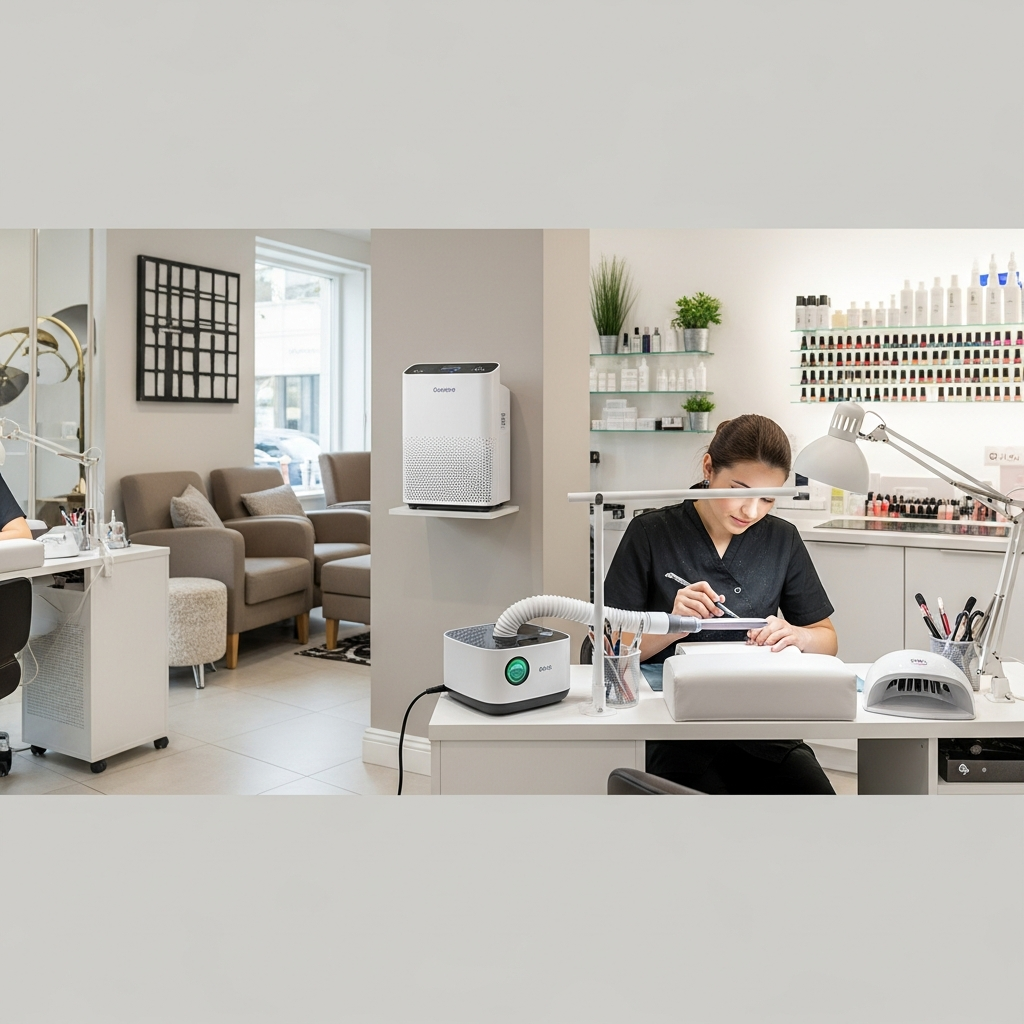
Source capture systems are designed to remove contaminants at the point of origin, specifically the nail technician’s desk.
These units use flexible hoses or integrated desk vents to pull dust and vapors away from the breathing zone of the professional.
This is the most effective method for controlling the heavy chemical odors associated with liquid and powder acrylic services.
Ambient air purifiers work by circulating and cleaning the air throughout the entire nail salon space.
While these units help reduce overall particulate matter, they are often insufficient on their own for high-volume salons.
The most effective setup usually combines source capture at each nail station with a high-capacity ambient system.
Essential Filter Types for Nail Salon Environments
A professional nail salon air purifier must utilize multi-stage filtration to be effective against diverse pollutants.
Activated carbon filters are non-negotiable for neutralizing EMA monomer vapors and other hazardous chemical odors.
Without a thick bed of activated carbon, a purifier will only move odors around rather than removing them from the air.
- Pre-filters: These trap larger particles and extend the lifespan of the more expensive main filters.
- HEPA Filters: High-Efficiency Particulate Air filters are essential for trapping microscopic nail dust from e-filing.
- Activated Carbon: Specialized carbon pellets adsorb chemical vapors and volatile organic compounds (VOCs).
Evaluating Maintenance and Operational Costs
When comparing systems, nail salon managers must look beyond the initial purchase price to the long-term maintenance costs.
Review the frequency of filter replacements and the ease of access for salon staff to perform routine cleaning.
Systems with washable pre-filters can significantly reduce the annual overhead for a busy nail business.
Noise levels are another critical factor for the professional nail salon atmosphere.
Choose units that offer high CADR (Clean Air Delivery Rate) ratings while maintaining decibel levels that allow for conversation.
A system that is too loud will often be turned off by staff, rendering the investment useless for safety compliance.
Compliance with Nail Salon Ventilation Standards
Many jurisdictions now require specific ventilation rates for nail salons to protect the health of technicians and the public.
Ensure that any system you evaluate meets or exceeds local building codes and OSHA requirements for nail services.
Properly documented air purification systems can also lower insurance premiums and improve your professional reputation.
Investing in high-quality air purification demonstrates a commitment to a premium, safe nail salon experience.
Clean air leads to higher employee satisfaction, reduced sick leave, and a more pleasant environment for your clientele.
Compare systems based on their ability to handle the specific chemical load of professional nail products used in your salon.
