Implementing Professional Disinfection Systems in Nail Salons
In the professional nail industry, disinfection systems are the most critical component of operational safety. Maintaining a sterile environment protects the health of your technicians and ensures every client receives a safe service.
For nail salon owners, choosing the right system is not just about cleanliness. It is about legal compliance, liability management, and maintaining the professional reputation of your nail business.
Choosing EPA-Registered Disinfectants for Nail Tools
Every professional nail salon must utilize hospital-grade, EPA-registered disinfectants. These chemicals are specifically formulated to kill nail-relevant pathogens, including bacteria, fungi, and viruses.
Owners must ensure that the disinfectant used is effective against Hepatitis B, C, and HIV. This is a standard requirement for nail salons operating under modern safety regulations.
Always verify the contact time listed on the product label. Most professional nail disinfectants require ten minutes of total immersion to be fully effective against harmful microorganisms.
The Professional Tool Disinfection Workflow
Effective disinfection follows a strict three-step workflow that every nail technician must master. Skipping any step compromises the safety of the entire nail salon.
- Step 1: Mechanical Cleaning. Use warm water, soap, and a nylon brush to remove all visible debris from nail nippers, pushers, and e-file bits.
- Step 2: Total Immersion. Place cleaned, dried tools into a disinfection tray. Ensure the tools are completely covered by the chemical solution for the full contact time.
- Step 3: Rinsing and Drying. Remove tools with tongs, rinse with clean water, and dry them with a lint-free towel before storing them in a clean, closed container.
Porous items like wood orange sticks, 180-grit nail files, and buffing blocks cannot be disinfected. These must be discarded immediately after a single use on a nail client.
Advanced Sterilization: Autoclaves in Nail Salons
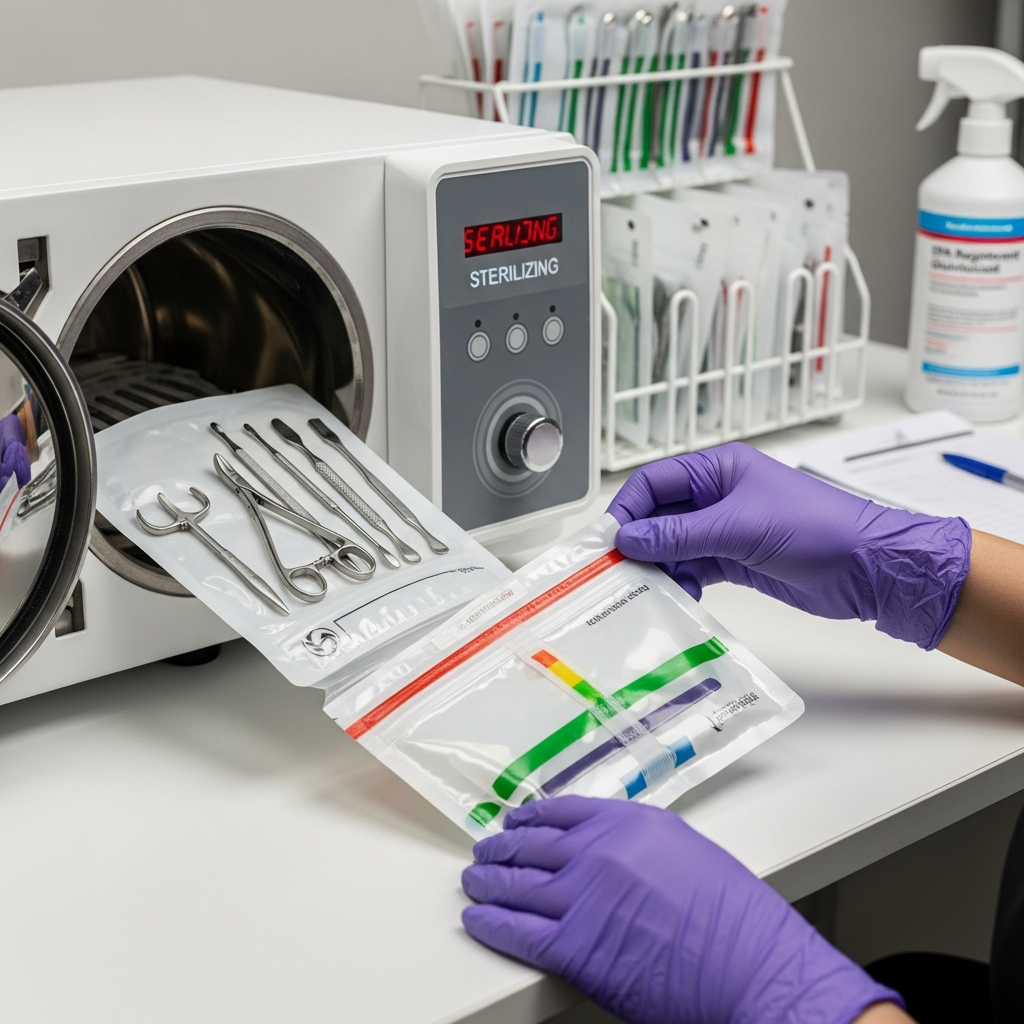
While chemical immersion is standard, high-end nail salons are increasingly adopting steam autoclaves. These systems use high pressure and heat to achieve a level of sterilization that chemicals cannot match.
Autoclaves are the only method recognized for killing highly resistant bacterial spores. For owner-technicians focusing on medical-grade nail care, this system provides the ultimate safety tier.
Using an autoclave requires specific pouches with chemical indicators. These indicators change color to prove that the nail tools have reached the necessary temperature for sterilization.
Pedicure Basin Sanitation and Safety Systems
Pedicure thrones represent a significant hygiene risk if not managed with professional-grade systems. Biofilm and hair can easily accumulate in the internal plumbing of traditional whirlpool tubs.
Owners should consider pipeless pedicure systems, which are significantly easier to disinfect. Without internal pipes, there is no place for bacteria and debris to hide between nail services.
Daily and Weekly Pedicure Cleaning Protocols
- After every client, the basin must be drained and scrubbed with a surfactant to remove all oils and skin cells.
- The system must then be filled with an EPA-registered disinfectant and circulated for the required contact time.
- Weekly deep-cleans involve flushing the system with specialized detergents to break down any potential biofilm buildup.
Chemical Safety and SDS Management for Salon Owners
Nail salon owners are responsible for the safe handling of concentrated disinfection chemicals. Proper ventilation is required in the dispensary area to prevent the inhalation of toxic vapors.
Safety Data Sheets (SDS) must be readily accessible for every disinfectant used in the salon. This is a mandatory requirement for both OSHA compliance and local nail industry inspections.
Ensure all staff members wear appropriate personal protective equipment (PPE). This includes nitrile gloves and eye protection when mixing or changing nail tool disinfection baths.
Documentation and Compliance Logs
Maintaining a disinfection log is a best practice for professional nail salon management. Documenting the frequency of solution changes and autoclave cycles provides a clear audit trail.
A well-documented safety system demonstrates your commitment to professional nail standards. It also serves as a vital defense in the event of a client complaint or state board inspection.
