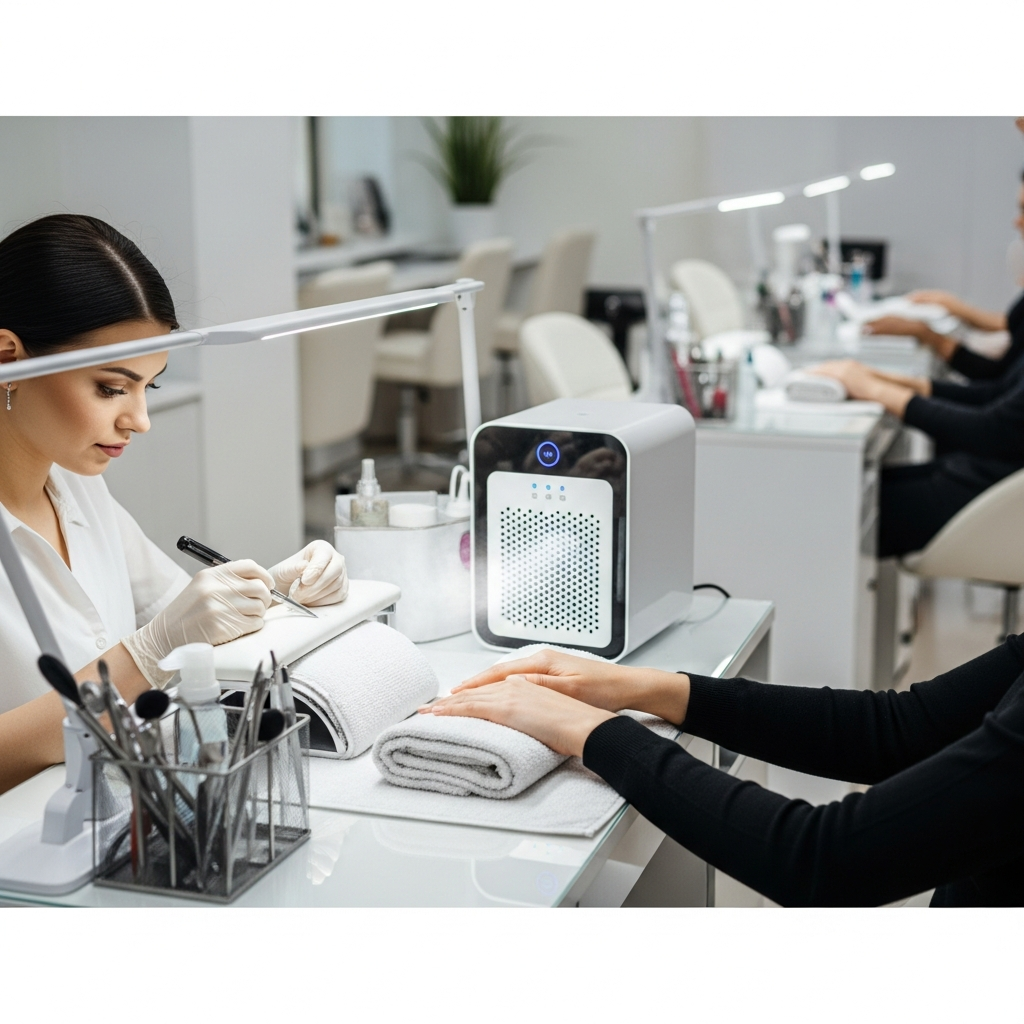
Essential Air Purification Systems for Modern Nail Salons
Operating a high-volume nail salon requires more than just technical skill.
Maintaining clean air is a critical operational standard for every nail salon owner.
Professional nail services generate significant dust and chemical vapors daily.
Understanding Respiratory Risks in the Nail Environment
Acrylic filing produces fine dust that settles into the respiratory system.
Liquid monomers and gel systems release Volatile Organic Compounds (VOCs) into the air.
Without proper filtration, these particles linger in the breathing zone of technicians.
The Difference Between Dust and Vapor Extraction
Standard ventilation often fails to capture heavy chemical molecules found in nail products.
Dust collectors focus on capturing nail debris during e-file or manual filing steps.
True air purification uses activated carbon to neutralize monomer and adhesive odors.
Source Capture Systems vs. Room-Wide Filtration
Source capture systems sit directly at the nail table to intake fumes immediately.
These units prevent chemical odors from migrating throughout the entire salon space.
Room-wide HEPA filters act as a secondary defense for general air quality.
- Source Capture: Best for localized monomer vapors and filing dust.
- HEPA Filtration: Essential for trapping microscopic airborne particulates.
- Activated Carbon: The only effective way to absorb nail chemical odors.
Operational Benefits for Nail Salon Owners
Investing in high-quality air systems improves technician health and reduces sick leave.
Clean air creates a professional environment that high-end clients appreciate and expect.
Effective filtration also prevents nail dust from settling on freshly polished surfaces.
Maintenance and Filter Replacement Schedules
Nail salon owners must establish a strict filter maintenance log for safety.
Pre-filters should be cleaned or replaced weekly in busy nail salons.
Carbon filters require replacement every six months to remain effective against VOCs.
Compliance and Safety Standards for Nail Services
Many jurisdictions now require specific CFM (Cubic Feet per Minute) airflow ratings.
Owners should consult local building codes regarding outdoor exhaust requirements.
Choosing an EPA-compliant system ensures the salon meets professional safety benchmarks.
Prioritizing air quality is a commitment to the longevity of your nail business.
A healthy salon is a productive and profitable environment for every professional.
Start evaluating your salon’s airflow to ensure a safer workspace today.
