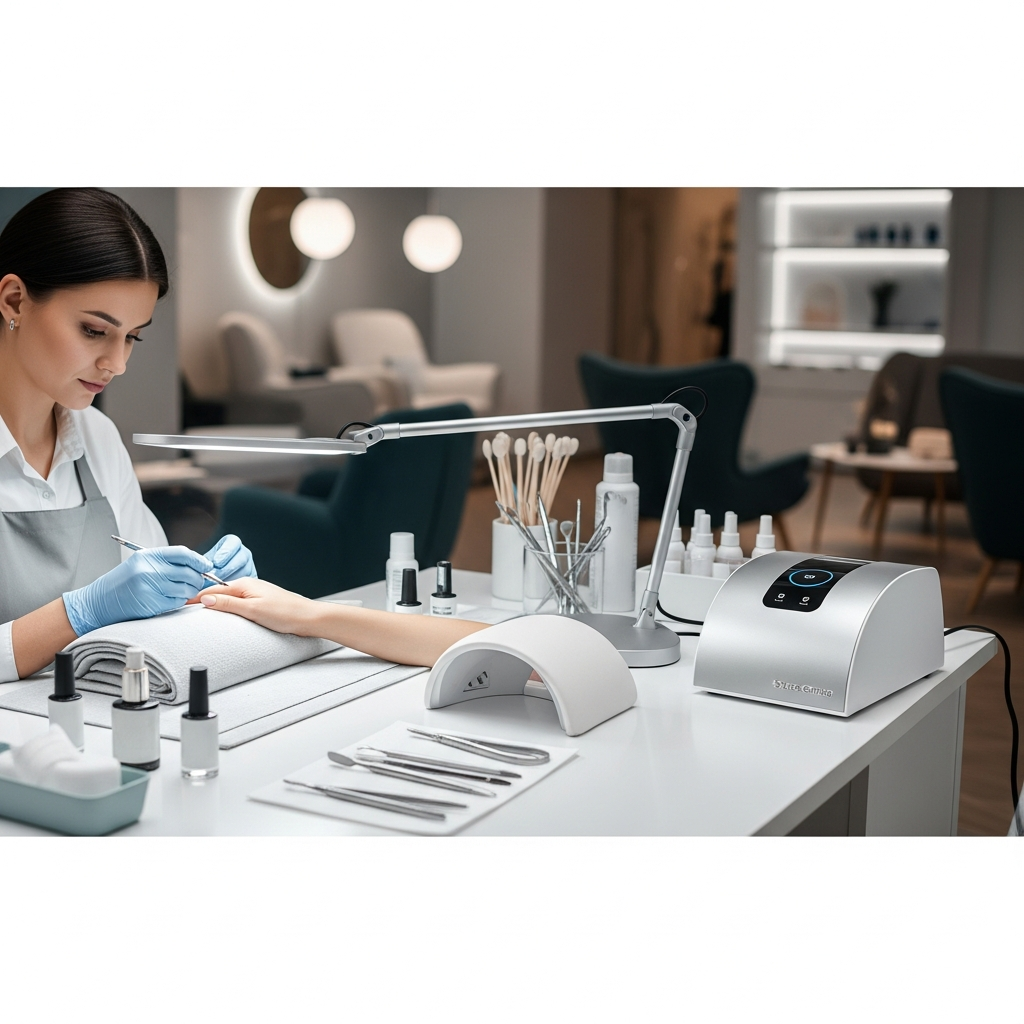
Evaluating Air Purification Systems for Nail Salon Owners
Managing air quality is a critical operational standard for modern nail salons. Owners must mitigate risks from volatile organic compounds (VOCs) and fine nail dust particles.
Professional-grade air purification protects the health of technicians and clients alike. It also ensures compliance with local health department ventilation codes and safety standards.
When selecting a system, salon owners must distinguish between general air cleaners and specialized nail industry equipment. Effective units must handle both chemical vapors and heavy filing debris.
Source Capture Systems vs. Ambient Room Filtration
Source capture systems are the gold standard for professional nail technicians. These units utilize adjustable arms to pull monomer vapors and filing dust directly from the nail table.
By capturing contaminants at the point of origin, these systems prevent chemicals from entering the breathing zone. This is the most effective way to manage acrylic odors and e-file dust.
Ambient room systems filter the general air within the salon footprint. While effective for overall odor reduction, they should complement rather than replace localized source extraction.
Critical Features for Nail Salon Air Purifiers
Look for systems specifically equipped with deep-bed activated carbon filters. Carbon is the only material capable of adsorbing heavy chemical vapors from acrylic monomers and gel systems.
High-efficiency particulate air (HEPA) filters are also mandatory for nail professionals. These filters trap microscopic nail dust and skin cells generated during intensive e-file services.
Check the Cubic Feet per Minute (CFM) rating to ensure the motor is powerful enough for your space. High-volume salons require systems with higher airflow to maintain a clean environment.
Commercial Investigation: Comparing Professional Solutions
- Portable Extraction Units: These offer flexibility for individual nail stations and provide high-suction source capture directly at the work area.
- Ventilated Nail Tables: These provide a built-in look with filtration systems integrated into the workstation, saving floor space in smaller salons.
- Ceiling-Mounted Air Scrubbers: Ideal for high-volume salons needing to circulate and clean large volumes of air throughout the business day.
Maintenance and Long-term Operational Costs
Evaluate the replacement cycle and cost for both carbon and HEPA filters. High-quality systems may have a higher upfront cost but offer lower long-term maintenance overhead.
Consider the noise level (decibels) of each system during operation. A quiet environment is essential for maintaining a premium professional atmosphere during nail services.
Ensure the manufacturer provides a clear schedule for filter changes. Clogged filters reduce suction power and fail to protect technicians from chemical exposure and dust inhalation.
Final Decision Checklist for Salon Owners
- Compliance: Does the system meet local mechanical ventilation codes for nail salons?
- Filtration: Does the unit include at least 2-3 pounds of activated carbon for odor control?
- Ergonomics: Will the source capture arm interfere with the technician’s workflow or client comfort?
- Warranty: Does the manufacturer offer a professional warranty for heavy-duty commercial use?
Investing in a high-quality air purification system is a commitment to salon safety. Proper ventilation reduces staff turnover and creates a more professional experience for your clientele.
