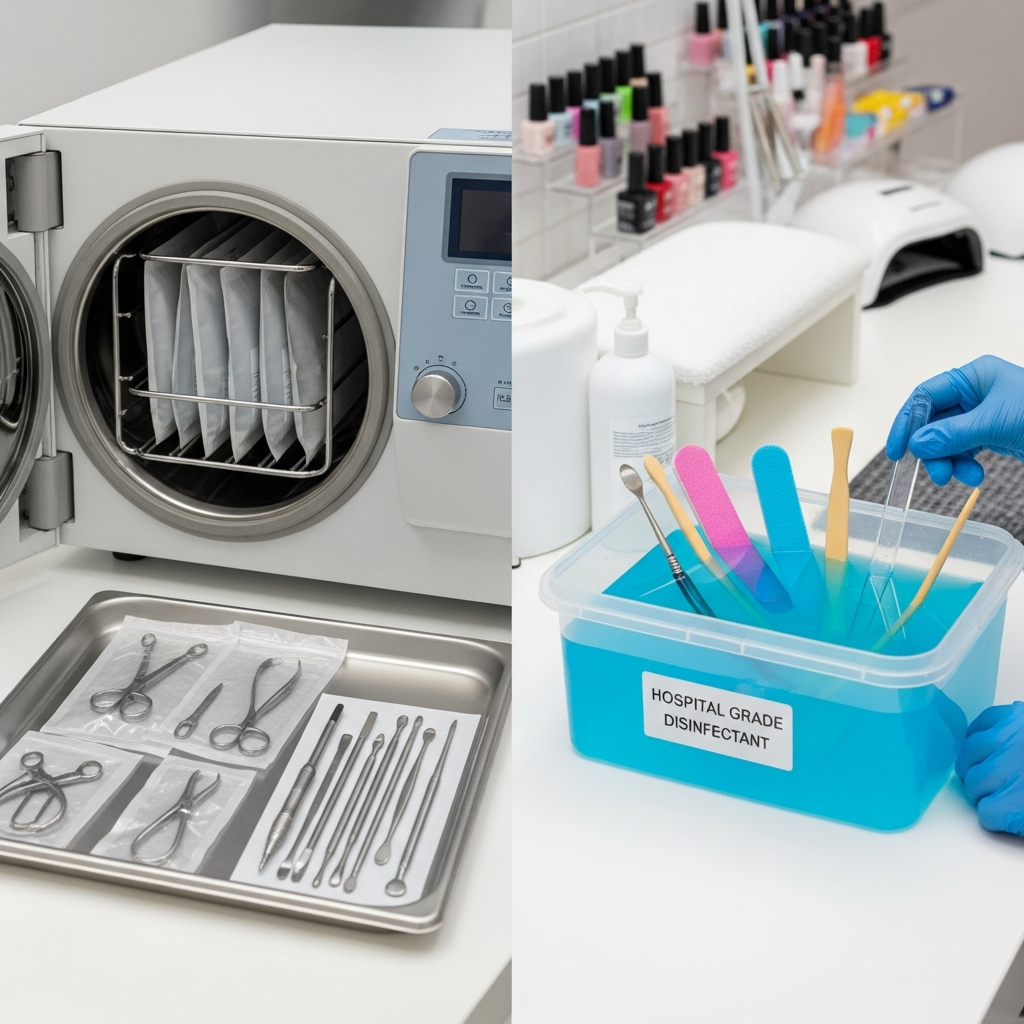
Evaluating Professional Disinfection Systems for Nail Salons
Selecting a disinfection system is a critical operational decision for nail salon owners.
This choice impacts client safety, state board compliance, and the longevity of your professional nail tools.
Modern nail salon owners must choose between high-level chemical disinfection and medical-grade sterilization.
Each system offers distinct advantages for different types of nail salon workflows and service volumes.
The Role of Autoclaves in Professional Nail Sterilization
Autoclaves use high-pressure saturated steam to achieve medical-grade sterilization of metal nail implements.
This process effectively eliminates all microbial life, including resistant fungal spores that standard chemical soaks might miss.
For nail salon owners, investing in an autoclave demonstrates a premium commitment to hygiene and professional standards.
It is considered the gold standard for cleaning stainless steel nippers, pushers, and professional nail drill bits between services.
Workflow Efficiency for Nail Technicians
Implementing an autoclave requires a specific workflow involving ultrasonic cleaning, bagging, and dry cycles.
Nail technicians must be trained to use sterilization pouches with internal indicators to verify that every cycle is successful.
While the initial investment is higher, autoclaved tools are perceived as safer by high-end clientele.
Pre-packaged, sterile tools can be opened directly in front of the nail client to build immediate trust and professional authority.
Liquid Chemical Disinfection for Nail Implements
Liquid systems utilize EPA-registered, hospital-grade disinfectants to sanitize non-porous nail tools and surfaces.
These solutions are highly cost-effective and provide a quick turnover rate for busy nail stations with high daily foot traffic.
Owners must ensure that nail technicians follow the exact contact time specified on the manufacturer’s label.
Improper dilution or shortened soak times can lead to cross-contamination and potential regulatory fines during nail salon inspections.
Maintenance and Chemical Safety in the Salon
Chemical solutions must be changed daily, or more frequently if the liquid becomes cloudy or contaminated with nail debris.
Proper storage of these chemicals is essential to prevent unwanted odors and ensure a safe breathing environment for staff.
Using specialized disinfection trays with straining baskets helps technicians avoid direct skin contact with harsh chemicals.
This protects the longevity of the tools and ensures the solution reaches all surfaces of the nail implements.
Comparing Safety Standards for Your Nail Business
- Sterilization vs. Disinfection: Autoclaves provide 100% sterilization while chemicals provide high-level disinfection of nail tools.
- Material Compatibility: Chemicals are suitable for plastic nail tools, whereas autoclaves are strictly for heat-resistant metal implements.
- Cost Analysis: Autoclaves have higher upfront costs but significantly lower long-term expenses on chemical waste and replenishment.
- Client Perception: Sealed sterilization pouches from an autoclave are a powerful marketing tool for premium nail salons.
Choosing the Best System for Your Nail Staff
The ideal system depends on your salon’s service volume and the specific types of nail enhancements offered.
High-end nail boutiques often prefer autoclaves for the superior safety profile and the marketing advantage they provide over competitors.
Regardless of the chosen system, consistent documentation of cleaning logs and adherence to professional nail standards are mandatory.
This rigor protects your nail salon license and ensures every client receives a safe, high-quality service every time.
