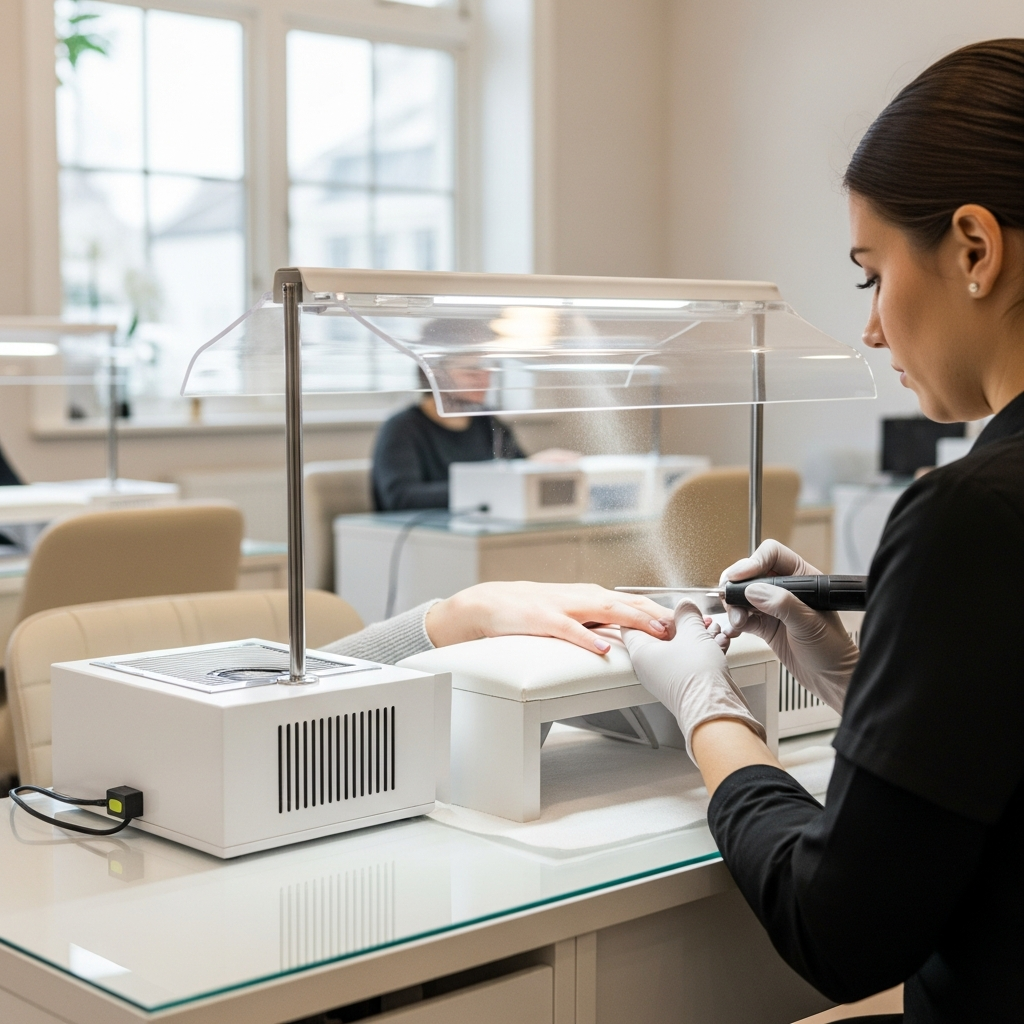
Implementing Effective Air Purification in Your Nail Salon
For nail salon owners, air quality is a critical component of operational safety and staff retention.
Managing chemical odors and fine particulate matter is essential for maintaining a professional environment.
Understanding the specific needs of a nail salon helps in choosing the right filtration technology.
Understanding the Risks of Nail Dust and Chemical Vapors
Professional nail services generate two primary types of airborne contaminants: vapors and dust.
Volatile Organic Compounds (VOCs) like ethyl methacrylate and cyanoacrylates evaporate quickly during application.
Without proper extraction, these chemical vapors can linger in the breathing zone of the technician.
Filing acrylics, hard gels, or dip powders creates fine particulate dust that remains suspended in the air.
Standard HVAC systems are rarely equipped to capture these microscopic particles effectively.
A dedicated air purification system is required to mitigate these specific nail industry risks.
The Role of Source Capture Systems in Nail Services
Source capture ventilation is the gold standard for protecting nail technicians and salon owners.
These systems use adjustable hoods or vented nail tables to pull air directly away from the work area.
Capturing contaminants at the point of origin prevents them from circulating throughout the salon floor.
Why General Ventilation is Insufficient for Nail Salons
General room ventilation merely dilutes the air rather than removing localized chemical hazards.
Nail-specific source capture systems ensure that the highest concentration of vapors is neutralized immediately.
This targeted approach is more energy-efficient and effective for high-volume nail salon operations.
Key Components of a Professional Nail Air Purifier
When evaluating air purification units, salon owners must look for multi-stage filtration systems.
A single filter is rarely enough to handle both the heavy dust and the complex chemical odors.
The system must be designed specifically for the rigors of a professional nail environment.
HEPA Filtration for Acrylic and Gel Dust
High-Efficiency Particulate Air (HEPA) filters are mandatory for capturing fine nail dust.
These filters trap 99.97% of particles as small as 0.3 microns, including dust from electric filing.
Using HEPA filtration prevents dust from settling on salon surfaces and entering the respiratory systems of staff.
Activated Carbon for VOC and Odor Neutralization
Activated carbon filters are necessary for absorbing gaseous chemical vapors and monomer odors.
Large carbon beds provide a high surface area for chemical molecules to bond with the filter media.
This process effectively eliminates the distinct “nail salon smell” that can deter some clients.
Maintenance Standards for Salon Air Quality Systems
Owning a high-quality air purifier requires a commitment to a strict maintenance schedule.
Pre-filters should be checked weekly and replaced as they become saturated with visible nail dust.
Regular maintenance ensures the system operates at peak airflow and provides maximum protection.
-
Nail Salon Air Safety Checklist:
- Position source capture hoods within 6 inches of the nail service area.
- Replace HEPA filters every 6 to 12 months depending on salon volume.
- Monitor carbon filters for breakthrough odors to signal necessary replacement.
- Ensure the system’s cubic feet per minute (CFM) rating matches the salon’s square footage.
Investing in professional-grade air purification is a strategic decision for any nail salon owner.
It demonstrates a commitment to technician health and creates a premium experience for every client.
A clean, odor-free salon is a hallmark of a high-standard nail industry business.
