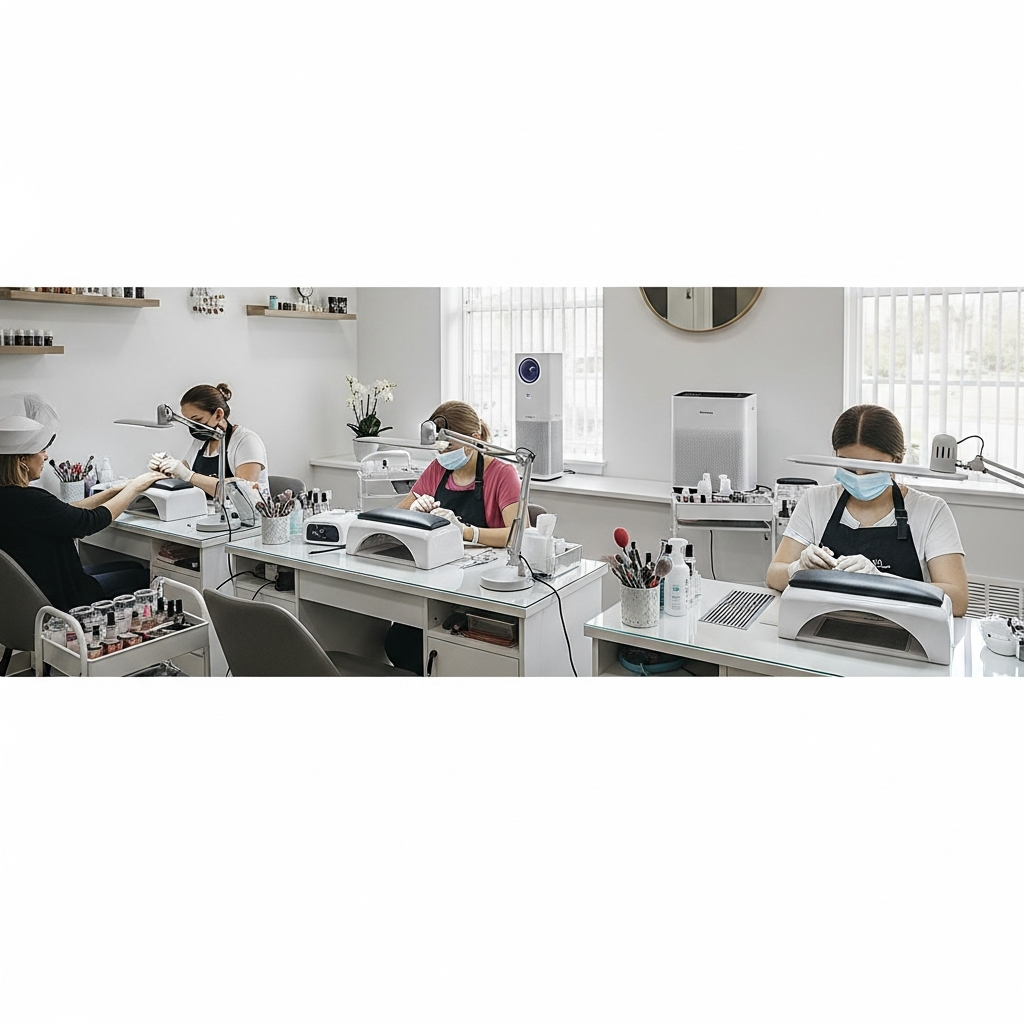
Selecting the Best Air Purification Systems for Your Nail Salon
Investing in a robust air purification system is a critical decision for any nail salon owner. High-quality ventilation protects the health of your technicians and ensures a premium experience for your clients.
Professional nail services involve various chemicals, including monomers, cyanoacrylates, and various polymers. Without proper filtration, these substances can lead to respiratory issues and a persistent chemical odor in the facility.
To maintain a professional environment, owners must evaluate systems that specifically target both fine nail dust and volatile organic compounds (VOCs). Understanding the difference between filtration types is the first step in this process.
Understanding the Impact of Monomer Odors and Nail Dust
Nail salon operations generate two primary types of airborne contaminants. Fine particulate matter is produced during e-filing and manual buffing of gel or acrylic enhancements.
Chemical vapors and VOCs are released during the application of acrylic systems and the curing of various nail coatings. These vapors are often heavier than air and tend to linger at the breathing zone of the technician.
Effective air purification must address both threats simultaneously to meet safety standards. Relying on general building HVAC systems is rarely sufficient for the high-intensity chemical use found in modern nail salons.
Source Capture vs. Room-Wide Air Filtration
Source capture systems are designed to remove contaminants at the point of origin. These units are positioned directly next to the nail table or integrated into the desk itself to pull dust and fumes away instantly.
Ambient room-wide purifiers focus on cleaning the air throughout the entire salon footprint. These systems are essential for managing the overall air quality and ensuring odors do not migrate to the reception or waiting areas.
For most professional nail salons, a dual-layer approach is the gold standard. Combining source capture with high-capacity room filtration provides the most comprehensive protection for staff and clients alike.
Portable Source Capture Extractors for Nail Tables
Portable extractors feature flexible arms that technicians can position over the client’s hands. These units utilize high-suction fans to draw in dust and monomer vapors before they reach the technician’s face.
When evaluating these units, look for multi-stage filtration that includes a pre-filter for large dust and a HEPA filter for microscopic particles. An activated carbon stage is mandatory for neutralizing the strong smell of nail liquids.
These systems are ideal for salon owners who need versatility. They can be moved between stations depending on the service being performed, such as high-dust acrylic removals or low-odor gel manicures.
Built-in Ventilated Nail Tables and Desks
Integrated ventilation tables offer a streamlined look while providing consistent suction. These tables typically feature a grate on the tabletop that pulls air downward into a hidden filtration compartment.
The main advantage of built-in systems is the reduction of noise and clutter around the workspace. However, owners must ensure the filters are easily accessible for the daily maintenance required in a high-volume salon.
Ensure the downward suction is powerful enough to overcome cross-drafts from salon doors or fans. A weak built-in system can give a false sense of security while allowing vapors to escape into the room.
High-HEPA Room Purifiers for VOC Management
Stand-alone room purifiers should be rated for the specific square footage of your nail salon. These units should have a high Clean Air Delivery Rate (CADR) for chemicals rather than just pollen or pet dander.
Look for commercial-grade units that feature several pounds of activated carbon. The more carbon the system contains, the more effectively it will absorb the specific VOCs associated with nail products.
Positioning these units near the back of the salon or near the mixing area can prevent odors from accumulating. They act as a secondary safety net for any particles not caught by the primary source capture systems.
Key Evaluation Criteria for Salon Owners
Noise level is a primary concern for nail salon owners who want to maintain a relaxing atmosphere. Look for systems that offer high CFM (Cubic Feet per Minute) airflow while keeping decibel levels low.
Operational costs must also be considered beyond the initial purchase price. Review the cost and frequency of replacement filters, as these are recurring expenses necessary for maintaining system efficiency.
Ensure any system you select complies with local safety regulations and OSHA standards for nail salon ventilation. Documenting your air quality efforts can also be a significant marketing point for health-conscious clients.
Maintenance and Filter Replacement Workflows
A filtration system is only as effective as its maintenance schedule. Pre-filters should be cleaned or replaced weekly to prevent dust buildup from choking the motor and reducing suction.
Carbon and HEPA filters usually require replacement every six to twelve months, depending on the volume of services. Many modern units include indicator lights to alert salon managers when airflow is restricted.
Assigning a specific staff member to oversee the ventilation equipment ensures that maintenance never falls behind. Keeping a log of filter changes is a best practice for salon safety and professional accountability.
- Daily: Wipe down intake grates to remove surface nail dust.
- Weekly: Inspect pre-filters and clear any obstructions from the intake hoses.
- Monthly: Check the integrity of the carbon canisters to ensure no odors are bypassing the system.
- Annually: Perform a full system audit and replace high-efficiency filters as recommended by the manufacturer.
By prioritizing high-quality air purification, nail salon owners protect their most valuable assets: their technicians. A clean, odor-free environment reflects a commitment to professional standards and long-term business success.
